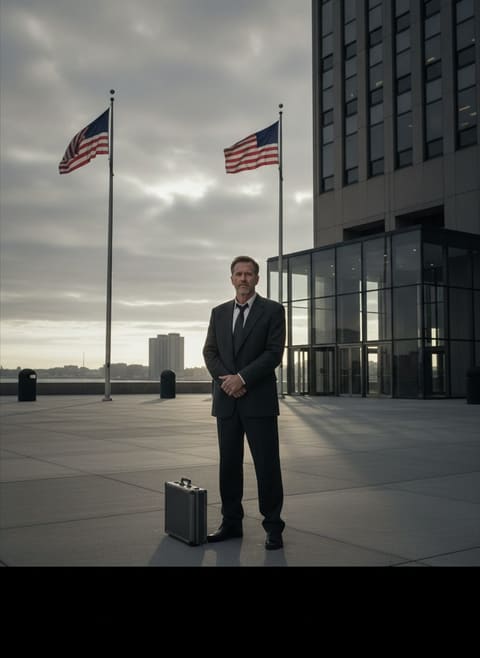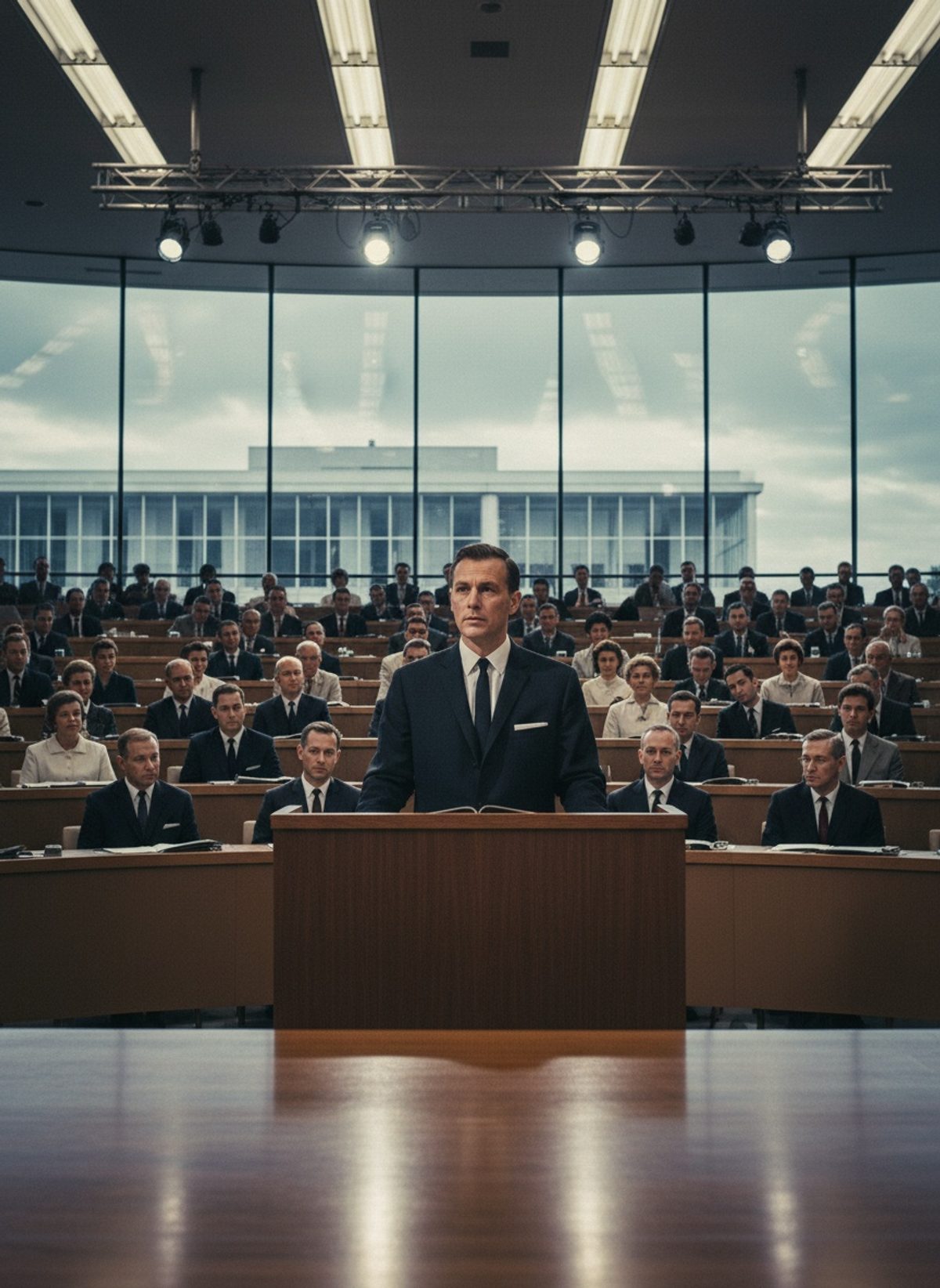
September 25, 1961. The world held its breath as leaders gathered in New York City.
Against the backdrop of looming skyscrapers and bustling streets, the United Nations General Assembly convened as a crucible of global power, tension, and hope. At the podium stood John F. Kennedy, the fresh face of American leadership, confronting a world that teetered on the brink of nuclear catastrophe. The Cold War's icy grip tightened, and with it, the shadows of missiles arched over the future of humanity. But in that moment of heightened peril, Kennedy's voice became a beacon aimed at averting catastrophe.
The Weight of the World's Arsenal
As Kennedy addressed the delegates, his words illustrated the stark reality of the nuclear age. “Every inhabitant of this planet,” he declared, “must contemplate the day when this planet may no longer be habitable.” The specter of nuclear annihilation loomed large, a grim reminder that civilization itself could be erased by a push of a button. The rapid proliferation of nuclear arsenals had transformed warfare’s finality into an existential threat, starkly illustrated by the mushroom clouds that still haunted memories barely over a decade old.
Yet, in this gathering of nations, Kennedy did not merely offer warning; he urged a path to salvation. The choice was as simple as it was momentous: "Disarmament or destruction." With the United States and Soviet Union locked in a perilous arms race, he emphasized that the responsibility for avoiding catastrophe lay not just with the superpowers, but with all nations. He proposed a United Nations "peace race," suggesting the implementation of effective arms control measures, and called for a global history devoid of "wars of mass destruction."
Read next: The Compiègne Wagon Where the First World War Ended at 5am
Kennedy’s address was set against a backdrop of dramatic geopolitical shifts. Just months earlier, the world had witnessed the failed Bay of Pigs invasion, which intensified U.S.-Soviet tensions. The Berlin Wall had scarred Germany’s landscape, solidifying the ideologies that divided East from West. Each development underscored the vitality and volatility of the Cold War chessboard, with pawns moved by the looming threat of nuclear escalation.
Soviet Echoes and the Cold War Chessboard
Kennedy’s speech did not occur in isolation. As the world watched, Soviet Premier Nikita Khrushchev listened intently. Just days earlier, Khrushchev had taken to the same stage, expressing the USSR’s parallel concerns about nuclear proliferation. While Kennedy spoke with calm determination, Khrushchev’s earlier speech had crackled with fiery rhetoric and fist-pounding passion, emblematic of the explosive tensions between the two superpowers.
However, beneath the confrontational facade lay a mutual recognition of the stakes involved. Both leaders understood that unchecked proliferation held no victories, only mutual destruction. Despite ideological differences, it was increasingly clear that dialogue, however fraught, was the only path that could steer humanity away from the abyss.
This era was marked by espionage and diplomatic subterfuge, where information was a prized commodity. Yet, it was also an age where small gestures held the potential for monumental shifts. Kennedy's call for a ban on atmospheric nuclear tests and his advocacy for the eventual aim of a test-ban treaty were foundational to the ensuing negotiations that would lead to the Limited Test Ban Treaty of 1963.
Read next: The Menin Gate Buglers Have Played the Last Post Since 1928
Both Kennedy and Khrushchev navigated their respective domestic pressures—Kennedy holding the line against fervent anti-communist sentiment at home, while Khrushchev balanced his ambitions against more hardline elements within the Kremlin. Their direct communications, often shrouded in the secrecy of coded correspondence, gradually evolved from confrontation to pragmatic engagement.
A Legacy of Words, a Hope for Futures
Though Kennedy's speech did not immediately dissolve nuclear arsenals or end the Cold War, its ripples spread sparingly but significantly through the corridors of power. It emphasized a shared human vulnerability and the possibility of unified aspiration. This moment of rhetorical clarity highlighted reasons for hope as much as fear, planting seeds of cooperation even amidst a largely adversarial global theatre.
In the years that followed, measures to control, limit, and eventually reduce nuclear weapons would emerge as cornerstones of international diplomacy. They were imperfect and fraught with setbacks, yet foundational in establishing frameworks to avert conflict. Kennedy's speech would come to represent an admonition and an invitation—a call for unity in quelling the single most potent threat ever known to the human race.
Amidst the tensions then, it becomes clear why this speech remains a resonant moment in history. It reflects the precariousness of human progress and the pivotal role of diplomatic foresight. The balance of fear and hope, of rhetoric and action, defined the East and West's perilous dance. As we navigate our current global challenges, Kennedy’s words echo through time—a summons to preserve not just our world, but our shared moral and spiritual existence.