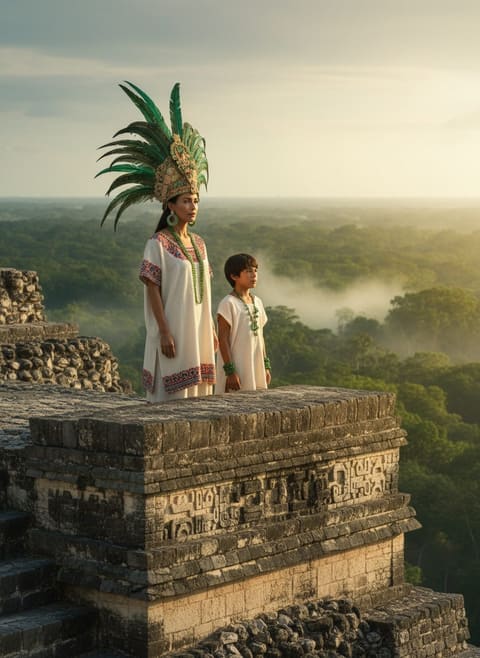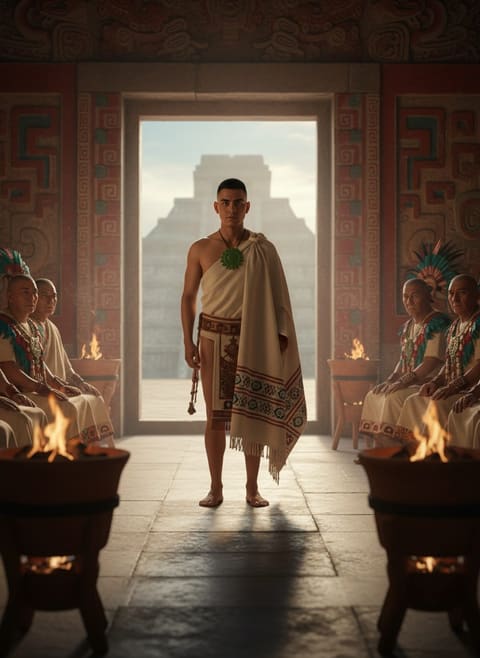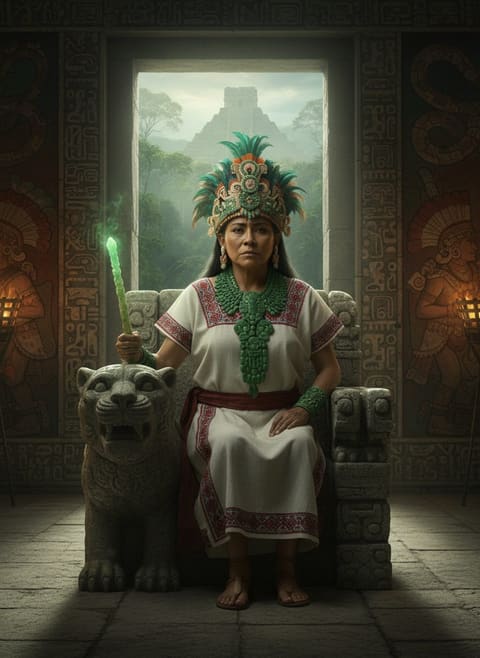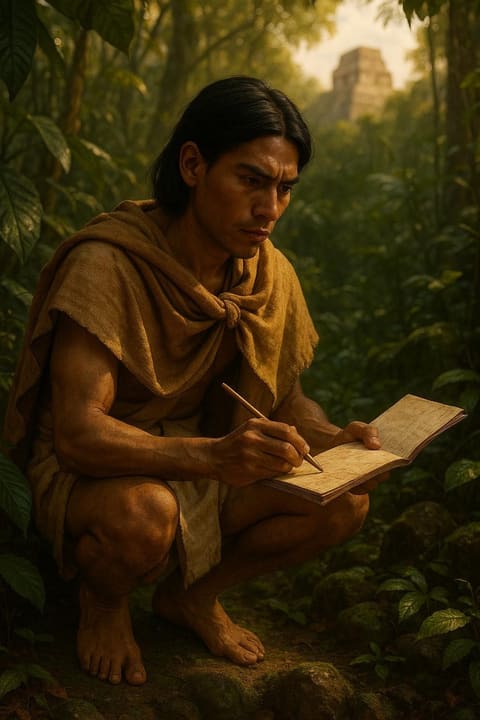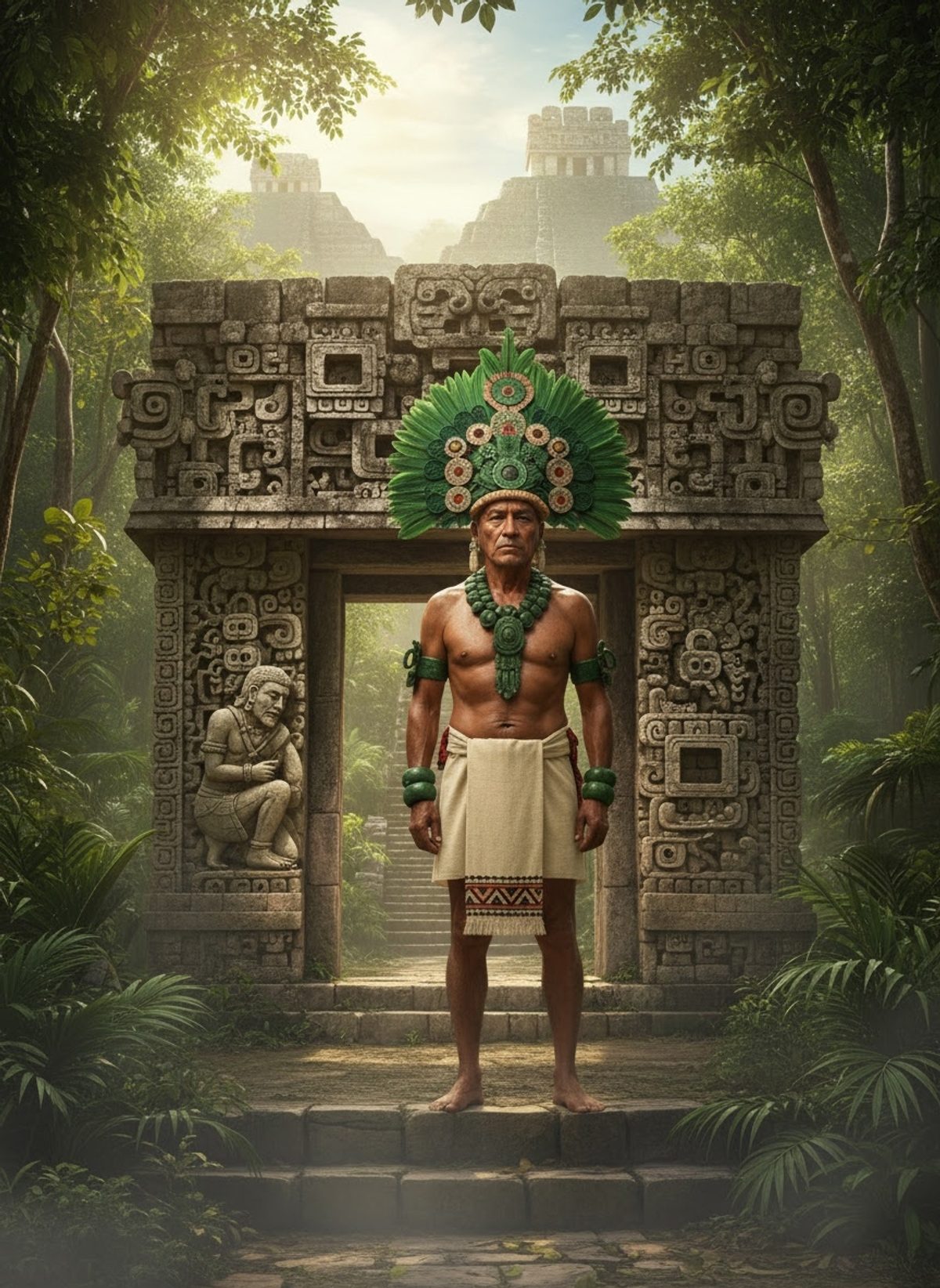
October 23, 681. The air buzzed with anticipation in Yaxchilan as Itzamnaaj B'alam II prepared to ascend the throne. For the Maya city-state, this was more than a transition of power; it was a moment of renewed dominance, the beginning of a new chapter etched forever in ancient limestone. As the new king stepped forward into the spotlight of Maya history, he knew that his rule needed more than coronation rites. It needed validation, carved exquisitely in stone.
Sculpting Authority Above Every Doorway
As Itzamnaaj B'alam II grasped the reins of Yaxchilan, he faced a formidable task: securing his legitimacy and proving his right to rule—not just to his subjects but to history itself. The answer came in the form of grand architectural projects, most notably the intricate carvings on the limestone lintels above the city's doorways.
These weren't mere decorations. They were dramatic narratives, visual declarations of power. Each carving depicted acts of conquest and submission, captives kneeling and pleading, ritual bloodletting—all potent symbols underscoring his earned throne.
The most famous among them, Temple 23, stands testament to his intricate propaganda. Here, his wife Lady Xoc is immortalized in the throes of a bloodletting rite, both marking his accession and the lofty events that followed, like the birth of their son, Yaxun B'alam IV. This public spectacle of self-sacrifice and divine favor was scripted onto stone, intertwining divine rule with brutal realism.
Read next: Tlacaelel Rewrote Aztec Myth to Crown a Dying Empire
For the peoples of Yaxchilan, these stones were more than history; they were present realities, instructive myths on the might of their king. So, above every grand doorway, Itzamnaaj B'alam II reminded his subjects and the deities: his rule was divinely sanctioned and battle-earned. This wasn't just a tale of conquest—it was a personal narrative etched into the heart of his city.
A Symbolic Dance with Power and Piety
Amidst alliances and animosities, Yaxchilan thrived under Itzamnaaj B'alam's vast undertaking of constructions. His realm was a sophisticated theater where power, religion, and family politics played out openly. Each lintel you find today is more than art; it's a calculated chess move in a game where gods, ancestors, and rivals watched closely.
Itzamnaaj B'alam shared power closely with Lady Xoc, his political partner through marriage. Their alliance reinforced his rule, her noble blood lending its weight to his claims. This alliance was crucial in a world where lineage could legitimize power as much as a recognized pedigree. The strategic portrayal of Lady Xoc on Temple 23 signified more than husbandly homage. It symbolized a strategic move to knit familial and spiritual power seamlessly into his reign.
Even more intriguing was the role of his secondary wife, Lady Eveningstar of Calakmul, whose son succeeded Itzamnaaj B'alam. This marriage linked Yaxchilan to its neighboring powerhouse, Calakmul, and secured alliances vital for the survival and legacy of his lineage. Through this blend of marriages and finely curated public displays of piety and military might, the king's strategy was clear—solidify his dynasty and his city's status in the competitive tapestry of Maya politics.
The Lasting Legacy of Stone Politics
Throughout Itzamnaaj B'alam's reign, which spanned over six decades until his passing in 742, he relentlessly pursued building projects. Many of these endeavors came in his later years, as he continued leading his warriors well into his eighties. Every building and lintel bore the hallmarks of his rule, creating an interwoven narrative of authority that would outlast him and echo through time.
Read next: Machu Picchu: The Inca Royal Estate Linked to Pachacuti
Yaxchilan's structures were not just marvels of architectural grandeur. They were sacred venues, each stone a propaganda masterpiece, asserting the city's—and its ruler's—status. Today, these carvings stand among the most detailed and information-rich Maya art ever unearthed. They offer historians insights into the complex socio-political and religious life of ancient Maya civilization, revealing the adeptness with which Itzamnaaj B'alam II managed his image.
By crafting a narrative in stone, the king ensured he wouldn't fade into the obscurity that claimed many other rulers whose achievements lived solely in oral traditions. What Itzamnaaj B'alam understood was the power of a story etched in permanence, one that his descendants and the gods would continually revisit and be reminded of.
In a world intensely attuned to the symbolic interplay of power and myth, Itzamnaaj B'alam II demonstrated a keen grasp of how to wield art and architecture in governance. His lintels, temples, and rituals served as a physical manifesto, capturing the essence of his reign and broadcasting it in enduring grandeur.
Through his vision, each stone invites the question of how history remembers rulers—not only by their conquests or dynasty but by the stories they chose to carve into their cultural bedrock. Thus the legacy of Itzamnaaj B'alam II stands as more than history; it tells us about the timeless human endeavor to communicate power, authority, and identity through every available medium, even stone.