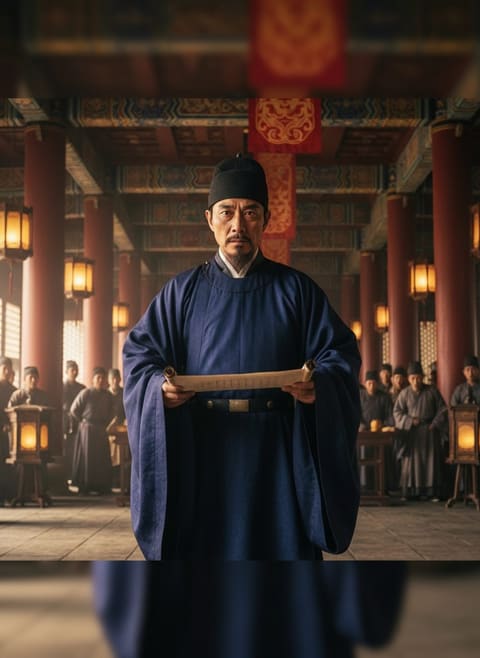
The sun hung low in the sky, casting a grim veil of orange over the barren fields of Zhejiang. Xu Youren stood amidst the whispers of wind and desperation, his heart pounding against the dictates of caution and duty. Before him stretched the haggard faces of those who had come to rely on his wisdom and courage. The imperial edict had not arrived, yet the question was no longer about protocol or obedience. It was about survival.
Beneath the Shadow of Famine
The famine had descended with a vengeful ferocity, sweeping through Zhejiang like an unyielding tide. The once verdant landscapes withered under its merciless grasp as crops failed and the specter of starvation cast its long shadow. The granaries, brimming with grain that could turn the tide of despair, stood locked, their bounty sealed under the stringent laws of the empire. Xu Youren, the governor of Zhejiang, was acutely aware of his duty to the Song Dynasty and to the Emperor Song Renzong. Yet, as days turned into nights, the faces of the hungry haunted his thoughts.
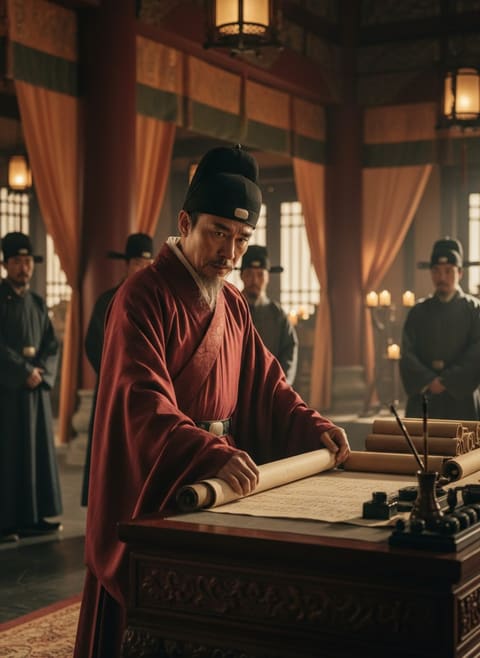
The local officials murmured anxiously in the corridors of power, torn between the need for a strict adherence to imperial protocols and the growing catastrophe outside their doors. Xu Youren's face carried the burden of sleepless nights, his mind a battlefield of potential consequences and a desire to save his people. Tradition dictated that opening the granaries without an imperial edict was a transgression punishable by execution—a risk to life and reputation. Nevertheless, the cries of the hungry grew louder, and the thought of inaction gnawed at him relentlessly.
The Audacious Gamble
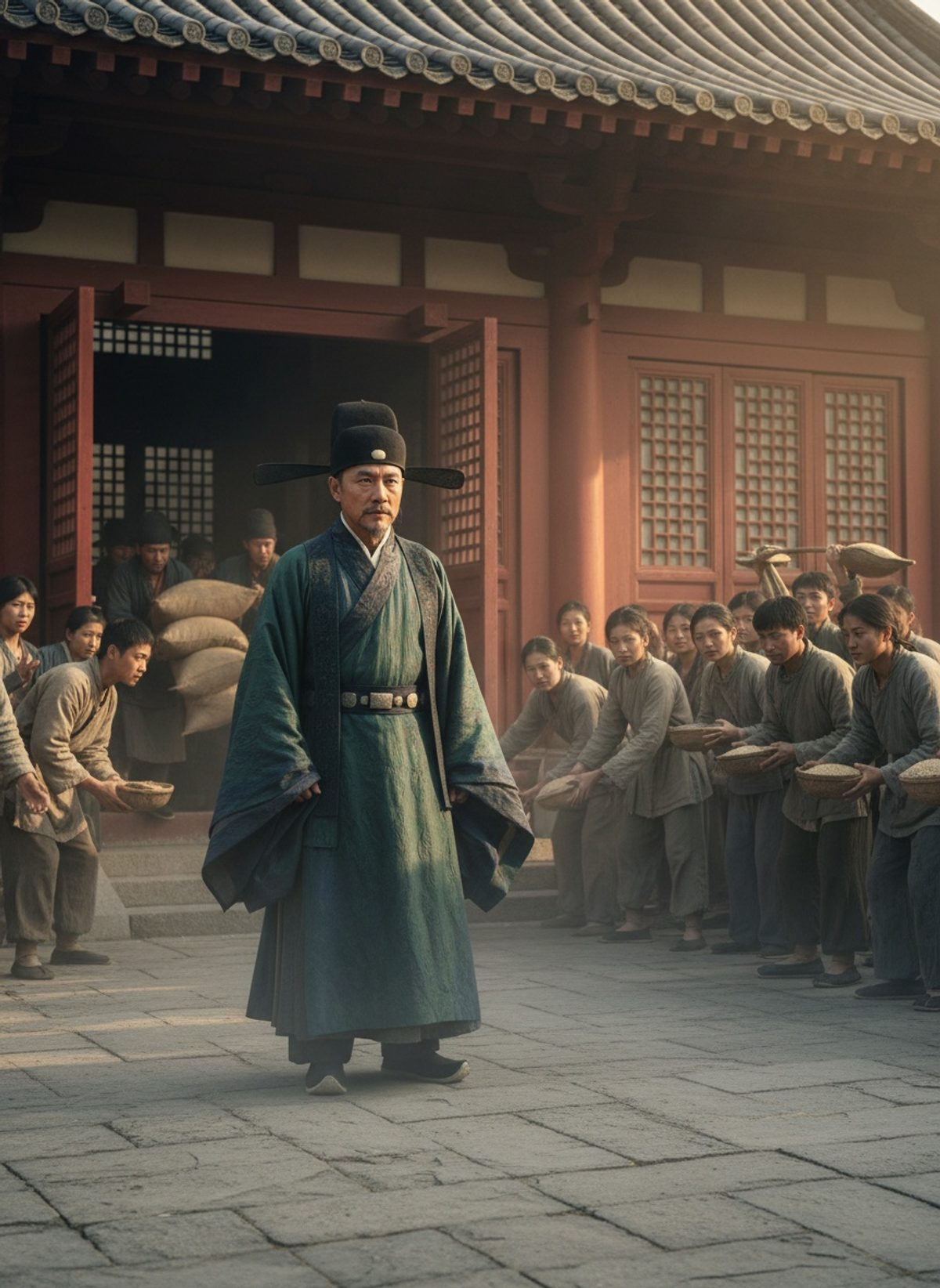
In a bold move defying the very core of his duty, Xu Youren made his decision under the night sky, surrounded by his closest advisors. The granaries would be opened. With the moon serving as their silent witness, barrels were unsealed, and the precious grain begun to pour into the streets, nourishing the villagers who had clung onto life by sheer will. In that moment, a silent accord was formed between a governor and his people—a pact of survival forged in the darkest hour.
Read next: She Ruled the Silk Road. No One Saw It Coming.
The news of Xu Youren's decision traveled faster than any imperial edict could. Whispers of his daring act reached the ears of the Song court, rippling through the corridors of power like a shockwave. His defiance was an affront to the rigid hierarchy of the empire, a finger pointed at the very structure that had left thousands to suffer. The entire court was stunned into silence—a silence that echoed with the questions of justice and redemption.
A Silent Response
In the aftermath, Xu Youren awaited his fate with the same steely resolve that had driven his actions. To defy the emperor was to invite death, or so he thought. Yet the silence from the court persisted. Days stretched into weeks, and the feared retribution from the throne never came. The halls of power, usually so quick to mete out judgement, remained quiet, their reaction muted by the magnitude of his compassion.
Read next: He Stood Before the Court. He Freed Himself With Words.
Some say it was the sheer audacity of Xu Youren's actions that confounded his accusers. Others speculate that the emperor, upon learning of the true scope of the devastation, chose to let justice merge with mercy. The vital truth remained unchanged; thousands lived because of one man’s defiance against an unyielding system. The response of the court reflected a tacit acknowledgement of a harsh truth—that sometimes, the moral law stands higher than the imperial decree.
This story remains etched in the forgotten pages of Chinese history. Xu Youren's courageous gamble speaks to the eternal struggle between duty and morality, a conflict that resonates through time. In a world where lives often hang by the threads of decisions made far away in halls of power, his quiet rebellion challenges us to consider what it means to protect that which truly matters. In honoring the essence of humanity over the rigidity of rules, Xu Youren not only saved lives, but crafted a legacy unshackled by fear, vivid in its depiction of valiance amid adversity.