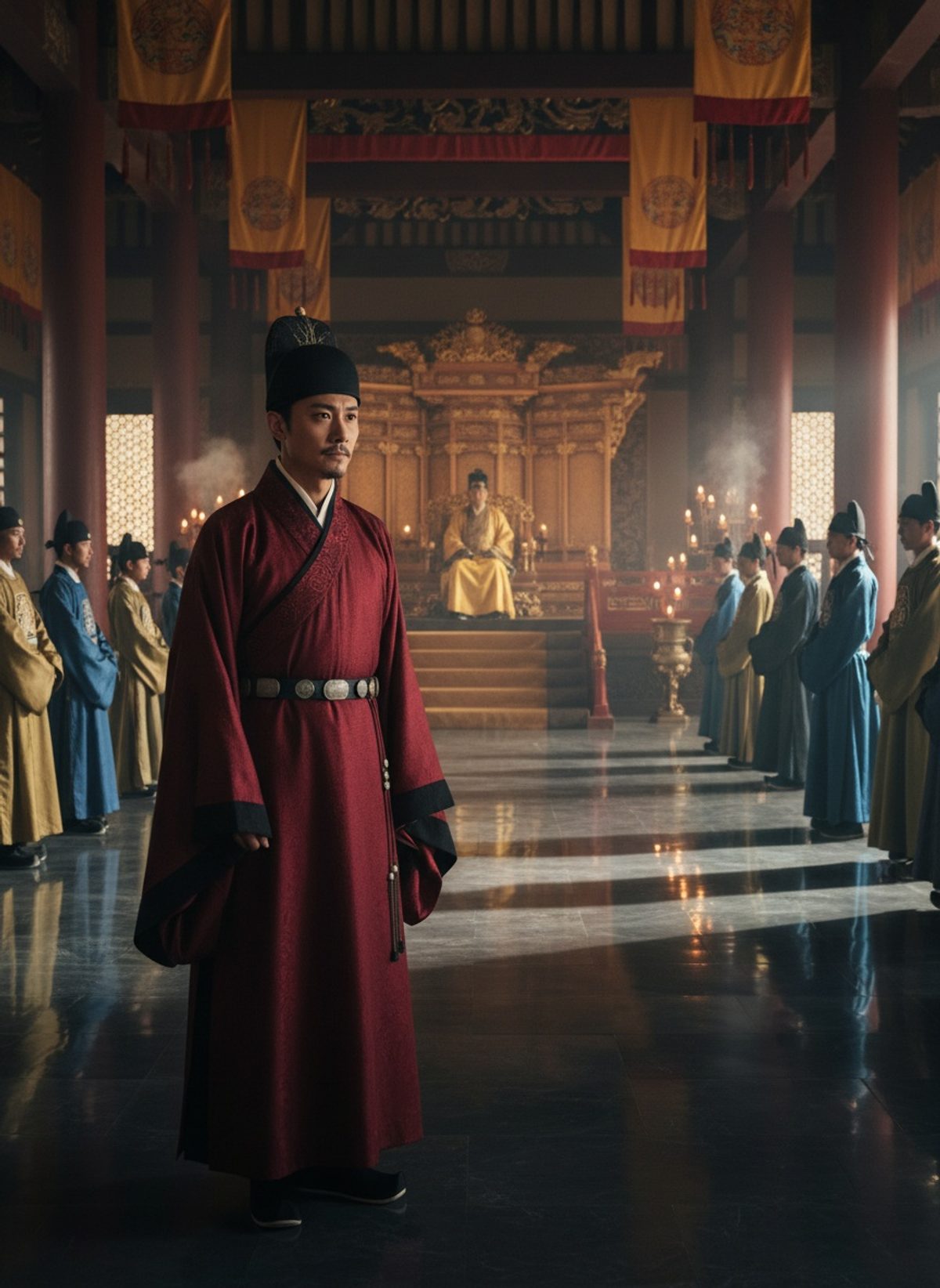
Voices echoed against the high ceilings as courtiers whispered their predictions. The Hall of Clear Ripples, grand and imposing, was wrapped in an expectant hush. At the far end of the room, the emperor sat on his throne, golden robes cascading like water. All eyes were on the solitary figure who stepped forward, a single word demanding the space between their collective breaths: "Mercy." Han Qi, a name almost swallowed by time but not quite, stood unwavering, his gaze fixed on the emperor himself.
The empire was never silent. In 1043 AD, the bustling sounds of Song Dynasty China spoke of progress and turmoil in equal measure. The land was still recovering from the tremors of a catastrophic border war. Each citizen knew the taste of anxiety as their leaders debated revenge versus reconciliation. Thousands of prisoners languished in unseen cells—ghosts of a conflict that had already amassed its grave toll. The court bristled for retribution, yet here was Han Qi, staking his career upon nothing more solid than an ideal.
Han Qi understood what others refused to see, that the true cost of aggression was paid not just in blood but in spirit. As an experienced governor and advisor renowned for his wisdom and integrity, Han Qi had climbed through the layers of bureaucracy. Every nuance in his plea for mercy stemmed from deep conviction and hard-earned insight into the hearts of men. With calm certainty, his voice unraveled the chains imagined and real, offering an alternative to endless cycles of violence.
Tension thickened in the hall, as if the very air gossiped of treason. Every face—aged visages in robes denoting seniority and stern young aides learning power—turned unreadable. They waited for the emperor, Renzong, whose bearings were cast in the crucible of past emperors’ choices, to respond. Renzong's reign was one defined by measured governance; his decisions held the fate of millions. It wasn’t mere words Han Qi offered but a profound challenge to the status quo.
Read next: He Stood Before the Khan. He Freed Ten Thousand.
Imagine the uncertainty roiling within Renzong. The court demanded punishment, equating justice with the severing of flesh and spirit. Behind each clamor for vengeance lurked fear disguised as armor. Yet one man dared to strip away the façade, urging a pardon that would ripple through history's water like a cleansing rain. Indeed, Han Qi’s proposition seemed as audacious as walking untouched through fire. Yet the emperor, known for his contemplative nature, paused—a moment stretched beyond time’s hinge, then nodded his assent.
“Release them all, unconditionally.” The emperor’s voice, clear as a bell tolling peace across a war-ridden province, cut through the residue of disbelief. Against the backdrop of tradition, the walls of the hall absorbed his decree. The emperor’s decision, inseparably tied to Han Qi's bravery, spanned more than an immediate act of clemency. It illuminated the inherent potential for humanity’s redemption, echoing through the realm.
This moment reverberated beyond its immediate confines. Rumors sprang like shoots of bamboo, bending the perception of justice among the populace. Village elders spoke of a time when mercy, not might, swayed a ruler’s heart. Debates ignited around hearths and markets about the nature of strength and forgiveness. Was it not, after all, more challenging to release the grasp of indignation than to wield it like a sword?
Despite what might seem like paternalistic benevolence, Han Qi knew the risks. Though warmly sung in the ballads of future dynasties, his stance faced potential condemnation. Earmarked as fearless by posterity, Han Qi risked imperial favor and the derision of peers—aesthetic frailties in the face of surety though his stand reshaped policy. The emperor saw this; his agreement was both a nod to his advisor’s courage and an embrace of innovation where others saw only the dark.
Read next: She Walked Into the Plague City. The Bishop Had Already Fled.
The irony is perhaps unmistakable: that the essence of power often rests in the unexpected wells of compassion. The emperor's choice unveiled threads of discourse in Confucian philosophy that had lain dormant—discussions of benevolence in rulership, the tempered use of power. Traditions bent beneath the winds of change; that which had seemed solid was now fluid, remolded to accommodate new paradigms.
This tale is more than just a political footnote from an era long enveloped by the sands of time. Historical cycles echo this to modern ears as debates on humanitarianism, leadership, and restorative justice continue. The courage to choose mercy over malice resonates beyond its time—a parallel to contemporary struggles where bravery is sometimes whispering hope amidst a cacophony of despair. In the quiet corners of human interaction, Han Qi's defiance provides a blueprint for those who dare believe in something more substantial than revenge.
As morning light streamed through ancient window grates, illuminating dust in ethereal dance, a single action had begun to alter history’s course. It stands not simply as a moment of clemency in ancient China but as a poignant meditation on the enduring complexity of human morality. For time and again, civilization is built upon the shoulders of those daring enough to name their price for peace, standing steadfast when called upon to define what it truly means to rule.