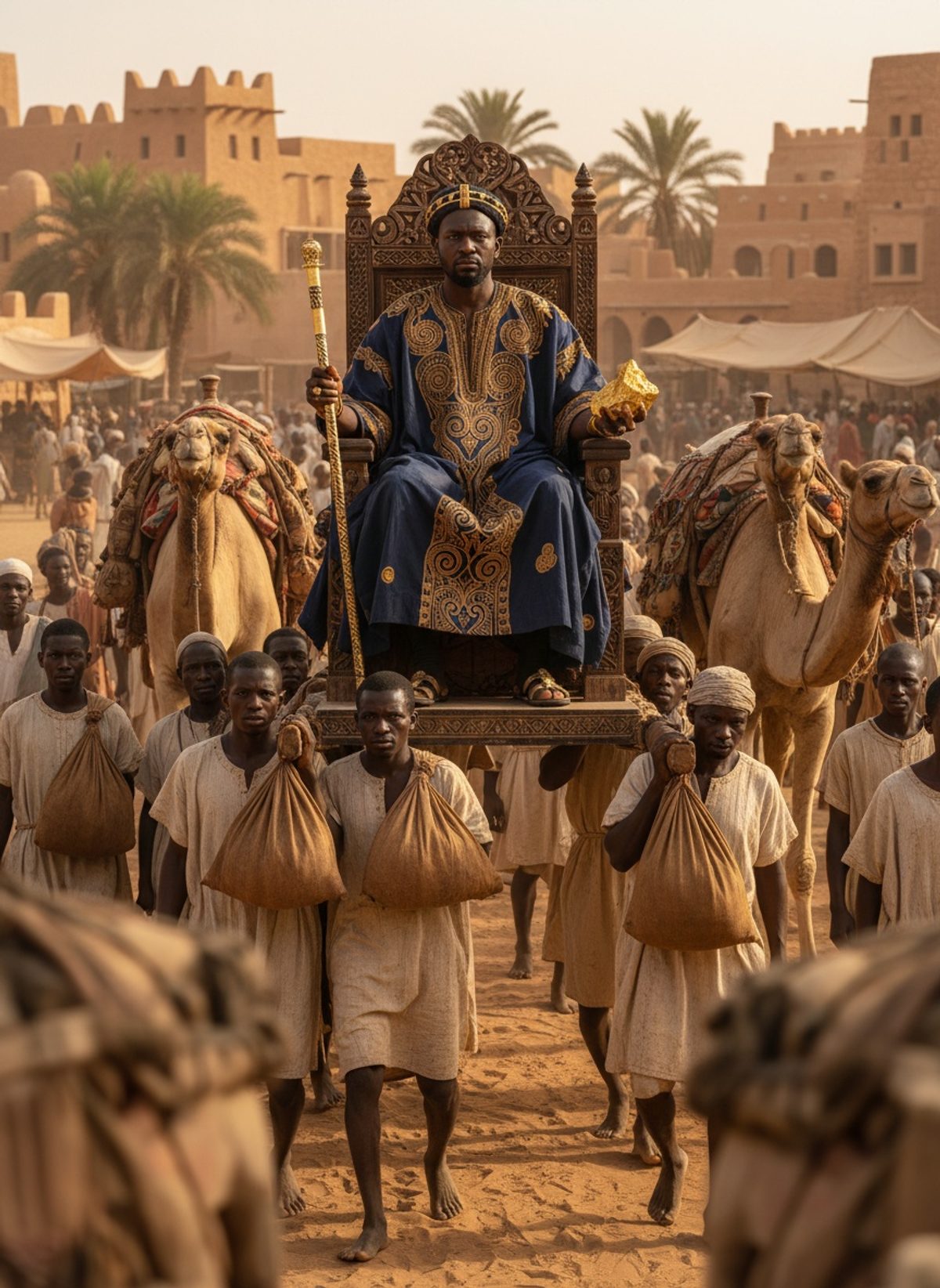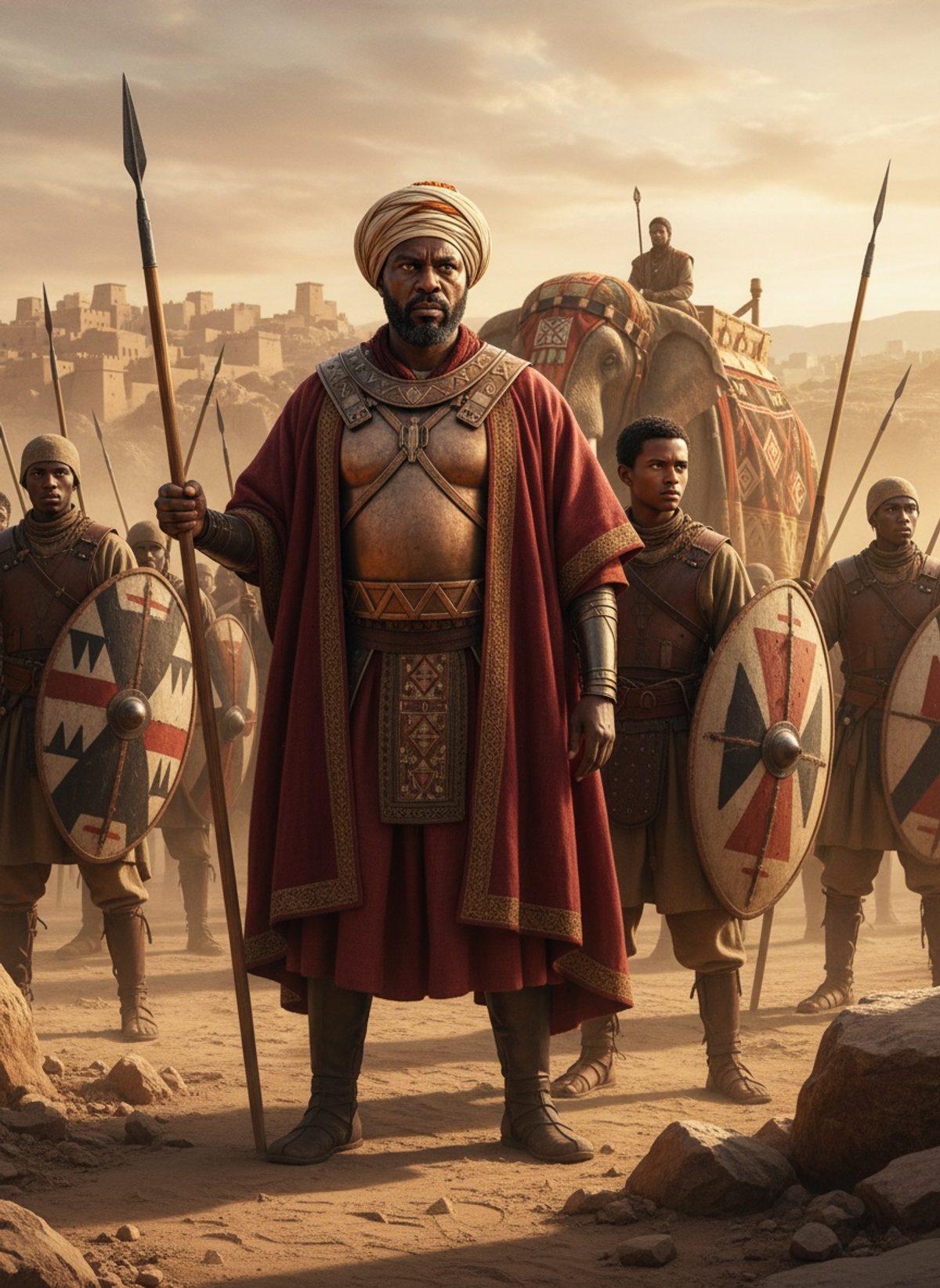
August 1816. The dry plains of southern Africa stretched endlessly under a relentless sun.
The Rise of a Visionary
In the heart of southern Africa, amidst the rolling hills and expansive savannahs, a young leader was quietly shaping a future that none of his ancestors could have foreseen. This was the time of Shaka kaSenzangakhona, the man who would forge the Zulu kingdom from a modest chieftaincy. His ascension to power marked the beginning of an era defined not by its struggles for survival in a harsh environment, but by an unparalleled transformation in military strategy and kingdom building.
Before Shaka, the Zulu were just one of many clans dotting the landscape, their existence a whisper in the vast chorus of African tribes. Inheriting leadership of a small chiefdom consisting of fewer than 2,000 people, Shaka's youth did not betray the genius that lay in his vision. He was not content with the status quo. The change he sought required more than just courage — it demanded innovation. Shaka asked a simple question — a question that would unravel the threads of conventional warfare: What if warriors never stopped moving?
The Art of War Reimagined
Shaka’s revolution began with the instruments of war themselves. Traditional throwing spears, while effective, were replaced with the shorter stabbing assegais — a tactical decision that would become the cornerstone of the Zulu’s military dominance. The assegai allowed for close combat that was brutal and personal, and under Shaka's leadership, it became the fearsome weapon wielded with deadly precision by his warriors.
Read next: Amanirenas Lost Her Eye. She Never Surrendered.
But Shaka's tactical genius did not stop at weaponry. He introduced rigorous military drills that transformed his regiments, known as impi, into relentless and cohesive fighting forces. The warriors trained to cover great distances on foot, their endurance unmatched, thereby eliminating the reliance on slower aspects of troop movement. In battle, their agility and speed were unrivaled, creating a formidable presence that seemed to move like a shadow across the plains, swift and deadly.
The brilliance of Shaka’s strategies didn't lie solely in reshaping the physical aspects of warfare but in redefining the psychological landscape of his enemies. The Zulu ranks, disciplined and capable, became the embodiment of an unstoppable force. Those who were not absorbed into the Zulu empire found themselves overrun, their lands swallowed into the expanding Zulu kingdom. In twelve breathtaking years, Shaka transformed his people from a small community into the most feared military power in the region.
The Expanding Influence
The shockwaves of Shaka's conquests were felt far beyond the lands he governed. Positioned near the mighty Drakensberg Mountains, the Zulu forces extended their reach, altering the power dynamics of southern Africa. Below the surface of these territorial expansions was a story of cultural reinvention. As the Zulu assimilated neighboring clans, they did not merely seek compliance but worked to create a unifying identity under the Zulu banner.
This process was both destructive and creative. Conquered tribes were given the choice of assimilation, entailing the adoption of not just a new rule but a new way of life. Those who resisted faced swift and decisive retribution. Under Shaka’s iron hand, the Zulu nation emerged more than a simple collection of subjugated peoples; it became a centralized, powerful kingdom built on loyalty and a shared national consciousness.
Shaka’s reign was marked by an intense restructuring of social systems, governance, and military framework. What had started as the dream of a singular leader evolved into a new reality for thousands, extending influences that persisted long after his untimely demise.
A Legacy Carved in Tradition
Despite the turbulent path of his rise to power and the oppressive nature of his rule, Shaka’s legacy is undeniable in the fabric of African history. His innovations in warfare not only shifted the balance of military might in southern Africa but altered the region's geopolitical landscape permanently.
Shaka's name, often invoked with a mix of reverence and dread, remains a symbol of both the potential and the peril of unchecked ambition. He was a tactician whose understanding of speed and surprise magnified the effectiveness of his warriors, an empire builder whose strategies went beyond immediate borders and created a cultural and political entity that formally shifted the power dynamics for decades.
The Zulu kingdom, under Shaka, did not merely grow in size; it revolutionized how power was wielded, how communities could be transformed, and how an idea could change the very system of life for generations. It’s a stark reminder of the impact of visionary leadership — when it transcends the mere goal of survival and seeks instead to redefine the landscape in which it thrives.