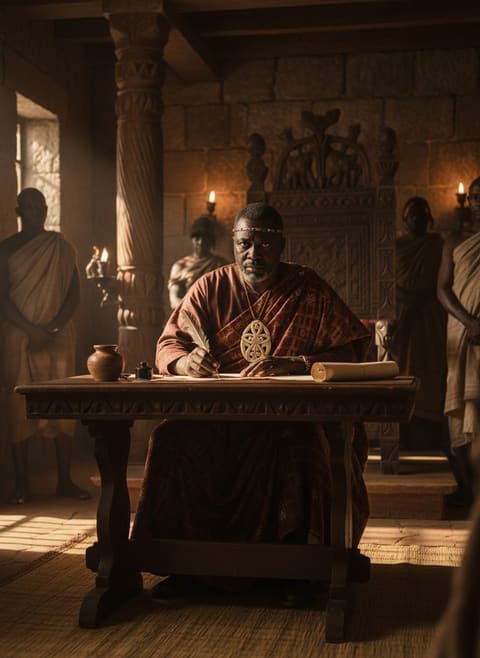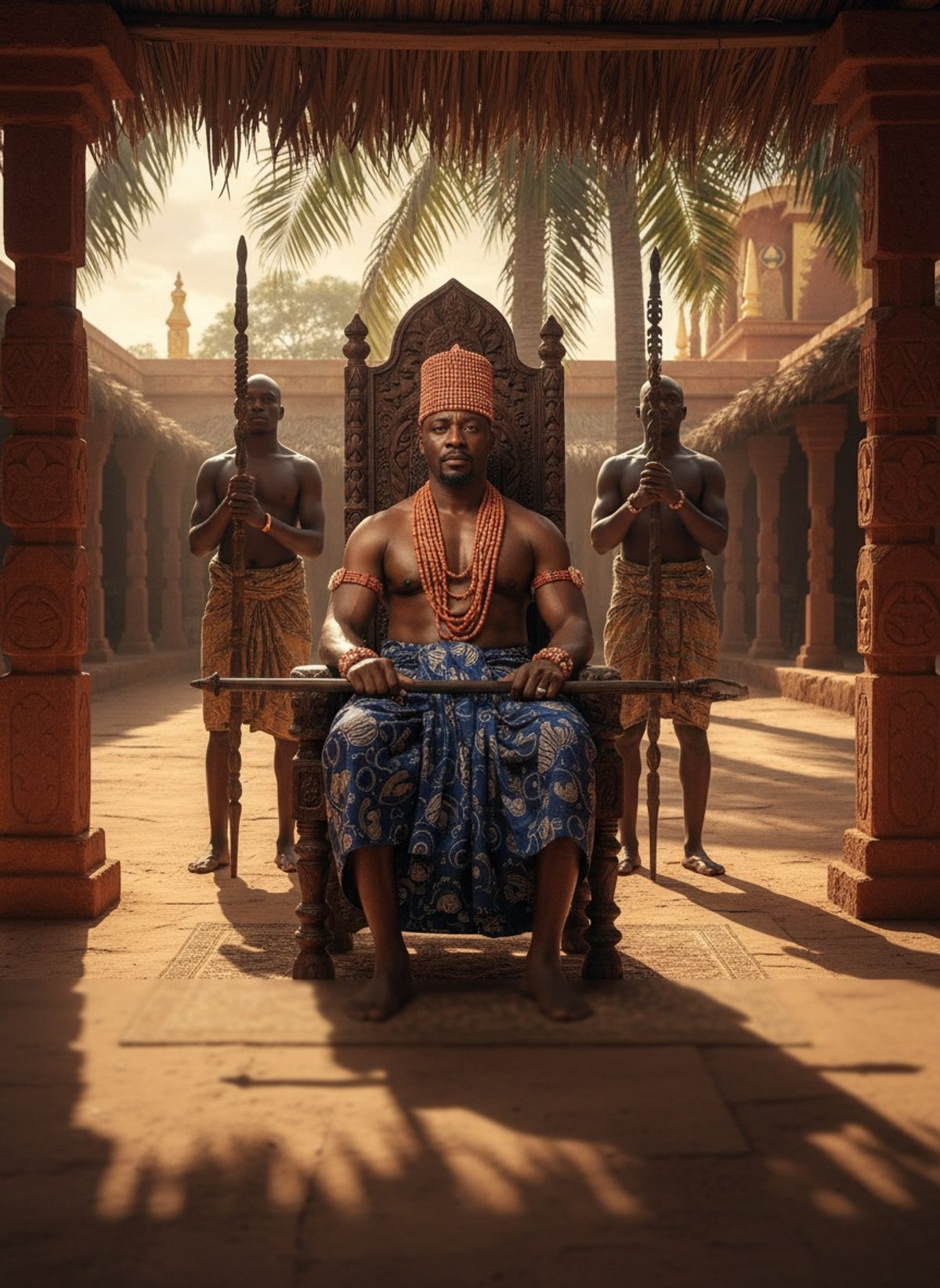
Prince Ogun seized a throne that wasn't yet his. But first, he crossed an expanse of exile that tested every fibre of his being.
Exiled Prince: A Journey of Wandering and Wonder
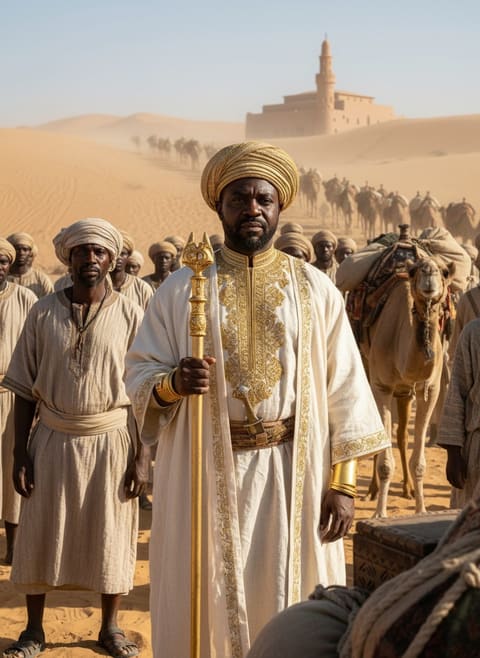
Before he became known as Ewuare the Great, the ruler of Benin City, Prince Ogun embarked on a twisting journey that would forge his destiny. Cast out by family betrayal and political intrigue, Ogun found himself adrift in a world where the elements seemed to conspire against him. Stripped of his royal privileges following a controversial succession scandal, he wandered the vast West African terrains. Each day was a gamble with fate, each shadowy path another test of his resolve.
His experiences weren't just obstacles to be overcome; they were lessons that would later guide him as a monarch. According to oral traditions, Ogun's wanderings introduced him to various cultures and courts, where he absorbed a vast array of magical and herbal knowledge. Tales speak of his encounter with a jungle spirit who gifted him the Agbavboko—an enchanted bag that defied the limitations of space. With this, Ogun wielded a power that enriched his exiled journey with endless possibilities, pulling out whatever he required from its depths.
Further enhancing the mythical aura surrounding him is the tale of the sacred uloko tree. It was said that when Ogun lay under its canopy, it whispered to him a destiny he could no longer deny. His path back to Benin was peppered with other supernatural encounters, including a fiery exchange with an injured lion that left him with a magical talisman. A trinket that, according to legend, gave him the power to manifest any situation he wished. These events, laden with folklore, weren't just narratives of supernatural favor but reflections of a leader in the making. Ogun was gathering the attributes that would eventually define his rule: wisdom, courage, and a meticulous strategic mind.
Read next: She Walked Into the Court. She Left With Her Kingdom.
The Smoky Ascension: Chaos and Rebuilding
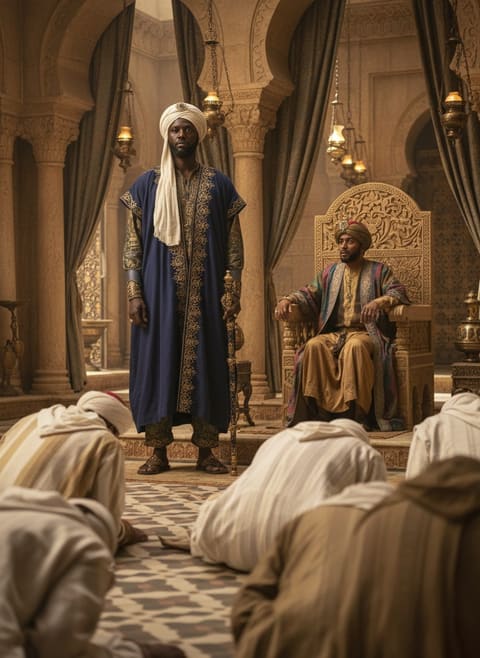
Returning to the beleaguered streets of Benin City, Ogun found a stage set for change. His brother, Uwaifiokun, sat on the throne, but his rule was far from secure. The city's populace lurked in the shadows of destitution while their ruler paraded in grandeur—a disparity that ignited the spark of revolution. With strategic deliberation, Ogun employed his mystical gifts with striking precision. From Agbavboko emerged a bow with a poison-tipped arrow, and Uwaifiokun's reign came to a swift, ignominious end.
The chaos that followed was uncontained and fiery—enough for Ogun to slip into obscurity. Thanks to the selfless act of a slave named Edo, who risked everything to hide him amidst an uprising, Ogun was shielded from the wrath of his brother's supporters. Edo's subsequent death at enemy hands only fanned the flames of Ogun's determination. He reclaimed his place and assumed the name Ewuare, meaning "the trouble has ceased," marking a new era of peace and governance.
Ewuare's ambition didn't stop at merely ascending the throne. No sooner had he settled into his rule than he commenced the most transformational rebuilding of Benin City. With organized labor at his disposal, the once-ash-cloaked city was invigorated. Streets were lined with trees of sacred significance, and homes arose from the ruins like phoenixes from flames. The Portuguese visitors who ventured into this thriving hub returned awestruck, tales of its grandeur echoing across continents.
Empire Forged Through Grief and Governance
With the ashes of turmoil behind him, Ewuare's reign saw the Benin Empire at its most expansive. His dynamic governance model mirrored the depth of his exile-learned lessons, marking a departure from the past traditions shackled by the uzama, the hereditary chieftains of Benin. By reforming the political structure, Ewuare fortified his authority, ceasing the long-standing tug-of-war with the uzama and repositioning the monarchy as the unequivocal center of power.
Read next: Ahmad Baba Was Chained. He Taught From His Prison Cell.
His renovations in the architectural and artistic realms weren't mere embellishments. They were the physical manifestations of a broader cultural renaissance. The city wore its new visage as if to declare its readiness for a future emancipated from its past shadow. No detail was too small; from the placement of ceremonial trees to the rhythm of the city's festivals, every element was curated to reinforce the empire's cohesion and prosperity.
Fleeting moments of personal loss marked Ewuare's path, shaping policies with an undercurrent of humanistic empathy. His dedication to urban planning wasn't just inspired by aesthetic values, but a vision of sustainable progress. The roads he carved, the walls he established, and the territories he expanded not only fortressed his empire but united a diverse multicultural tapestry under a single banner.
As the tide of history flows, the tale of Ewuare the Great transcends its chronology, leaving a legacy far richer than the gleaming façade of Benin City. His story isn't a mere account frozen in time; it's a dynamic fabric woven with wisdom about resilience, forgiveness, and the transformative power of grief. In an age where the weight of governance and fairness still bears heavily, Ewuare's journey compels us to consider not just the empires we build, but the values we root them in. His is a legacy that underscores the power of rebuilding; not only of cities, but of spirits and ideals. Ewuare’s Benin was an empire crafted not just in walls and roads but in the aspirations kindled by an exiled prince who returned, not to conquer, but to construct. The city he left behind was indeed a monument to the lessons gleaned on that long path through exile—a monument as enduring as the sturdiest palace and as broad as the empire itself.