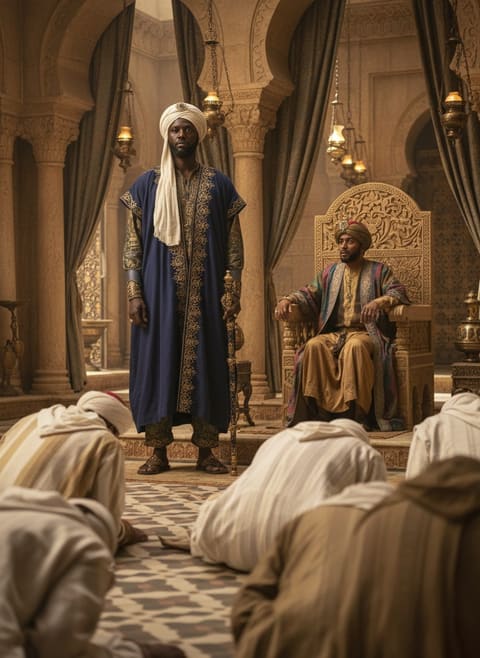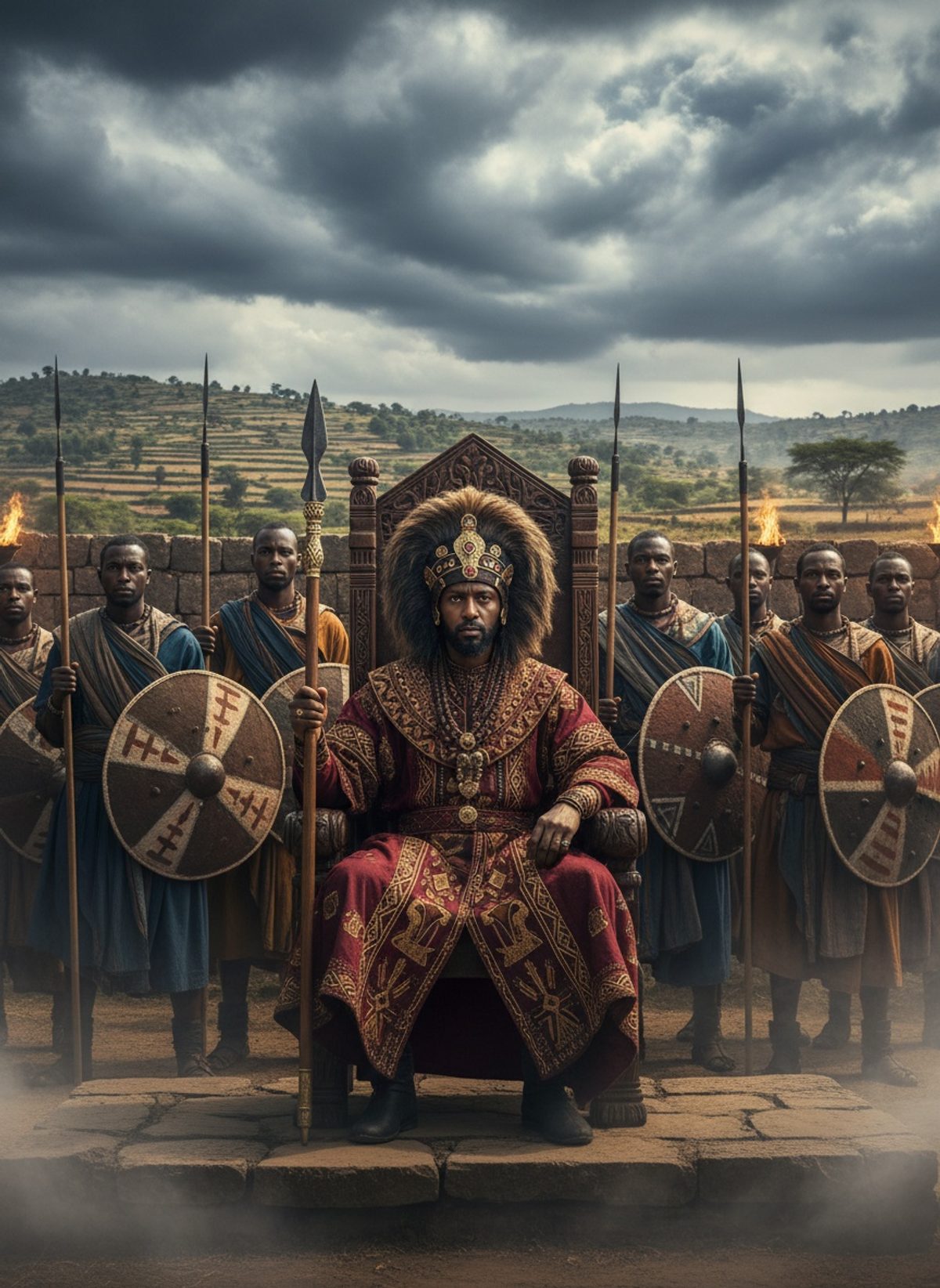
The clash of swords and the echoed cries of war reverberated through the rough terrain as Emperor Amda Seyon I personally led his forces into the heart of enemy lands. Dust and the scent of mingled sweat and steel thickened the air as his Ethiopian warriors charged against adversaries whose lands had barely known the tread of such a formidable Christian host. This was 1329, and Amda Seyon I was orchestrating a symphony of warfare across the vast and volatile frontier of medieval Africa.
Ethiopia, encircled by five hostile Muslim sultanates—Ifat, Dawaro, Hadya, Sharka, and Bale—had every reason to feel threatened. But Amda Seyon I, ruling from the heartland of this nascent Christian empire, was a man of impossible resolve. Rather than waiting for a siege, he chose the bold path of marching directly into hostile territory, demonstrating the might of the Solomonic dynasty he so fervently preserved.
His campaigns of 1329 catapulted him into legend not just among his contemporaries, but echoing through the annals of history. With his title, Gäbrä Mäsḳal—"Servant of the Cross"—emblazoned across the Ethiopian consciousness, Amda Seyon became both a defender of faith and a tactician without parallel. Yet, the king's rise to power was no foregone conclusion. Gossip, court intrigue, and vague whispers of his questionable lineage marked the early years of his ascent. Monks accused him of incest for his union with Jan Mogassa, a concubine of a former emperor. This could have been his downfall, yet he deflected the accusations, claiming sonship not of his immediate father, Wedem Arad, but of an uncle, Qedma Asgad—an assertion shrouded in more mystique than clarity.
Marching swiftly with his well-drilled Abyssinian army, Amda Seyon was a strategic visionary who understood that Ethiopia's landscape was as much a weapon as his own sword. The Ethiopian highlands provided a natural bastion against outside invasions, and he turned this knowledge into an advantage as he tackled the encroaching sultanates. In a display of audacity and determination, Amda Seyon laid waste to the armies of his adversaries in swift succession. He shattered the resistance of the Ifat and Adal, leaving these realms vulnerable and subjugated.
Read next: Ewuare the Great Rebuilt Benin. His Grief Made a City.
He was not merely on a quest for territorial aggrandizement; Amda Seyon's broader strategy was to establish a shield against Muslim encroachment that threatened the cultural and religious heart of Ethiopia. The campaigns not only added territories under his direct control but brought the light of Christianity into regions that had long resisted it. This marked the beginning of a zeal for proselytization and integration that would ripple for generations.
Much of our knowledge of these events comes from the chronicle known as The Glorious Victories, a narrative dripping with the vibrancy of eyewitness reportage and yet countered by speculation around its origins. Though some historians, like Bertrand Hirsch, suggest a later compilation date for these records, others like Edward Ullendorff argue convincingly for their contemporaneity, citing the compelling, lived-in details captured in the text. The rhythm of war, the personality of Amda Seyon, the triumph of determination—Ullendorff believed these could only have been documented by someone who had stood at the emperor's side.
Read next: She Walked Into the Court. She Left With Her Kingdom.
Amda Seyon's campaigns were not just about overcoming armies; they were about securing a legacy. By successfully imposing servitude upon the previously hostile sultanates, he did more than expand boundaries: he founded a narrative of Ethiopian invincibility and Christian perseverance. The new vassal sultanates did not merely bow in submission; they were woven into the fabric of Amda Seyon's Ethiopia, where they would thrive under a new politico-religious order that would endure long past his reign.
Yet the story of Amda Seyon I's triumph is more than mere conquest; it is a tale of identity and survival, a King turned crusader, forging a new era in the Horn of Africa, with ripples still visible in the geopolitical borders today. While medieval Europe lay wracked by frequent crusades of its own, the Horn of Africa had its own unfolding epic. Amda Seyon's ingenious strategy and sheer force of will illustrate a pivotal moment in African medieval history—the crowning of the Solomonic dynasty not as mere rulers, but as architects of an enduring Ethiopian identity.
In the far-reaching vista of history, the story of Amda Seyon I stands, not just as a testament to Ethiopia’s martial legacy but as a resonant reminder of interfaith dynamics that have shaped civilizations. It reminds us how borders on maps often belie the deeper cultural and religious entwinements honed by centuries of war and peace. As we parse the annals of such transformative epochs, we are confronted with the perennial human struggle for sovereignty and the will to carve out a place in a world ever on the brink of flux.