He was a confidant of Pharaohs. He held a title that heralded the dawn of medical history.
The Multifaceted Life of Hesy-Ra
In the vibrant tapestry of ancient Egyptian society, few figures have captured the imagination of historians quite like Hesy-Ra. Living circa 2650 BCE, Hesy-Ra served during the reign of Pharaoh Djoser and possibly under Sekhemkhet. He was a high-ranking official whose life was as varied as the striking titles he held, which paint a picture of a man who was integral to both the administrative and spiritual life of the time. Beyond the titles of "Confidant of the King" and "Chief of the Scribes," Hesy-Ra is notably recognized for bearing a title that is believed to mean "Great one of the dentists." This designation marks him as the first named physician in recorded history, although ambiguity over the translation leaves room for speculation about his precise role in the realm of dentistry or medicine.
As if his medical prowess weren’t enough, Hesy-Ra’s name—linked to the sun god Ra—points to his elevated status. Only a select few were privileged enough to connect their names to a deity, although they were forbidden from using the sun disk hieroglyph reserved exclusively for the Pharaoh. This exclusive connection underlines the reverence in which he was held, a man of science and spirituality woven into the very fabric of society. Yet, for all his titles, it’s the human side that resonates, illustrated in the artistic depictions on his tomb panels that capture the trajectory of a life lived close to power.
An Artistic Testament in Cedar and Stone
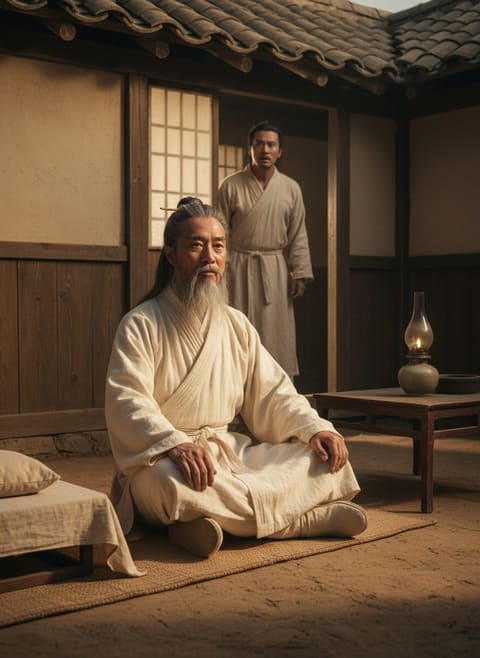
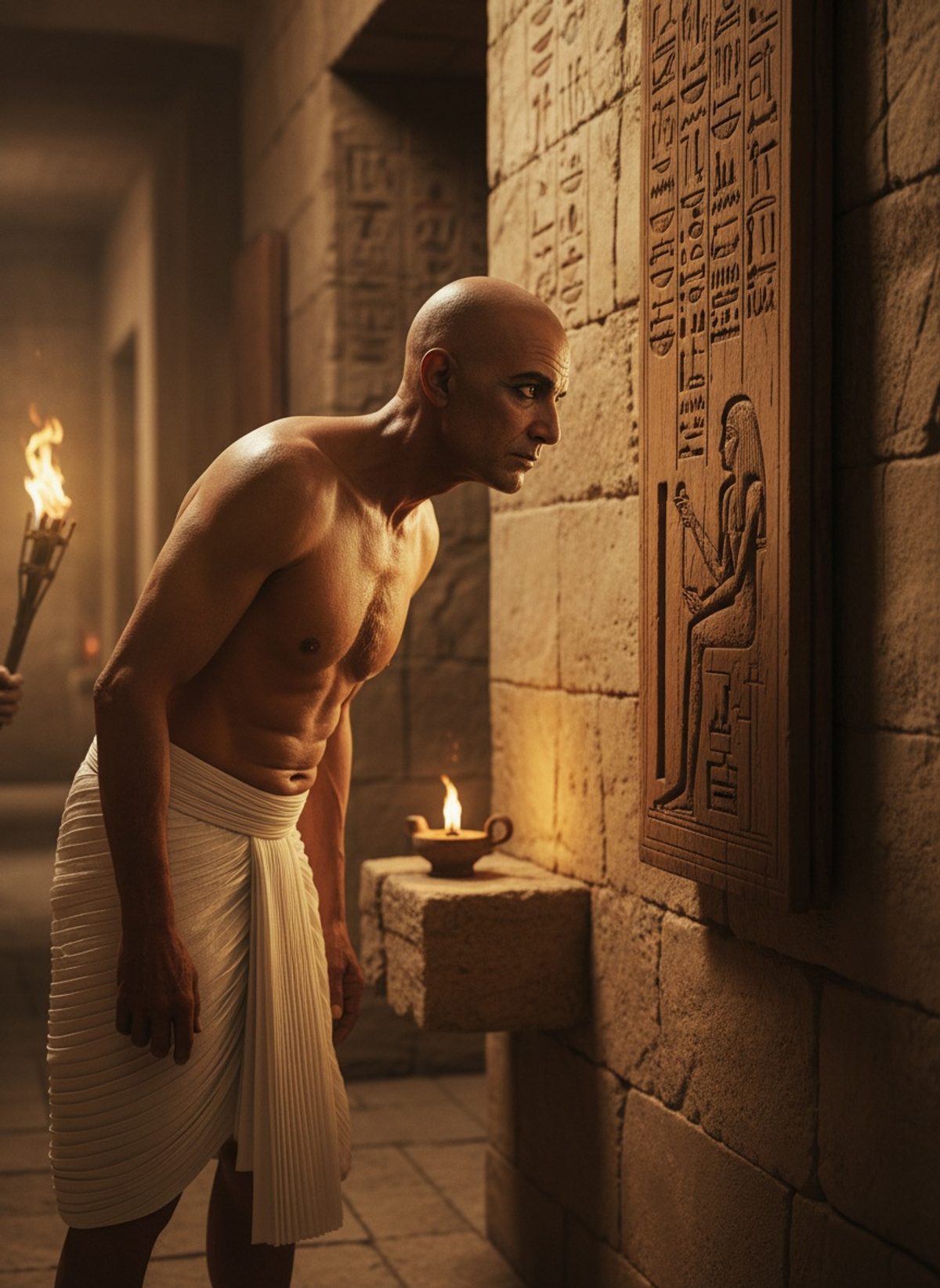
Hesy-Ra's tomb, an archaeological wonder nestled near the Step Pyramid of Saqqara, stands as a canvas where his life's story is unfurled in vibrant detail. The tomb features richly decorated cedar wood panels, which archaeologists marveled at for their state of preservation. On these panels, an artist rendered Hesy-Ra at various stages of life: a young man at the dawn of his career, robust and dignified in middle age at the peak of his influence, and finally an elder, sagacious and contemplative in his twilight years. The progression is more than just an artistic choice; it’s a visual narrative that tracks time’s inexorable march reflected in the changing landscapes of the human face.
Read next: She Said No to the Company. She Saved Thousands.
The tomb’s stunning artistry extended into vibrant wall paintings, which harbored a symphony of colors—black, white, yellow, green, and red—and motifs that echoed the daily rhythms of his world. The corridors were imbued with figures like rhomboids and a reed mat imitation designed to imitate the textures of cloth. The level of detail showcases the cultural significance placed on visual storytelling and preservation, an encapsulation of Hesy-Ra's esteemed position not just in life, but assuredly in death.
A Whisper of Medicine in the Stone
While Hesy-Ra's precise role within the field of medicine remains a tantalizing riddle, it’s his title, "Great one of the dentists," that seduces our curiosity. Should the translation lean towards dentistry, his acknowledgment as a pioneer for this specific field of medical practice isn't just recognition; it represents the emergence of named medical expertise in human history. However, translations that interpret "ibeḥ" as "ivory" suggest that he may have been an artisan of sorts, a figure skilled in the craft of ivory cutting, a common practice in the early dynastic periods.
This duality in translation tantalizes Egyptologists as a compelling study of ancient language layering practical and ceremonial functions. Though there remain gaps in our understanding of precisely how Hesy-Ra served as a medical figure, his carved legacy speaks volumes of the society’s transition toward specialized roles and the nascent esteem for the healing arts.
The Legacy of a Name
The resonance of Hesy-Ra’s name over the millennia illustrates a fundamental human desire: to remember and to be remembered. Before him, healers worked in anonymity, their contributions merging into the broad tapestry of ancient life. After him, medicine had its first luminary, a personal reflection of universal themes of service, artistry, and expertise that highlighted the symbiosis between life and afterlife central to the Egyptian ethos.
Read next: He Watched Her Drowning. Then He Dove In.
His legacy suggests that even in the most ancient societies, there was a profound respect for the knowledge of healing and a recognition of professional identity. Hesy-Ra's memory echoes in every name of every healer that followed, painting a lineage of compassion and care that reaches through the shadows of time. His tomb stands not simply as a marvel of ancient construction but as a testament to the enduring human spirit, our collective memory, and the quest for meaning that defines what it is to be human.
The Inheritance of Hesy-Ra
In the vast chronicle of medicine, Hesy-Ra’s story stands as a beacon that sheds light on the roots of a discipline that now touches every corner of our world. His life tells us that from the earliest days of organized society arose individuals whose lives were dedicated to the enhancement of human welfare. The titles and artistry that surround Hesy-Ra invite us to peer back into the mystique of ancient Egypt, revealing an ardor for knowledge and reverence for those who wield it.
His story strikes a chord in a world where, millennia later, we remain enraptured by progress in medicine, ever grateful for the foundations lain by those who came before. In Hesy-Ra, we find a touchstone—a reminder that history is not just a record of events but a testament to the enduring human heart and intellect.