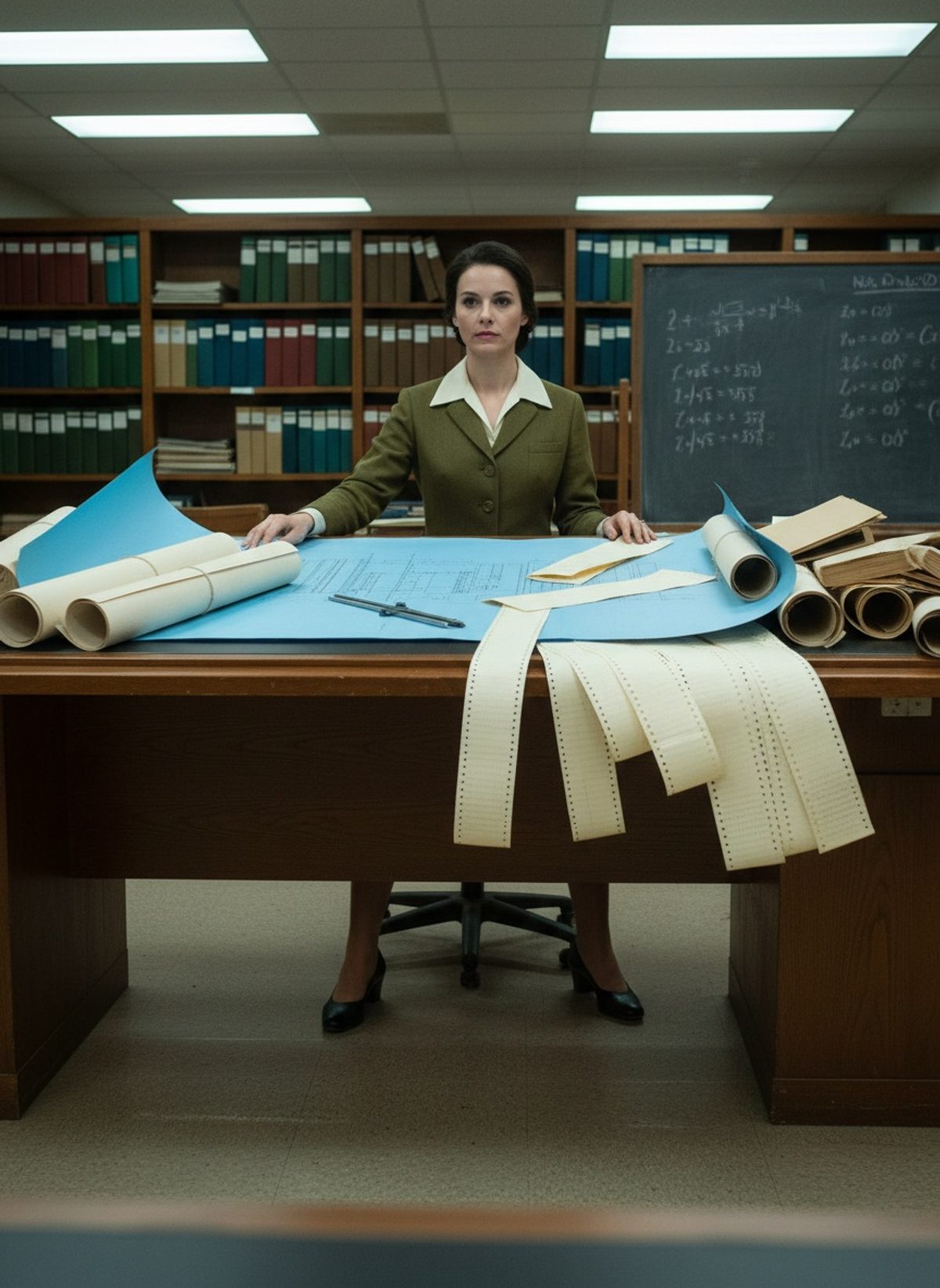
Judith Love Cohen was an aerospace engineer at a time when very few women pursued such a career. She didn't take maternity leave when she went into labor; instead, she brought her work to the hospital.
The Woman Behind the Mission
In 1969, as the world focused on the ambitious missions to the Moon, Judith Love Cohen was making significant contributions from behind the scenes. An accomplished engineer, she worked at a time when aerospace was overwhelmingly male-dominated. Her office was a realm of ambitious projects and pressing deadlines, none more significant than the Apollo programs that sought to put humans on the lunar surface. Among her contributions was a crucial system for the Apollo spacecraft, critical for its guidance and navigation.
Cohen’s work was instrumental in the success of these missions, and her technical acumen earned her respect in a field not known for gender inclusivity. She was one of those rare individuals whose expertise and determination broke through the glass ceiling long before the term became commonplace. Through tireless dedication, Cohen helped shape one of the most groundbreaking achievements of the 20th century. Still, her personal story stands as one of the most compelling narratives of the unsung heroes of space exploration.
The Challenge of Apollo 13
The Apollo 13 mission, launched in April of 1970, was meant to be NASA’s third Moon landing. However, it quickly turned into a harrowing tale of survival when an oxygen tank exploded, crippling the spacecraft and putting the lives of its three astronauts in peril. As responsibility fell on control rooms filled with the best aerospace minds of the era, the fate of the astronauts relied heavily on the guidance systems developed by Judith Love Cohen and her team.
Read next: He Planted a Forest Where Nothing Grew. It Worked.
Years earlier, Cohen had played a crucial role in designing the abort-guidance system, an innovation that would become essential after the infamous "Houston, we’ve had a problem here" call. This system provided the crew with a way to navigate home, bypassing the vehicle's primary system, which no longer functioned. The challenge was unimaginable, but thanks to the foresight and engineering excellence of those like Cohen, Apollo 13 could return to Earth safely.
The Day She Made History
While such technical achievements bear their own merit, Cohen's personal focus on completing her task was on full display on a particularly important day. It was presumably a hectic blend of anticipation and concentration when Judith Love Cohen went to the hospital to give birth to her fourth child. Amid the commotion that naturally accompanies such a life event, Cohen didn’t cease being an engineer. Instead, she carried her work with her, determined to solve an engineering problem that needed her attention.
Stories from colleagues suggest she diligently reviewed and solved the problem right there, amidst the waiting and the labor pains. Only after it was done did she focus on bringing a new life into the world. For Cohen, personal and professional lives intertwined with a dedication that seemed second nature. Her child's birth and her contribution to the success of future missions became synonymous with each other, emphasizing how deeply she valued both roles in her life.
An Unspoken Legacy
Judith Love Cohen's story is not only about technical prowess but is also a testament to her quiet resilience and the challenges faced by women in STEM fields during that era. While much of the recognition went to the male astronauts and engineers whose feats captured the public imagination, Cohen's work was arguably just as critical and groundbreaking. Her narrative, however, didn’t always make the headlines; instead, it thrived as a hushed legend among those who knew the integral role she played in those missions.
Read next: He Walked Into the Plague. The Emperor Sent Him Anyway.
Her contributions extended beyond the confines of the NASA programs. Cohen actively encouraged young women to pursue careers in engineering and the sciences, serving as both a mentor and a role model to those who followed her. She left an indelible mark not just through her technical achievements, but also by paving the way for more inclusivity in fields she helped revolutionize. Her legacy persists in the stories of success found in female engineers making strides today.
Breaking Barriers and Setting Examples
The story of Judith Love Cohen matters because it challenges the conventional narratives of achievement and recognition. It reminds us that history often overlooks the crucial contributions of those whose paths were less visible, but without whom major milestones could not have been reached. As the modern era continues to celebrate the achievements of women across all disciplines, Cohen's story serves as a poignant reminder of the barriers early trailblazers faced—and overcame.
In remembering Judith Love Cohen, we celebrate not just the success of a critical mission but the strength of character and will it took to ensure such success amidst personal demands. She teaches us that dedication knows no bounds, and in doing so, she encourages future generations to blend passion with perseverance as they reach for the stars themselves.