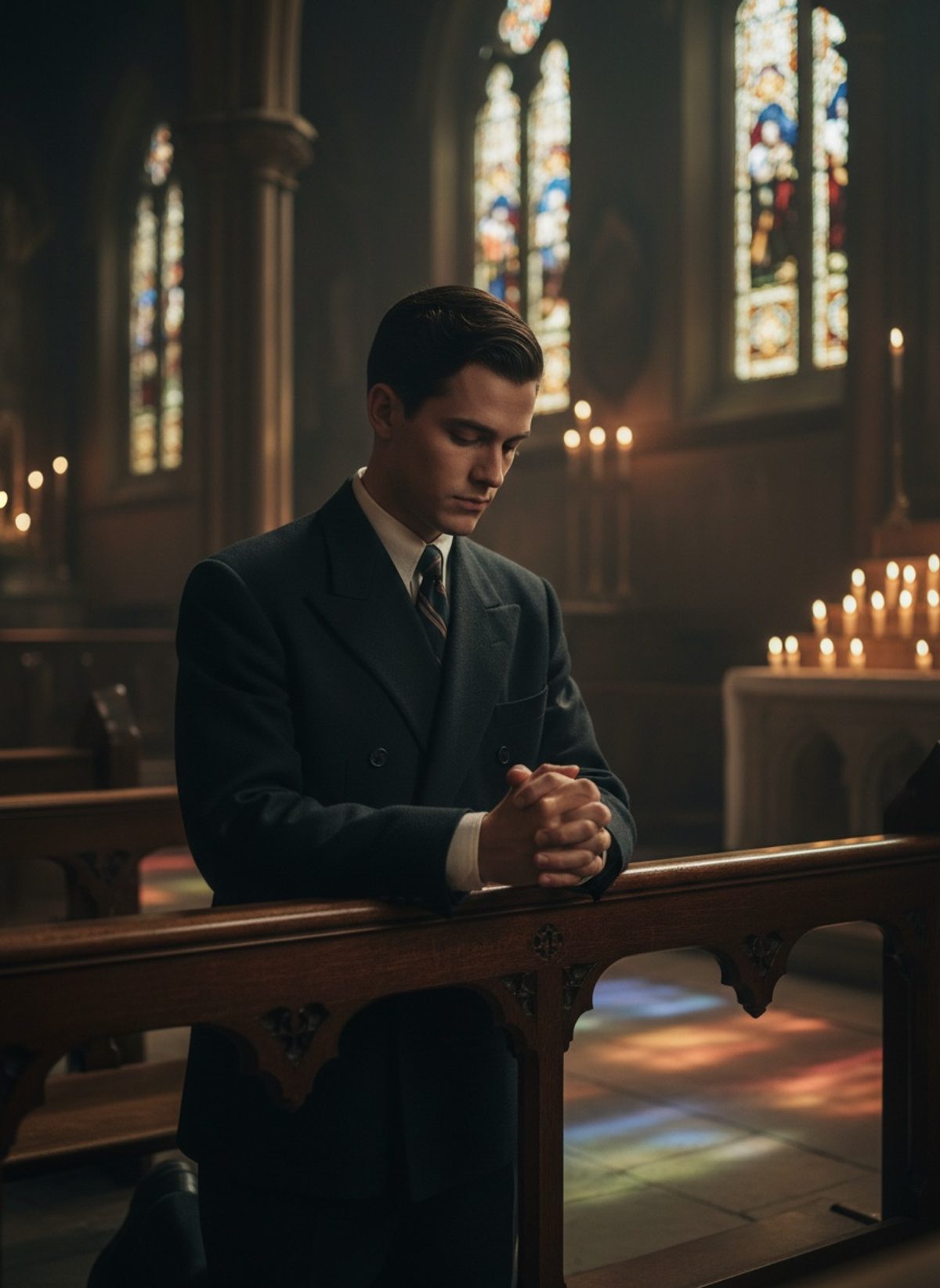
The chilling winds of a Chicago winter swept through the streets, crisp and relentless, as they whispered across the icy sidewalks. The sun had long dipped below the horizon, daylight folding into the comforting embrace of an urban night. Beneath the moody glow of streetlights, a solitary figure walked with purpose toward a small, modest church nestled among the brick buildings. Inside, the warmth was immediate, not just from the heaters but from something more ethereal, a sense of refuge. It was here, in this sacred space, that desperation and hope converged upon the path of young Danny Thomas. His pockets held only seven crumpled dollars, and his thoughts were consumed with the gravity of his circumstances. With a pregnant wife at home and uncertainty shadowing his every step, the stakes were high. On his knees, Thomas made a fateful promise: if God showed him his purpose, he vowed to repay the kindness by building a shrine. Little did he know then that his journey would lead to a sanctuary for children from across the globe.
The Comedian's Leap of Faith
The early 1940s in America were a time of profound change and instability. War loomed on the horizon, and the nation was only beginning to stir from the Great Depression's grasp. Among those grappling with the uncertainty of the era was Danny Thomas, a struggling young comedian who had left his comfortable beginnings in Michigan to seek fame and fortune. It was a path strewn with challenges, rejections, and moments of profound self-doubt. Each day was a new struggle for Thomas to secure gigs, juggling various odd jobs just to scrape by. He often questioned the wisdom of his choice to pursue a career in entertainment when bleak reality was often his only audience.
Risk or retreat? For many, this was the question that dominated the period, and for Thomas, the risks felt monumental. On that fateful day in 1940, with his last few dollars clutched like driftwood to a drowning man, Danny walked into St. Jude's Shrine, a place dedicated to the patron saint of hopeless causes. Perhaps it was divine intervention or simple serendipity, but as he prayed for guidance, he found a renewed sense of resolve. Imbued with a promise to bring aid to those in need, Danny Thomas left the church, holding fast to his leap of faith. With a newfound mindset, he set his sights firmly on overcoming the multitudinous auditions and setbacks that were as intrinsic to show business then as they are today.
A Dream Realized in Neon
As the 1950s flourished, America found itself in the grip of a post-war economic boom, and entertainment blossomed in tandem. Emerging out of obscurity, Danny Thomas, with his quick wit and natural charm, finally snagged a slice of the limelight. Success found him gradually through radio, and later, television. His show, aptly named The Danny Thomas Show, became a smashing success, drawing widespread acclaim and popularity. With each passing season, his stature and financial earnings grew, allowing him to remember the promise whispered in the dimly lit church years before.
True to his word, Thomas dedicated himself to fulfilling his promise of constructing a sanctuary. Yet, rather than a mere shrine, his vision expanded into something far more groundbreaking—an institution where the world's most vulnerable patients could find hope and healing. In 1962, he founded St. Jude Children's Research Hospital in Memphis, Tennessee, a place where all children, regardless of race, religion, or economic status, could receive care without cost to their families. It became one of the first institutions to pool resources and expertise as part of a global mission to combat catastrophic childhood diseases.
Read next: The Sliding Window That Fed an Army and Changed Fast Food
Thomas's foresight and the hospital's work led to revolutionary advances in pediatric healthcare. From treatment to research, St. Jude's was remarkable not merely for its spirit of humanitarianism but for the genuine changes it inspired in the landscape of medical care. The institution adopted a bold "no child should die in the dawn of life" motto, a stark departure from the era's often bleak prognoses for childhood maladies. Families watched their children enjoy renewed vitality as survival rates for diseases like leukemia increased dramatically thanks to breakthroughs incubated within those walls.
Promises Etched in Time
Today, the legacy of Danny Thomas and the pledge made on a cold Chicago evening continues to resonate powerfully around the world. St. Jude Children's Research Hospital stands as a beacon of hope and a testament to what a single promise can become when fueled by dedication and sincerity. What began as a knee-bent plea for guidance in a small shrine grew far beyond what Thomas envisioned, touching not just the lives of patients, but of countless healthcare experts and researchers who contribute to its ongoing mission.
The lessons from this historical narrative transcend the bounds of time, serving as a luminous example that sometimes, all it takes is a leap of faith for monumental change to take root. Danny Thomas's journey from economic desperation to launching an institute that fundamentally changed pediatric health care reminds us of the profound power of determined benevolence. In the shadows of adversity, the human spirit's capacity to emerge resilient and fulfilled can initiate ripples that resonate across generations. As we move through an era marked by challenges of scale and complexity, this story—rooted in a personal promise—serves as a powerful reminder of the transformative impact that belief and action can have on millions of lives. And it all started with seven dollars and an unyielding resolve to make good on a promise made in a simple Chicago church.