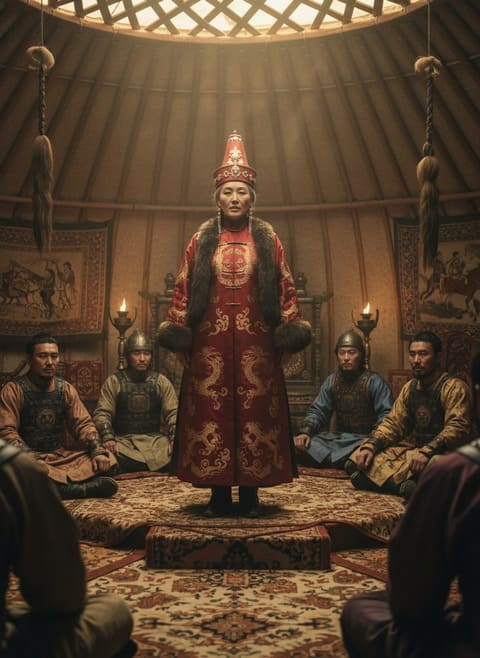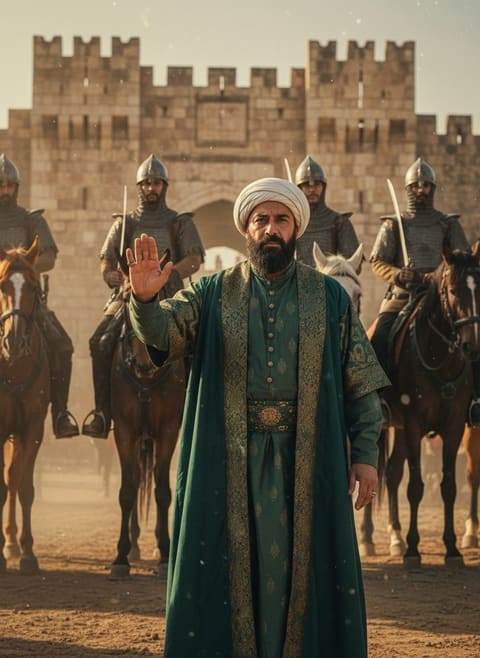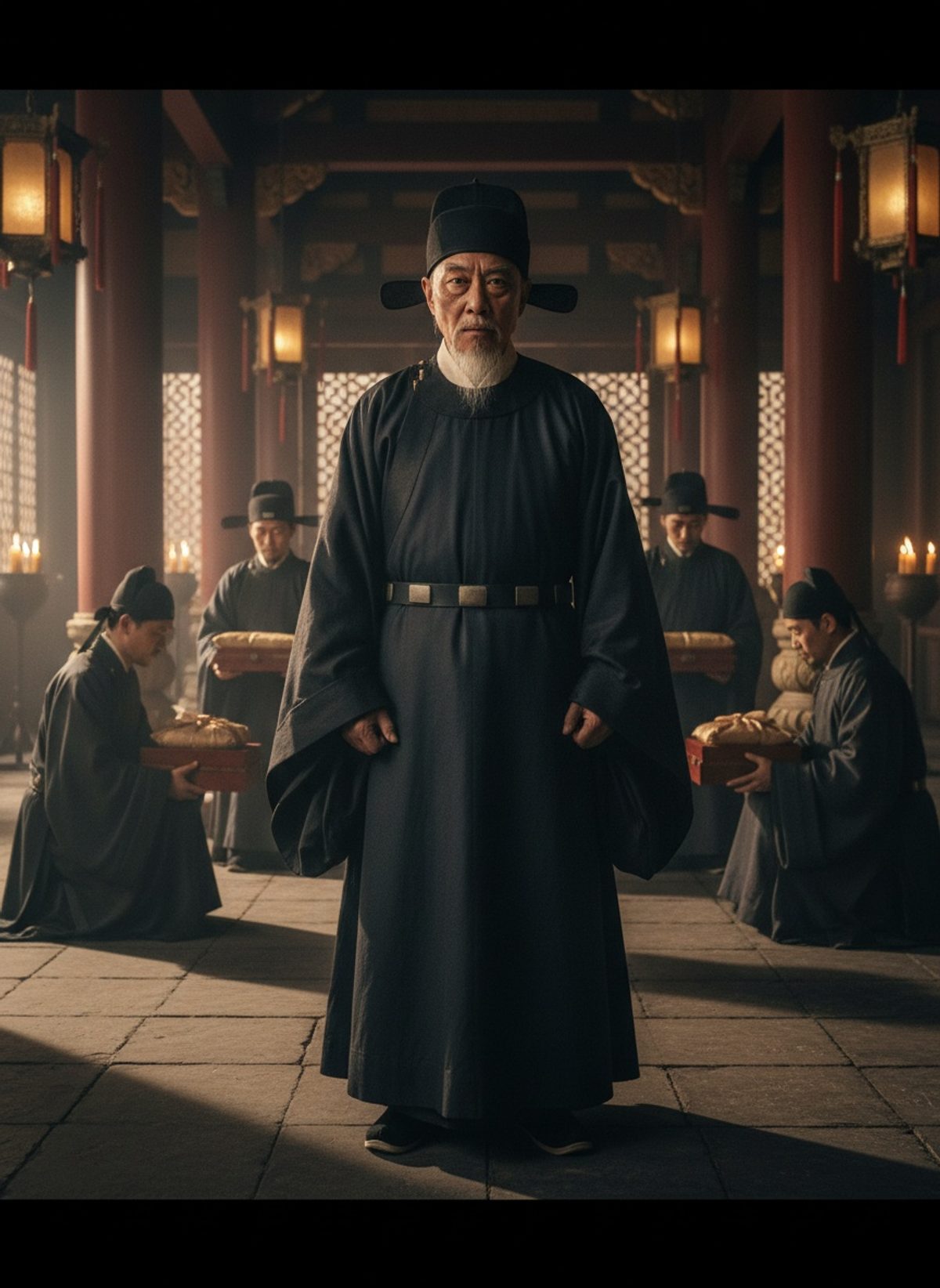
He feared no name, but justice feared none either. Bao Zheng refused a sword at his side, for his words alone could bring empires to their knees.
The Unexpected Integrity of Bao Zheng
In the sweltering summer of 1063 AD, as the lavish halls of the Song Dynasty's palace mourned the death of Emperor Renzong, an unusual scene unfolded. While grief soaked the city, something else brewed — a test of moral fibre among the court's most esteemed officials. Treasures were distributed as tokens of imperial gratitude, the likes of which hadn't seen such scales of distribution since generations past. Gold, jade, and silk flowed freely, a tradition mingling sorrow with avarice. Yet, among the throng of grateful recipients, one figure stood out like a granite monument amidst shifting sands.
Bao Zheng, known across China as a formidable judge, walked away from the riches without so much as a second glance. His stand left a shiver in the silent halls. Others may have seen a chance for reward, Bao saw an opportunity to reaffirm his allegiance to justice. He had built a reputation, not as a man to whom power was owed, but as one to whom the truth was sacred. His refusal was both a statement and a challenge, a proof of an incorruptible spirit that would not trade integrity for gold.
A Legacy Forged in the Courts of Justice
Born in a time when corruption could touch even the seats of power, Bao Zheng was uniquely gifted with a moral compass that never quivered. His judgements, both feared and revered, struck down the powerful and protected the commoner. As the chief justice of the Imperial Court, he approached each case with unwavering fairness, his decisions echoing through the annals of Chinese folklore not merely as law but as living stories of equity.
Read next: She Walked Into the Plague City. The Bishop Had Already Fled.
To a populace weary of corruption, Bao's presence served as a beacon. It is said that on more than one occasion he forewent the luxury of his position, opting instead to conceal his identity and investigate the plight of his people firsthand. This personal attachment not only strengthened his bond with the common folk but also fostered an unparalleled respect that extended into the furthest reaches of the empire. Bao's legacy, thus, was not simply an array of court decisions, but a living testament to what righteous governance could achieve.
The Velvet Glove of Governance
Wisdom ruled as Bao Zheng's ally, not force. He wielded his influence like an artisan with a brush, crafting outcomes that combined severity with understanding. Such was the man who earned the title of "Blue Sky," representing a clear, untainted path that could guide his people. His was a world where justice required no bloodshed, only the piercing gaze of truth and the resolution of a clear conscience.
Read next: He Stood Before the Sultan. He Freed the Captives.
His refusal of imperial gifts was more than an act of personal integrity; it was a reflection of his philosophy of governance. For Bao, serving the emperor was beyond material wealth; it was a sacred duty. The gold coins and lavish gifts that tempted many were of no value to the man who found his treasure in the harmony and fair treatment of his people. In an era when loyalty could be bought with gold, Bao reminded the empire that true allegiance was intangible, a vow to the principles that upheld the kingdom.
A Whisper into Eternity
Even in death, the ripples of Bao Zheng’s lifetime of service linger through China's rich tapestry of history and folklore. His life remains a testament not only to his time but to the timeless values of fairness and integrity. His tale is shared not merely as a saga of ancient courts and imperial struggles but as a reminder of an unparalleled commitment to justice. In the quiet halls of today's collective memory, his story inspires those who seek truth beyond the charades of power and wealth.
The story of Bao Zheng persists because it resonates deeply with anyone who has ever faced a choice between self-interest and the common good. His actions mark a defining moment where individual resolve stood firm against the temptations of self-enrichment and left an indelible mark that reaches further than the annals of history. This legendary refusal illuminated the path for future generations, a whisper through time reminding us of the unyielding nature of true justice.