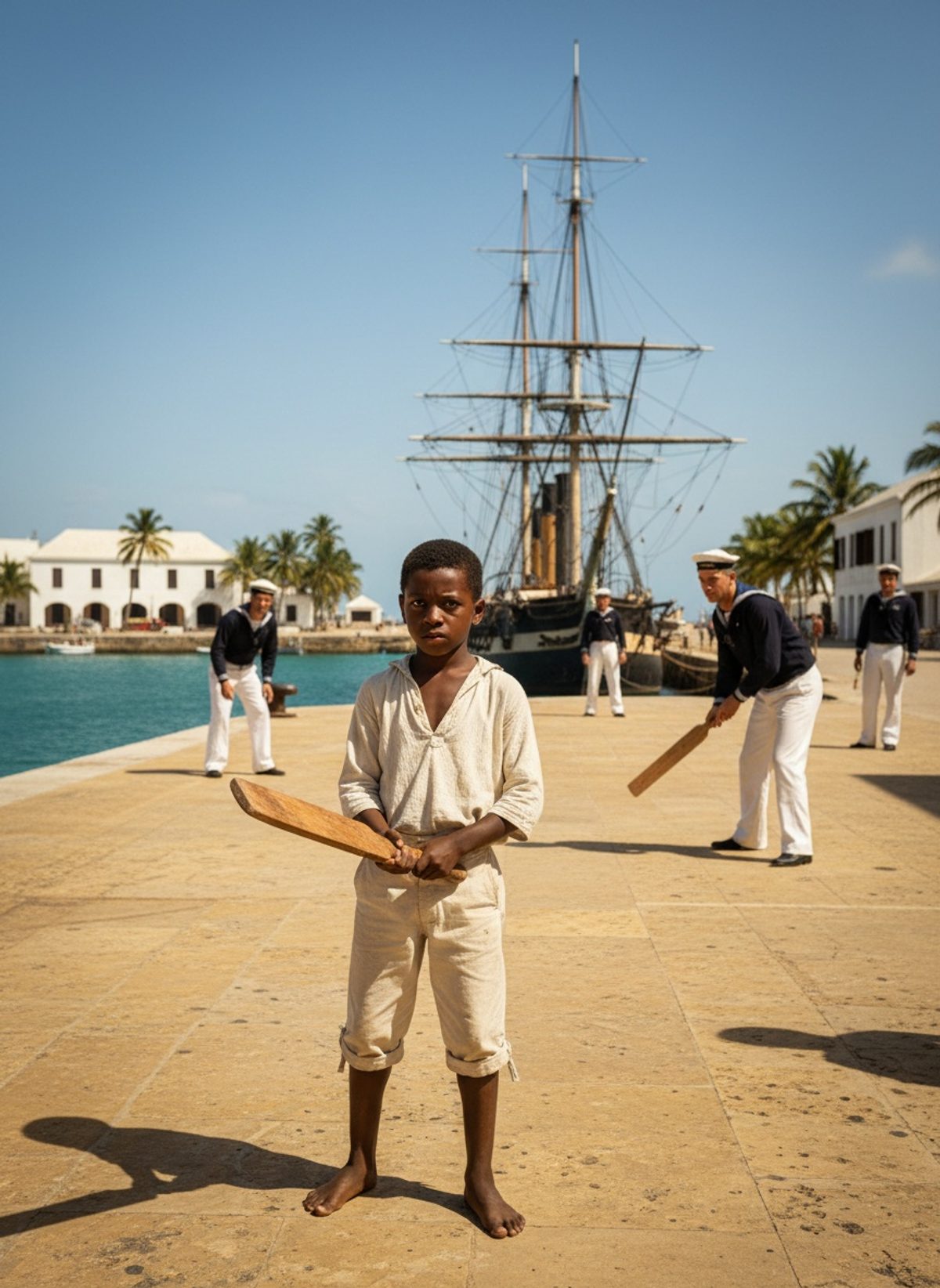
He was neither wealthy nor English. Yet, that barefoot boy on the docks of Bridgetown, Barbados, would ignite the Caribbean's passion for cricket, transforming it into a force that would one day challenge the very nation that introduced the game.
The Unexpected Passion of Colonial Cricket
In the final days of the 19th century, the grandeur of the British Empire extended its tendrils across oceans and continents, bringing along peculiar cultural pastimes. Among these was cricket, a game with origins deeply rooted in the English countryside. Imperially clad sailors, on duty yet seeking camaraderie and leisure, would bring out their bats and balls at every seaport they entered. The parade grounds and beaches of the Caribbean islands, with their dry, crimson earth, provided the perfect stage for spontaneous matches to unfold. Such scenes were especially common in bustling ports like Bridgetown, Barbados, where local islanders would gather, initially as bystanders, to watch this unique spectacle unfold.
For the British, cricket was more than a sport; it was a ceremonial display of their cultural supremacy. However, for the youthful locals observing from the sidelines, it was an open invitation. This grassroots initiation was unconsciously preparing a future battleground. To the barefoot boy and his peers, the game was a delectable enigma, an opportunity too tantalizing to resist.
From Apprentices to Innovators: The Caribbean Way
The game’s complex elegance, quick reflexes, and strategic play soon enraptured the inhabitants of the Caribbean. Cricket grew organically across the islands, with local teams forming, initially mimicking their colonial mentors but soon developing distinctive styles of play. The landscape of the Caribbean, with its vibrant beaches and sprawling sugarcane fields, served as a rich tapestry for this burgeoning passion.
Read next: When Thomas Wise Stole the British Museum's Rarest Pages, 1934
With scant resources available, some boys wielded sticks and crafted rudimentary balls to replicate the elusive and beguiling movements of the sailors’ game. Over the first decades of the 20th century, cricket metamorphosed from a colonial relic into an intrinsic element of Caribbean identity. By observing and imitating, the locals invented a style that was both joyful and aggressive, a defiant counterpoint to the English's more reserved approach. This flair was uniquely Caribbean—every match was a performance, every stroke a dance, a celebration.
The Forgotten Pioneers of Barbados
Amidst the cascading sounds of the waves and the chatter of the fish market at Bridgetown, young legends were forged. While not captured in textbooks, men like Sir Frank Worrell and Sir Garfield Sobers would have traced their lineage to these early pioneers, inspired by those youthful eyes that once lingered behind palm trees, watching the sailors with intent curiosity. Their predecessors were the unsung heroes, who, without any formal guidance or mentoring, quietly cultivated a fervor that would resonate through generations.
Barbados, often considered the mecca of Caribbean cricket, was the epicenter of this evolution. The local characters who embraced the game developed an air of humorous bravado and unrivaled pride. Matches became island-wide events, drawing crowds of spectators who would line the grounds, cheeks speckled with salt from the sea breezes, taking in every kinaesthetic turn of the wrist that sent the ball soaring into the sky.
Emergence of a Caribbean Powerhouse
By the mid-20th century, the winds of change had swept through the Caribbean with exhilarating vigor. In countries across the islands, cricket ascended not merely as a sport, but as a symbol of national aspiration and resilience. The West Indies cricket team, composed largely of players who hailed from diverse island nations, emerged as an unyielding powerhouse. By the late 20th century, the regional team had conquered cricket domains well beyond the boundaries of their former colonizers.
In a striking twist of fate, the exponents of Caribbean cricket evolved from being mere immitators into formidable challengers, culminating in numerous victories against England—the very nation that sowed the seeds of cricket on these fertile Caribbean shores. It was a sweet dance of irony, a testament to resilience and reinvention. The echoes of leather on willow resonated with pride and defiance, as the music of the Caribbean islands made its way onto fields around the world.
As we reflect on this remarkable journey, cricket's voyage to the Caribbean stands as a compelling reminder of the unpredictability of cultural diffusion. A game once lost in translation between British sailors and curious island locals transformed into a magnificent symbol of identity and power. It unshackled the Caribbean spirit, ultimately allowing them to assert themselves on a global stage, with the echoes of that barefoot boy in Bridgetown still present in every match they play today.