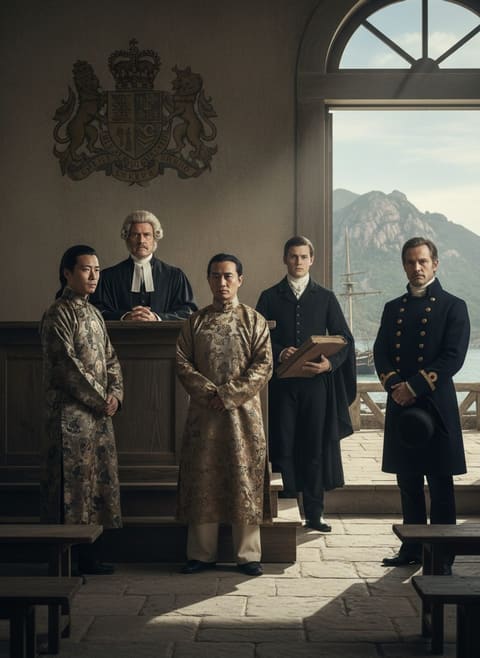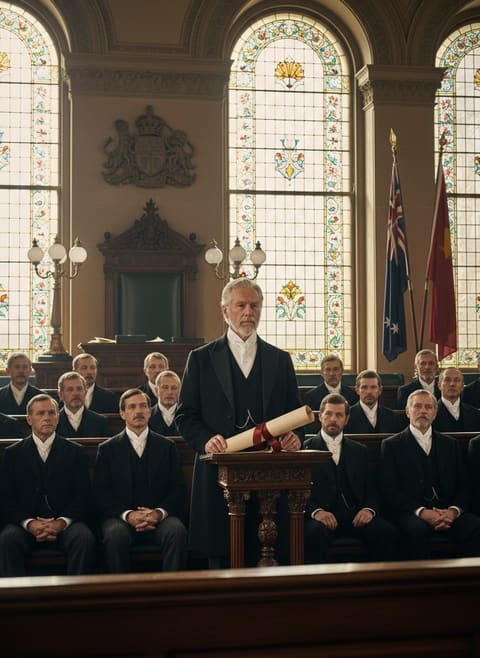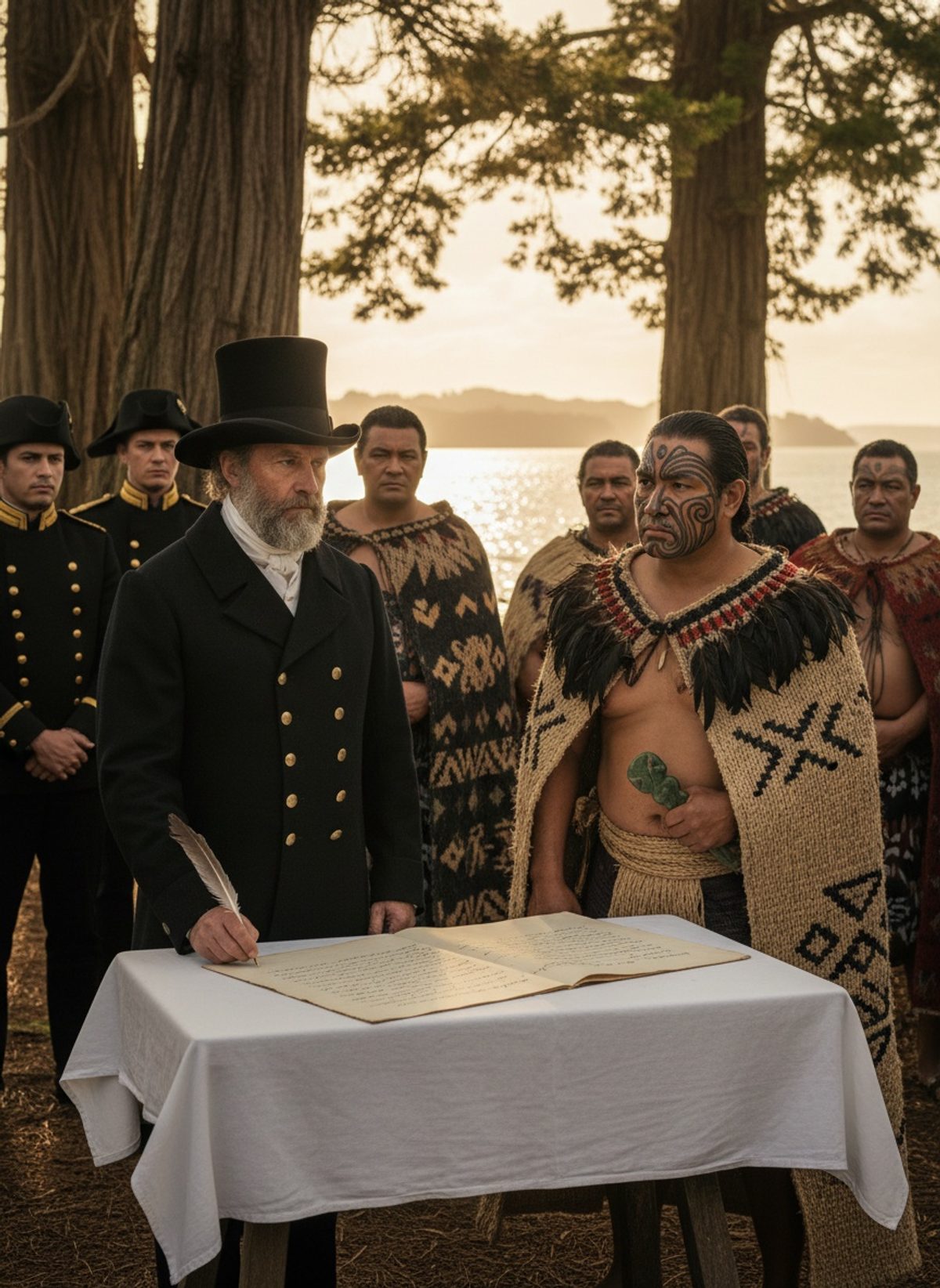
The fluttering leaves mimicked the rustling whispers of uncertainty among the gathering crowd. The warm breeze carried the salty tang of the bay over to the shore where a disparate assembly of British representatives and Maori chiefs stood. Eyes of both brown and blue met across a table where a singular document — the Treaty of Waitangi — lay waiting to be etched into history. As the quill dipped into ink, a seemingly simple act bound vastly different worlds together, promising protection under British law to every Maori chief, an unfolding of destiny that would shape New Zealand far beyond that pivotal February day in 1840.
The Covenant at Waitangi
Imagine the scene: a tent pitched flimsily on a carpet of seashells crunching softly beneath curious feet. Chiefs adorned in traditional cloaks stood solemn beside British officials clad in woolen suits, both garbed in the attire that spoke volumes of their heritages. The landscape bore witness to the conversations unintelligible to the steady waves that lapped the cove’s edge. The Treaty of Waitangi was not merely a document; it was the crucible in which the fire of nationhood began to burn.
British sovereignty had been declared over the entirety of New Zealand just the day before. In these islands of lush green tapestries and rugged mountains, a formal agreement was critical to mutually define coexistence. The ceremony symbolized a blend of formality and spiritual recognition, involving a unique fusion of British and Maori traditions. This inclusion of Maori chiefs was unlike other colonial encounters where imposition was the order of the day. Here, both sides held the quill — metaphorically and literally.
The treaty had its origins in the necessity of addressing the complex issues arising from increasing European settlement. Grassroots commerce with local Maori had flourished, but it was often marred by misunderstandings and mistrust. For the British, establishing a legal framework meant not only expanding their territories but ensuring stability and peace in their new garden of the Pacific.
Read next: When English Common Law Crossed the Ocean, 1607
But what made this treaty especially significant was its audacious promise of equal rights and protections under British law to the Maori people. By signing, the Maori weren’t just yielding land or resources — they were, in theory, securing an official recognition of their people and culture within the sweeping purview of a burgeoning Empire. Yet, as history would show, the ink on paper bore both power and flaws in equal measure.
The Challenges of Interpretation
Despite the good intentions and sweeping declarations of the treaty, the infamous "interpretation gap" loomed over discussions, mere whispers evolving into clamorous discord over years. To comprehend this, one must peer into the chasm of translation where English and Maori versions of the treaty bore different meanings. While the Maori text suggested governance and protection, the English version spoke of sovereignty and cession.
Unearthly meetings in shaded clearings soon became arenas of frustration and conflict. Continued waves of European settlers fostered discord, devouring lands and resources with ferocity previously unspoken. Misunderstandings and unfulfilled promises brewed a tempest that took the form of numerous land wars over subsequent decades.
This difference in interpretation highlighted the dual reality of the treaty — a beacon of hope marred by overlooked details. Even amidst rising tensions, cultural resilience and compromise shone brightly. Various Maori leaders, astute navigators of both their heritage and the precariousness of the written English law, began to challenge the interpretations that unwittingly denied their autonomy.
The tribunal, known as the Waitangi Tribunal, established much later in 1975, would symbolize a voice of redress. The tribunal sought to evaluate breaches of the treaty and reconcile historical grievances — a monumental effort towards justice and equity, but a poignant reminder of the complexity embedded in that singular agreement. The work-in-progress that was the Treaty of Waitangi continued to evolve, reinterpreted through each decade’s lens.
Read next: When Rammohun Roy Walked Into Parliament and Changed Everything
A Living Document
Seen today, the Treaty of Waitangi is not merely an ancient document sealed in time, but a living social contract continuously scrutinized and recontextualized. It exists as New Zealand's founding document, highlighted each year as Waitangi Day commemorates that fluid mirage of hope, trust, and occasionally, distrust.
The awareness and acknowledgment of the treaty's shortcomings have been instrumental in its modern relevance. The late 20th and early 21st-century allowed the Maori to wield the treaty as a formidable tool of advocacy, causing socio-political ripples that transcend centuries to redress historical wrongs. Simplifying it as a mere bond fashioned by pen and ink diminishes its immense cultural and political weight in influencing the social fabric of New Zealand.
For the modern observer, it embodies a nation's soul — the struggles it has faced, the debates it has kindled, and the progressive journey towards a shared future it motivates. It reshapes colonial narratives through collective recognition and respect, essential facets of a multi-ethnic nation still defining its identity.
Reflecting upon the signing at Waitangi in 1840, we see more than just an event but a profound unraveling of colonial intentions counterpoised with indigenous resilience. It is this alchemic balance which keeps the treaty alive — a signpost for dialogue and understanding across cultures. Its legacy demonstrates the relentless power of shared narratives, a testament to the possibilities forged when differences braid their way into a cohesive and equitable tomorrow.