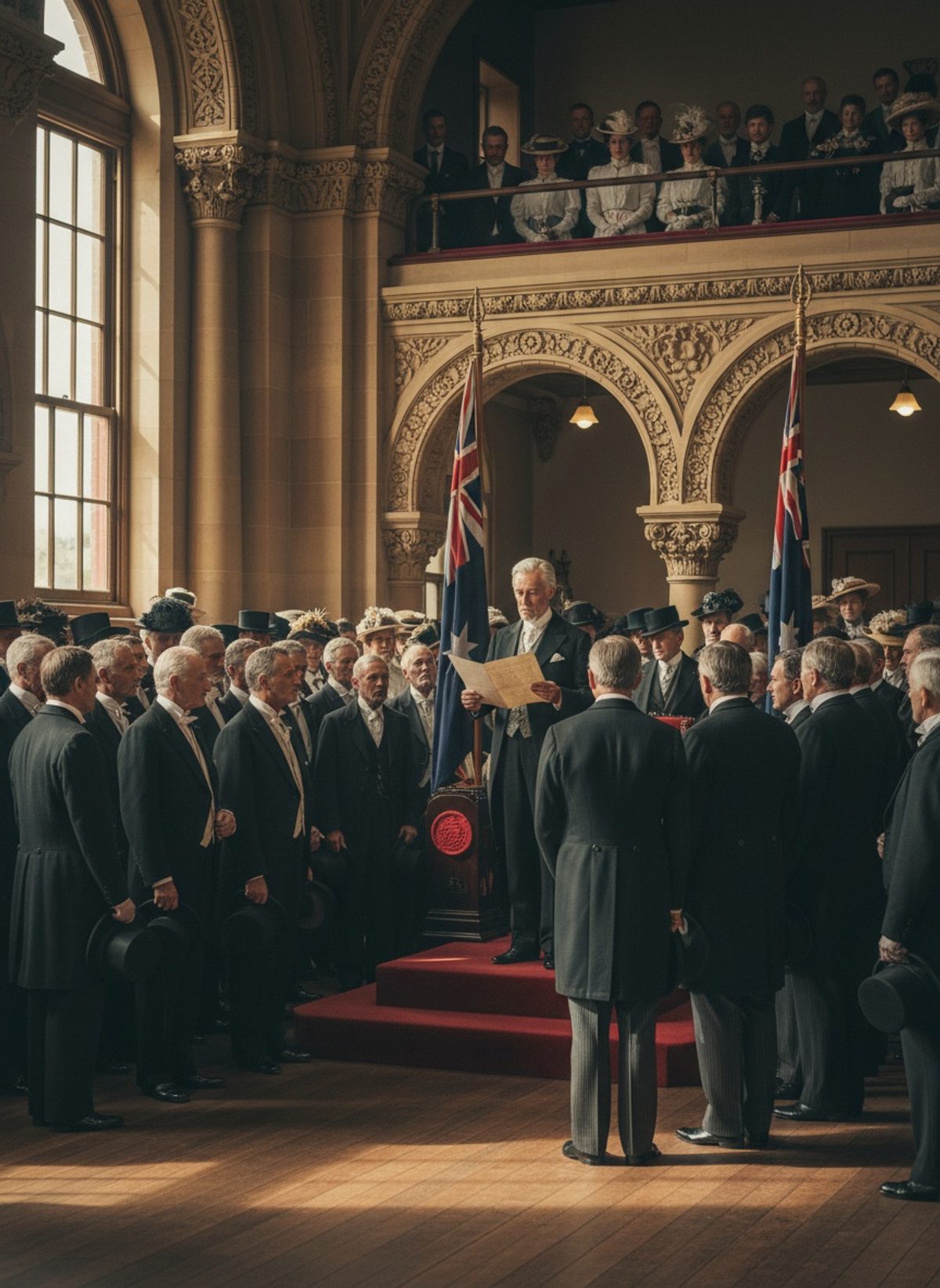
Australia became a nation on January 1, 1901. But its roots were entwined with those of a distant empire.
In the dawn of the 20th century, the lands down under stood on the precipice of self-determination, yet the echoes of Westminster reverberated in every corner of its emerging identity. The six distinct colonies—each a unique tapestry of landscapes and cultures—joined to form a singular federation. This union birthed the Commonwealth of Australia, anchored by a constitution crafted in English not just in language, but in its philosophical core. While the land was distinctly Australian, the heart of its governance beat to the rhythms of British tradition.
Walking the corridors of power in early 1900s Australia would have felt eerily familiar to someone from London. The architecture of the new nation's government mirrored the motherland, with parliamentary debates conducted in a style reminiscent of Westminster's age-old customs. The language of law and governance was undeniably British, a choice that spoke to both practicality and a profound legacy of colonial administration. Yet beneath this façade of imperial continuity lay the seed of something profoundly transformative: an independent democracy that sought to protect the powerless from the powerful, a principle that had matured over centuries in the bosom of British legal tradition.
The choice of English common law as the foundation for Australia's legal system was no accident. It was the result of a colonial alchemy—a blending of necessity and influence—that saw the transplanted legal customs of Britain adapt to the landscapes of a continent far removed from its native soil. The common law, with its emphasis on precedent and judicial interpretation, offered a flexible yet sturdy framework, one that could evolve alongside the fledgling nation. This adaptability was crucial for a country still honing its identity, molding laws to meet its unique challenges while ensuring stability through continuity.
Read next: When English Law Gave the World Its First Written Rules, 1840
In the heart of the bustling early 20th century Australian cities, the shadow of the Victorian era loomed large. Aspects of everyday life—be it commerce, crime, or civil disputes—were governed by statutes and courts that bore the unmistakable stamp of English tradition. Even the grand symbolism of the parliament buildings whispered of heritage, built with a conscious eye towards the iconic structures of the British Isles. But as Australians convened, setting forth on new aspirations and ideals, a subtle yet critical transition was underway—a shift from passive colonial subjects to active participants in a new democratic experiment.
The new Commonwealth's constitution, drafted with meticulous care and debate, was a document of contradictions and compromises, embracing the historical while craving the innovative. It laid the groundwork for a bicameral parliament, a nod to the British system but infused with Australian distinctiveness in its federal structure. This blend of the old and the new proved more than a nod to practicality; it soon became a canvas for the vibrant, evolving debates that defined the Australian national character.
Read next: When English Law Gave a Freed Slave His Own Courthouse
One could argue that the most enduring legacy of colonialism in Australia was not only the legal system it adopted but the very idea of law as a living protector—a concept that found fertile ground far from the green shores of England. This ideology empowered a nation of immigrants and colonials to deliberate, to dissent, and to demand representation, channeling an inherited legal philosophy into a democratic framework tailored for a diverse and sprawling landmass.
The inauguration of Australia as a nation united more than territories; it catalyzed a political awakening, encouraging introspection about what it meant to be Australian. In this new political landscape, the people grappled with the legacy they had inherited—a legacy that included both the wisdom of centuries-old English legal principles and the burdens of a colonial past. As the 20th century progressed, Australia's relationship with its British legacy became more complex, prompting dialogues about identity, independence, and innovation.
Today, reflecting on the birth of the Australian Commonwealth in 1901 offers insights into the complex interplay of empire, law, and identity. The scene invites us to consider how the echoes of the past resound in the formations of new nations. It provokes thought on the balance of justice and tradition, of old ideas serving new sovereignties. Most of all, it reminds us that the greatest empires do not merely conquer land—they shape the dreams and aspirations of peoples across oceans.