The summer monsoon swept through Calcutta like a relentless deluge, turning streets to rivers and skies to a swirling grayscale canvas. Amidst the cacophony of raindrops hammering down on the bustling city, one could walk past the formidable edifice that housed the newly established High Court. It was an anomaly standing tall in the heart of the British Empire's vast colony—its stone facade a testament to English resolve and its interior an echo of foreign legal principles brought to Indian soil. In 1861, as the thunderstorm of colonization roared across India, the delicate architecture of imperial power found its echo in the form of three High Courts. Unbeknownst to the soaked citizens of Bombay, Calcutta, and Madras, these institutions would lay a foundation as enduring as the ancient subcontinent itself.
The Edifice of Empire
Amid thick humidity and the fragrance of earth awakening beneath the rain, the Act of 1861 transformed a corner of India forever. Far from being mere colonizers enforcing their dominion, the British Parliament aimed to graft its legal traditions onto the fertile soil of India. The initiative came during a period of change and consolidation in the empire, as new regulations replaced outdated systems in an effort to bring uniformity across British territories. Through the Indian High Courts Act of 1861, the British established three courts in Calcutta, Bombay, and Madras—a move meant not only to streamline judicial decisions but to merge British legal practices with Indian jurisprudence.
The precise architecture of these courts was a deliberate statement of power and order. Built with the kind of grandeur befitting the Victorian era, these courts were designed to impress and to functionally serve as halls of justice. Their design and purpose heralded a new era where English law would sentence, rectify, and decide for generations to come. These institutions laid the track on which the juggernaut of British legal influence would run, right down to contemporary India’s very own judicial hallways, where echoes of English common law still reverberate.
Humanity and Law Under One Roof
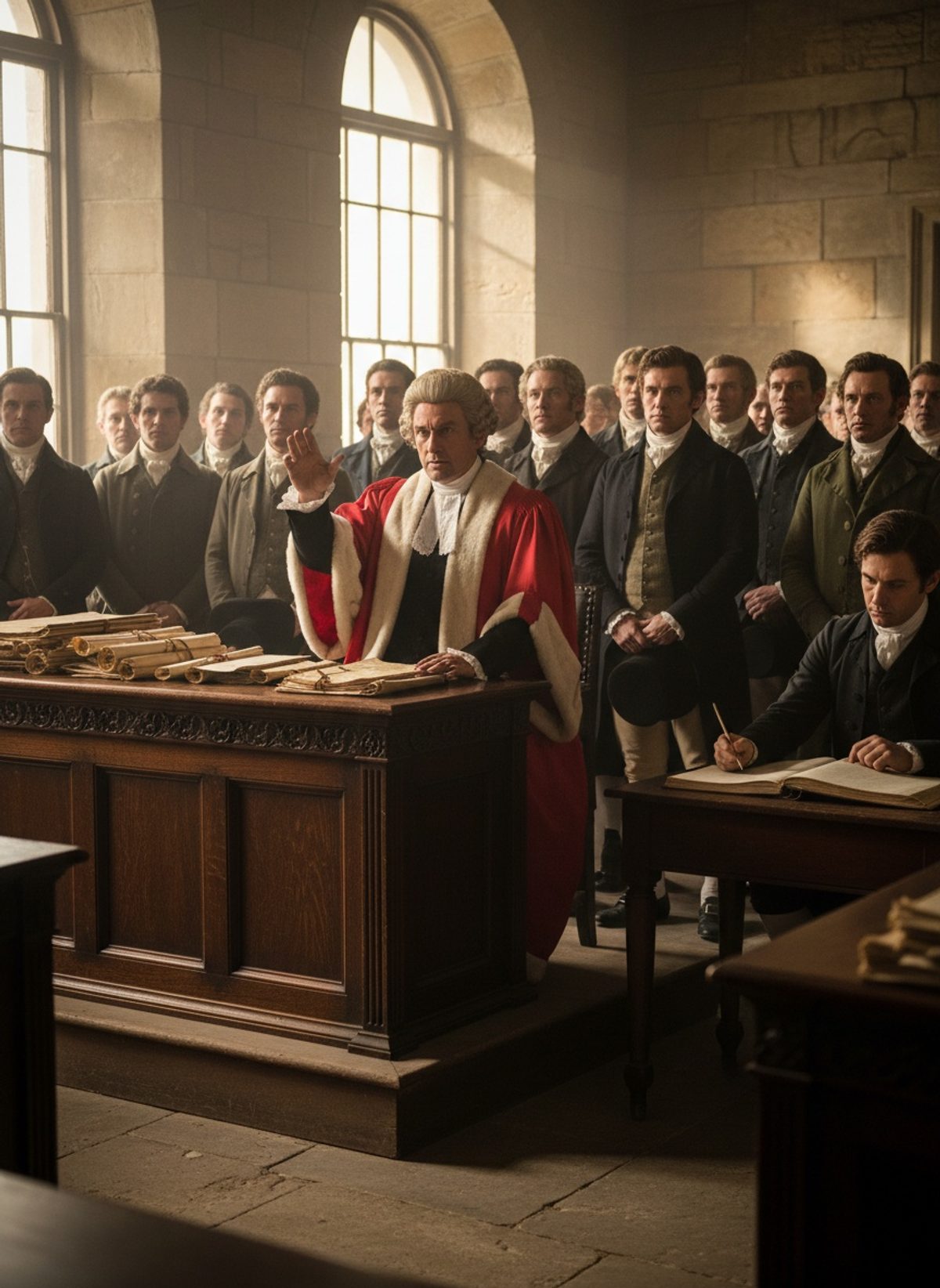
As one walks through the hallowed halls, the rich tones of wood-paneled courtrooms invite introspection. The benches sat witnesses who bore the weight of empires in their testimonies, and judges who wore the burden of balancing two worlds—British statutory pronouncements and Indian customary law. Scrolled documents lined with signatures became lifelines or chains—affecting the course of lives wrapped within those parchment folds.
Read next: When English Common Law Took Root in West Africa, 1874
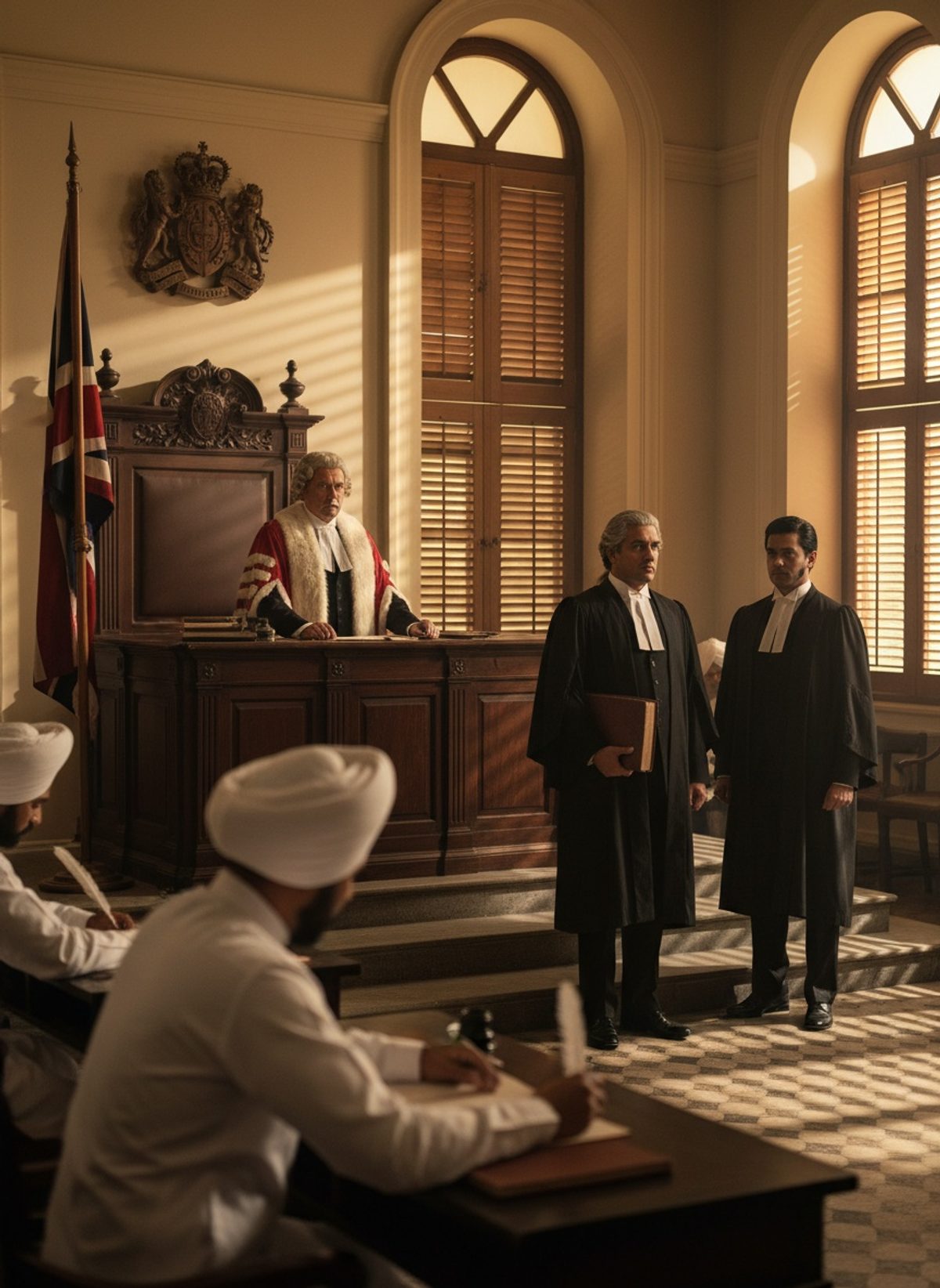
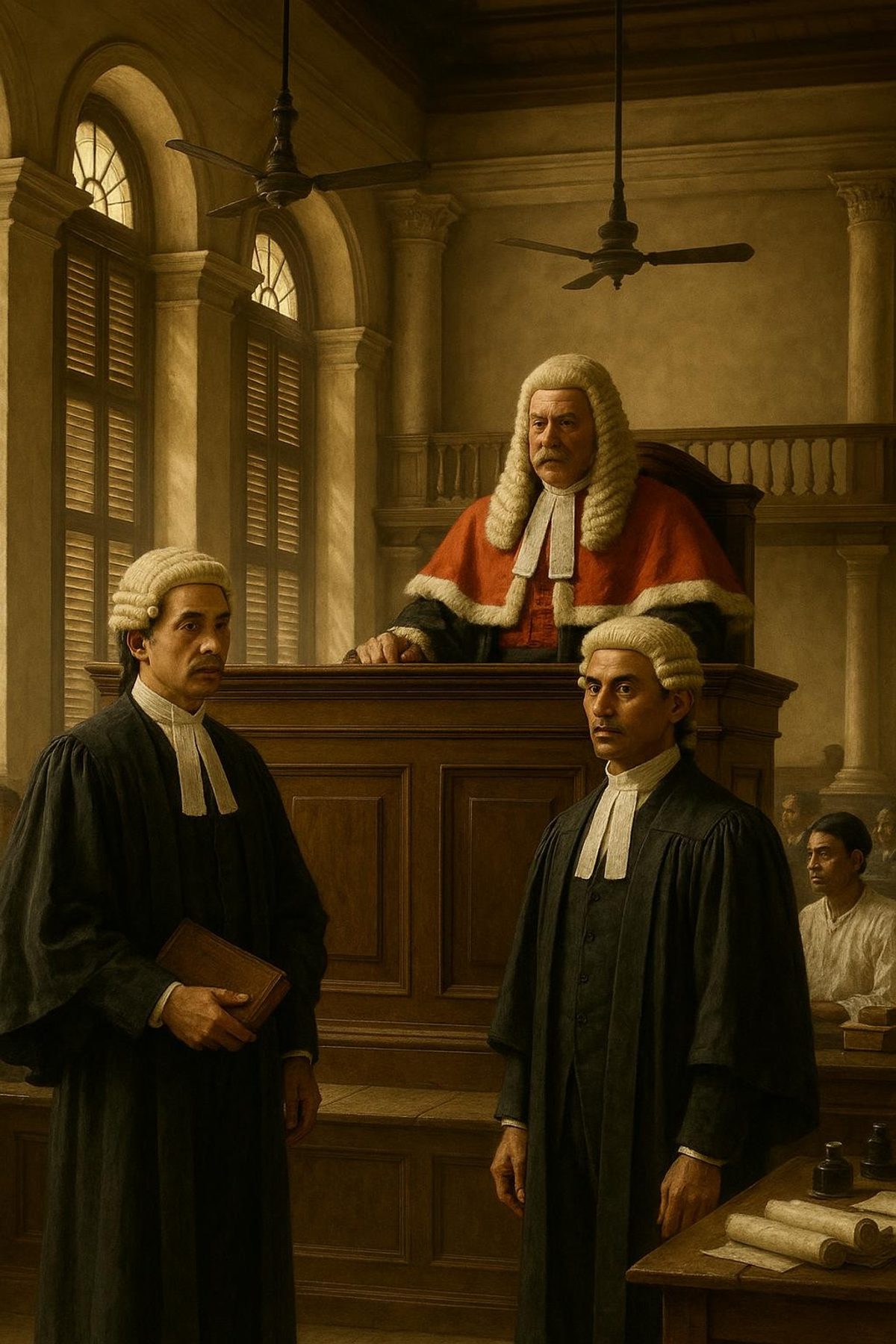
The human story entwined with these courts extended far beyond legal decrees. With their inception, an unending dialogue between colony and colonizer began. How could precedent better serve the subjects? What importance did local customs hold against imperial law? The judges, a blend of British officers and Indian appointees, were charged with daunting responsibilities. Yet, this melange conjured unforeseen cultural and legal hybridizations that only gained profundity as the decades passed and attitudes shifted.
More than a century later, visiting any of the three original courts witnesses testaments of past struggles. The brisk sound of a judge’s gavel blends with whispering wind across the courtyard. The courts continue their legacy, embracing judicial reforms that were seeded with the Act of 1861. From this fertile intersection of Western jurisprudence and Eastern consciousness emerged innovative blends of justice still relevant to India's evolving democratic ethos.
Justice's Enduring Beacon
Dominating the Gothic skylines of these cities, the High Courts became centers of advanced legal thought and practice in India. They attracted luminaries in law and nurtured some of the subcontinent’s finest legal minds. Every court case had the potential to become a landmark, every judgment a precedent influencing not only the social fabric of India but also inspiring courts across the world with its progressive philosophies.
In Calcutta, cases that challenged imperial policies inspired entire movements, while Bombay's court saw early advocacy for dissenting voices representing new currents of change. Madras became known as the pivotal ground for historical decisions around rights and liberties. In each edifice, resonating arguments thundered through British-built corridors that ironically nurtured ideas contesting colonial supremacy.
The courts, however, were more than arenas of adversarial battles. They were bastions of credibility and fairness that would shape an independent judiciary in a postcolonial era. Today, India’s Supreme Court traces its lineage to these three beacons of enlightenment. Its judgments still draw upon tenets and traditions first planted by the British but matured into a system well-suited to a democratic republic’s needs.
The Lasting Impressions of an Empire
As the monsoon rain abates and the sun pierces through dispersing clouds, one is reminded of the play between visibility and obscurity—an apt metaphor for the English legal institutions rooted deeply in Indian soil. This tale of 1861 is one of transformation, part-intention, part-accident. A testament to the powerful continuity that legal frameworks can provide, which the sun sets upon but never eclipses.
Even as each generation of Indian citizens chalks their interpretation of justice upon this legal canvas, they invariably stand upon a foundation laid down in this pivotal year. Britain shed many of its colonial garments, yet within India stands a living inheritance, a judicial structure serving beyond its original imperial purpose. The story of these High Courts is about enduring legacies birthed in distant lands and adapted under tropical suns—a dialogue still unfolding in the pursuit of an ideal called justice.