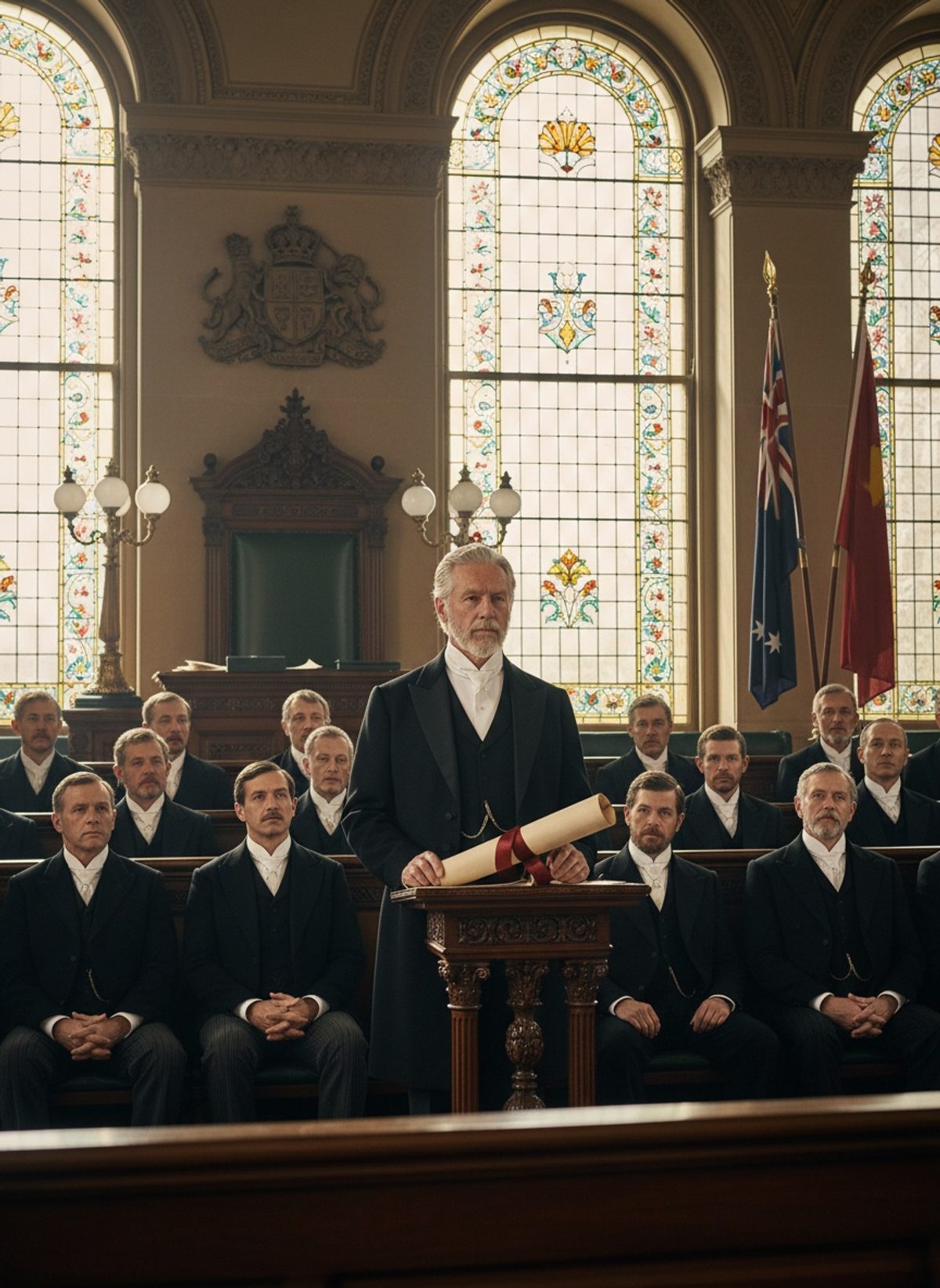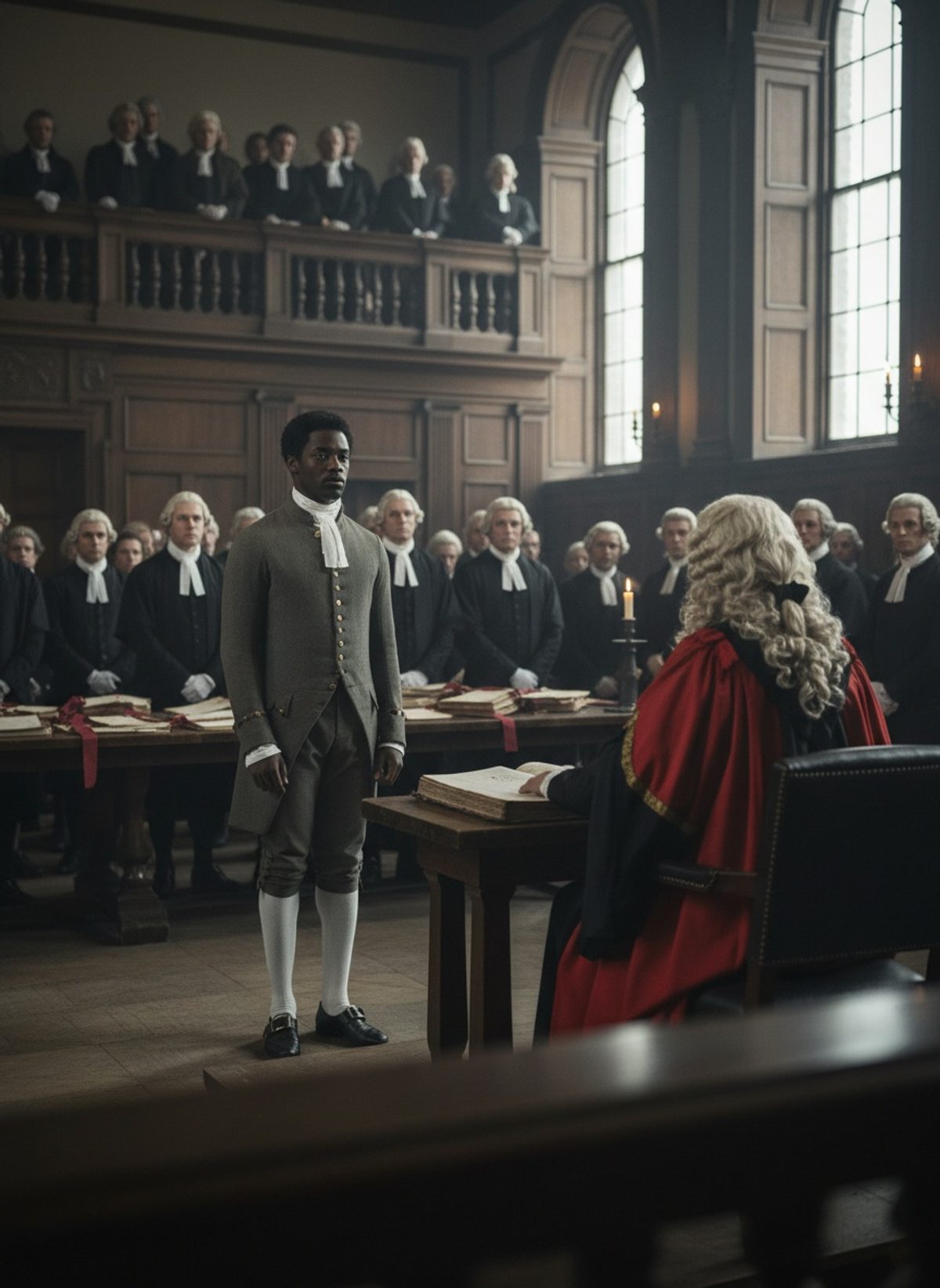
In 1772, the streets of London thrummed with the rhythm of horse-drawn carriages and the clatter of people going about their daily business, oblivious to the weighted breaths of history that hung heavy in the damp air. The sky was a patchwork of gray and white, clouds drifting lazily, as if time itself hovered in anticipation. Inside the esteemed court of the King's Bench, a storm of a different nature was brewing. The echoes of tense whispers and shuffled feet filled the hallowed hall, as every corner of the room seemed to vibrate with the significance of the moment. Lord Mansfield, the meticulous and respected head of the judiciary, was poised to deliver a ruling that would ripple far beyond English shores.
The case had already captured the public's imagination, transforming ordinary citizens into temporary jurists. The man at the heart of the proceedings was James Somerset, an African born into the brutal chains of slavery. His journey to the courtroom was as bewildering as it was hopeful. He had been brought to England by his American master, Charles Stewart, who now demanded that Somerset be returned to the Jamaican plantations, where the sun beat oppressive and unmerciful over the backs of those in bondage.
The legal question before Lord Mansfield was deceptively simple yet profound in its power to disrupt. Could a man, enslaved on foreign soil but physically standing on English ground, be forcibly returned to a life of servitude? The answer would challenge the intricate and often unspoken social agreements of the time. Enveloped in this question was the broader ethos of the British Empire, an empire built on commerce, trade, and indeed, the subjugation of others.
As the courtroom fell silent, Lord Mansfield's presence commanded attention. Known for his judicious demeanor, he was a man well-acquainted with history's gaze. His wig, as customary as it was symbolic, framed a face etched with lines of deep contemplation. When he spoke, his words carried the weight of empathy, reason, and a profound understanding of justice that seemed to transcend the era’s more mercenary concerns. He declared, in what would become an epochal moment, that no man could be considered a slave on English soil. The courtroom, and indeed the empire, held its breath.
Read next: When English Law Gave a Slave His Freedom in Open Court, 1772
With Lord Mansfield's ruling, James Somerset, a man once shackled by chains both literal and figurative, found his freedom. The significance of this decision cascaded beyond Somerset’s personal liberation. It sent shockwaves through the colonies where slavery was an entrenched institution, raising vexing questions about human rights and the moral fabric of empire. It was as if Mansfield’s courtroom had become the stage for a larger, global conversation about human dignity, one that questioned ownership, autonomy, and the very soul of law itself.
Despite its immediate impact, the ruling did not abolish slavery outright in England or its colonies. Yet, it signaled a profound change in the legal landscape. For abolitionists and humanitarians, the judgment acted as a beacon of hope, a landmark upon which future campaigns against slavery could be staked. Somerset's case became a pivotal chapter in a narrative that would eventually lead to the abolition of the transatlantic slave trade in 1807 and, later, the Slavery Abolition Act of 1833.
This case also highlighted the complexities of English law, which had allowed slavery to flourish in colonies while remaining ambiguous about its status on home soil. Mansfield's logic pierced through this contradiction, a testament to the evolving consciousness of liberty and human rights. His decision tacitly asserted that English air was incompatible with the institution of slavery, binding no man in servitude simply by stepping onto its land.
Lord Mansfield's ruling carried the gravity of an unspoken promise—a promise that the arc of history bends towards justice, albeit slowly and painfully. It provided serendipitous encouragement to those enslaved, igniting small fires of hope in what were often the darkest of circumstances. It was a catalyst, one that propelled legal minds and moral advocates toward a future that dared to view all men as equals.
Years later, as echoes of the Somerset decision resonated through the corridors of power, the ruling had become an emblem of the relentless pursuit of freedom. It was a small revolution within the larger story of human rights, a clarion call to act, to question, and to envision a world in which shackles were nothing more than a vestige of history. England's judiciary had taken a stand, and in doing so, turned the tide for a single man while also altering the destiny of many.
The compelling story of James Somerset and his unexpected redemption is one that reverberates through time, inviting us to reflect on the moral imperatives that shape societies. It reminds us that the law, at its core, is not mere words on parchment but a living spirit that speaks to the values we choose to uphold. Through Lord Mansfield's pivotal ruling, the seeds of equality and justice were sown in the fertile soil of English jurisprudence. In recognizing Somerset's humanity, the legal system etched a powerful and enduring legacy: that freedom is not just an aspiration but a fundamental right that transcends the ages, ever waiting to be realized.