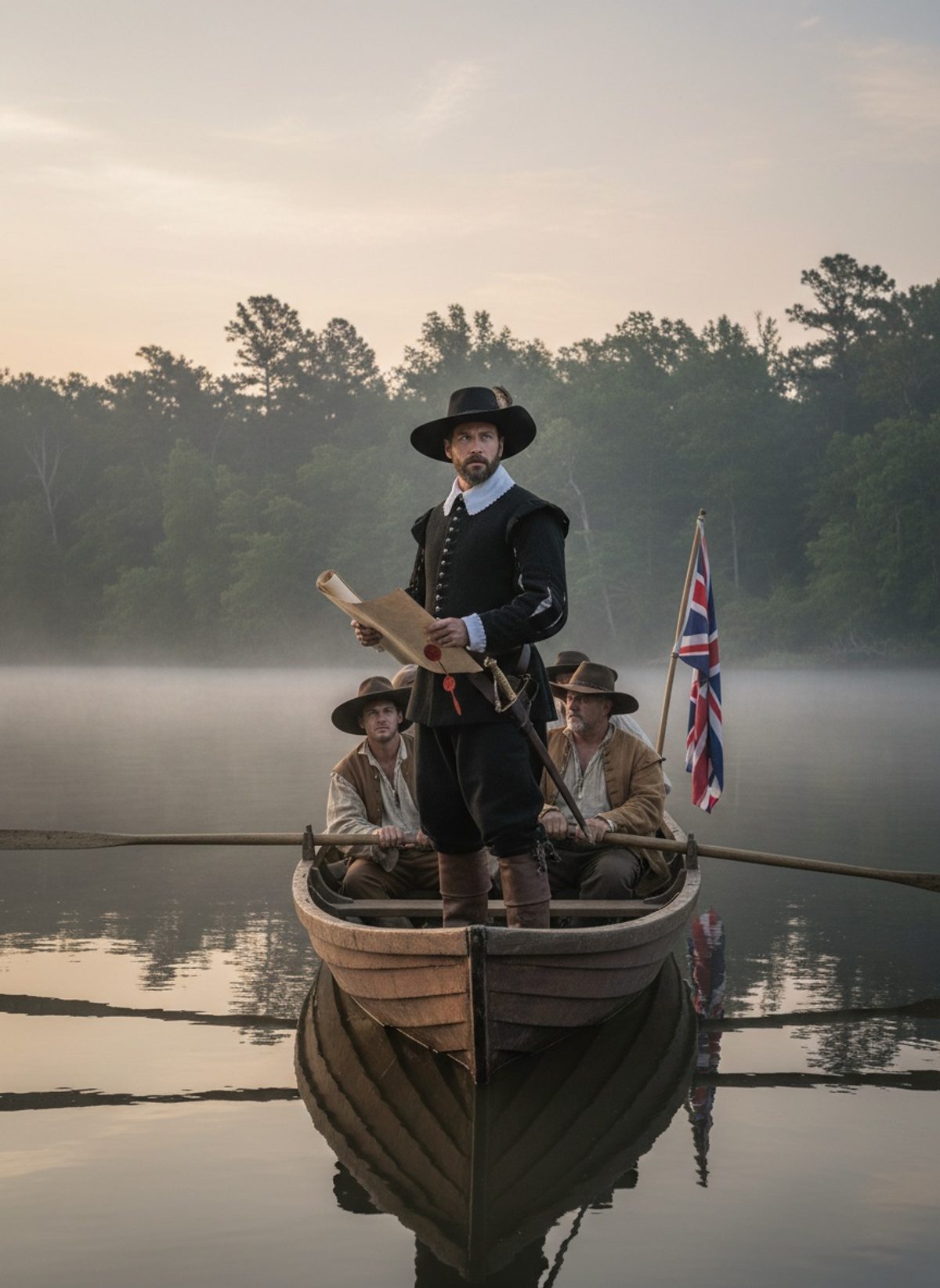
The screech of the anchor chain grated against the new world air as the Susan Constant, its sails slackening with weary relief, clanged into the Virginia dirt. John Smith steadied himself on the slippery deck, the scent of wet timber mingling with briny sea air, and stared out at the tangled green landscape that promised nothing but uncertainty. Behind him, the bustling chaos of a makeshift colony unfolded—hammers on tent pegs, barked orders, the nervous anticipation of exiled adventurers far from their English homeland.
Amidst the clatter of construction and shouts of workers eager to stake their claim, there lay an unspoken inheritance, sealed in paper, waiting to take root in this untamed land: the English legal tradition. These settlers, having carried across tempestuous seas little more than tools, seeds, and frayed hopes, did not yet realize the enduring legacy they bore. Inside their carefully packed charter lay the embryonic veins of a system that would someday bind a continent and ripple around the world.
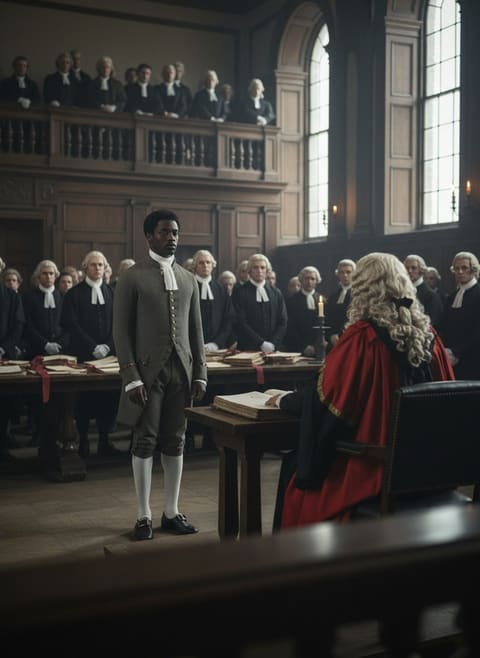
As smoke curled from the nascent fires of Jamestown, the settlers held in their grasp the English common law—a system as intricate as it was ancient. This wasn’t merely a procedural code; it was a living organism, fed by history and human judgment, accustomed to bending to the needs of each generation. Unlike the codified Roman law, the common law had no comprehensive script. Instead, it thrived on principles like fairness and equity, evolving through a dialogue between the Parliament’s statutes and the judicial philosophies of men, who issued decisions in oak-paneled courtrooms of London.
This legal wisdom, invisible yet powerful, whispered through centuries of English life and burst from the pens that drafted the settlers' charter. Yet Jamestown was a precarious microcosm of future America, a briar patch of clashing allegiances and harrowing survival that tested the resolve of even the most ardent pioneers. Could the rigid yet resilient principles of English law adapt to this foreign soil, brimming with unfamiliar faces and customs?
Read next: When English Law Crossed the Ocean to Become Australian Law
The freshly minted Court of Governor and Council in Virginia, its authority raw and undistinguished, was the first echo of English judicial sound on American shores. Men such as Sir Thomas Gates, armed with legal charters, demanded order beneath the shadowy canopy of native forests. Although more than 3,000 miles from the motherland, an arcane tapestry of by-laws, decrees, and jury proceedings took form. This first attempt at judicial governance was rudimentary and often arbitrary, yet it was the spark that kindled later flames of due process and representative government.
Judges, ordained by no monarch but their settlement’s need for stability, grappled with the tangled vines of colonial disputes. They faced the reluctant adjudication over stolen chickens, treaties with Powhatan tribes, and debates over land grants. Even the mere word of their judgments held an embryonic echo of what would ultimately foster a powerful future doctrine: stare decisis. Each decision, each opinion, wove another thread into the tapestry of this newfound legal reality and understanding of common law, unknowingly presaging future conflicts over liberty and rights.
The seeds planted by these providential adjudications flourished as the Atlantic swelled between colony and crown. Year by year, the settlers forged a new identity; administrative council meetings turned into representative assemblies that interrogated imposed codes, resembling a ghostly mirror of Parliament’s debates back in England. Although rough-hewn and imperfect, a nascent democracy began to rise—a new experiment molded by necessity and idealism, reinterpreting English law in an American context.
This early adaptation of law stood resilient through the fever of revolutions and the birth pains of a nascent nation that clamored for its own identity. American Founders, nurtured by both Old World texts of Montesquieu and home-grown grievances, turned to constitutional convention halls echoing with debate, importing this ancestral yet malleable heritage into their revolutionary embers. The powers and boundaries of government, the rights of individuals, and the application of justice emerged from longstanding English traditions—those rooted in both the landed gentry and ancient common folk.
Read next: When English Law Gave the World Its First Written Rules, 1840
As misted mornings rose over Williamsburg and later on the sprawling streets of burgeoning American cities, English law fractured and adapted, sprawling outwards in tributary currents. Each state, buoyed by its autonomy, adjusted its legal frameworks, drawing upon centuries of common law like branches reaching for the sun. With time, these branches intertwined with foreign doctrines, creating a robust legal canopy under which modern societies grew.
Today, over four centuries after the colonists set foot on Virginian soil, the English legal tradition continues to govern billions, not just in America but globally—an enduring legacy of Jamestown’s dust and saltwater. The law that began its pilgrimage from a tiny settlement by the James River has carved paths through courtrooms around the world, embedding its principles in international treaties, influencing democracies, and enlightening public discourse.
If the faces on that ship had peered into a distant future, watching nations rise and reign, witnessing constitutional amendments, civil rights movements, and global debates on justice and human rights, they might have understood the profound gift within their charter. It is this legal tradition, as invisible as it is indispensable, that became one of the most potent legacies of their voyage—the soft revolution that whispered across the Atlantic wind.
The settlers brought no gold to adorn their pockets nor divine decrees to crown them with glory, but they carried a living tradition—one that outlasted forts, flags, and empires. They could never have foreseen the reach and resilience of the legacy they bore. Yet, within every court decision that echoes fairness and justice is a reminder that some gifts indeed outlive the giver, enduring across centuries to shape not only laws but the very ethos of cultures worldwide.