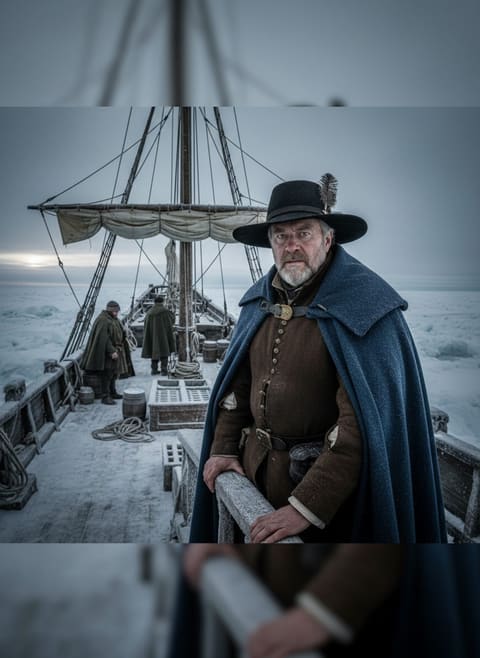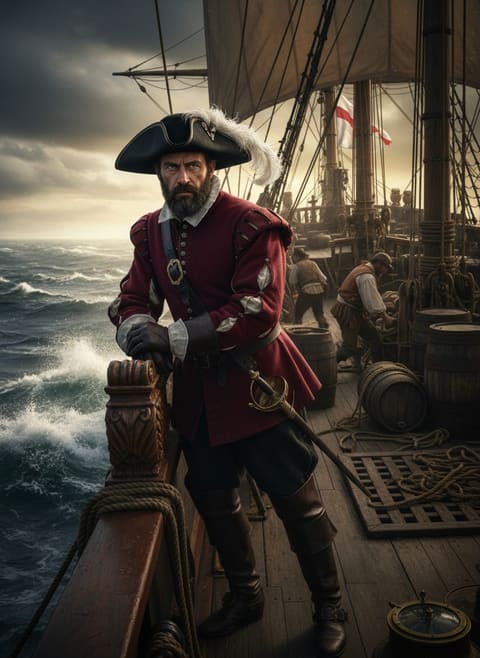
The chill of an early April morning hung heavy over the River Thames, wisps of fog curling through the rigging of ships anchored at Deptford. The anticipation was palpable, a tangible thing that set the water to shiver ever so slightly. It was here, in this cradle of England’s naval might, that a moment unfurled which would echo through the annals of maritime history. For on this fine day in 1581, against the backdrop of the softly creaking timbers and the muffled calls of gulls, a sea captain would kneel upon the deck of a single, weather-beaten galleon and rise as a knight of the realm. In doing so, Francis Drake and his ship, the Golden Hind, would announce England’s daring challenge to the world’s greatest empires.
A Voyage Like No Other
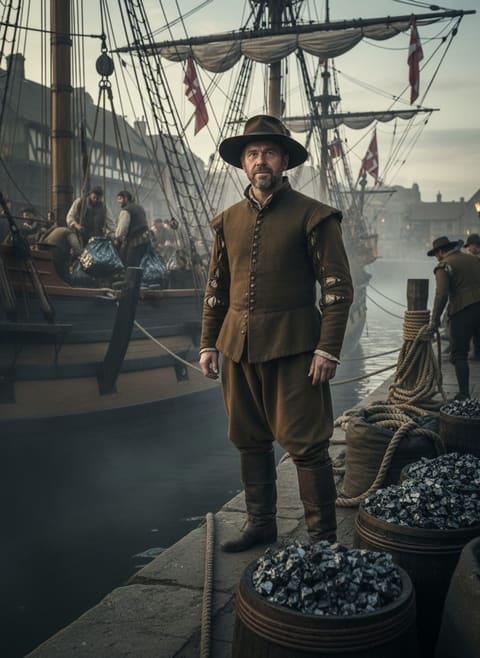
Francis Drake did not set sail with the deliberate aim of rewriting history. Yet, in December of 1577, when he departed England with a modest fleet of five ships, he charted a course that would draw the eyes of nations. The allure of the unknown drove them onward — a tangled blend of exploration, piracy, and empire. By the end of the journey, only the Golden Hind would return, her holds swollen with treasures claimed from Spanish galleons, proving to all who doubted that England was indeed a force to reckon with.
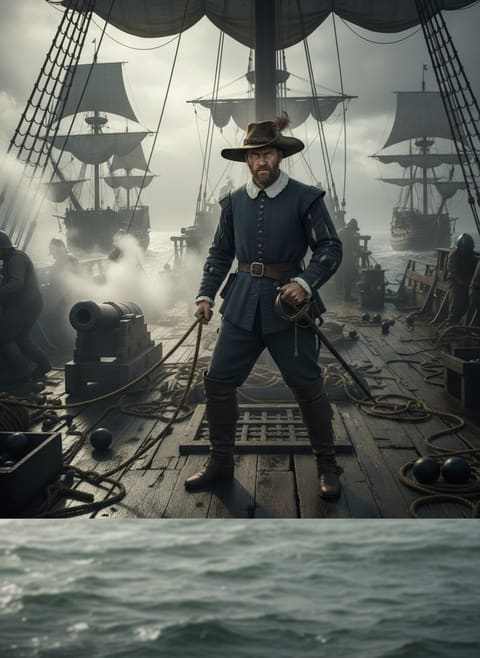
The voyage saw Drake circumnavigate the globe, an audacious feat that demanded equal parts tenacity and guile. From the tumultuous seas of Cape Horn to the unexplored coasts of California, they sailed onward, chasing the horizon until England beckoned them homeward once more. Drake’s boldness, often flirtatious with piracy, did not go unnoticed by Spain, whose fleets dominated the seas. But it was the queen's gesture at Deptford that would mark the turning of tides in England’s favor.
Deptford: Where the Crown Meets the Sea
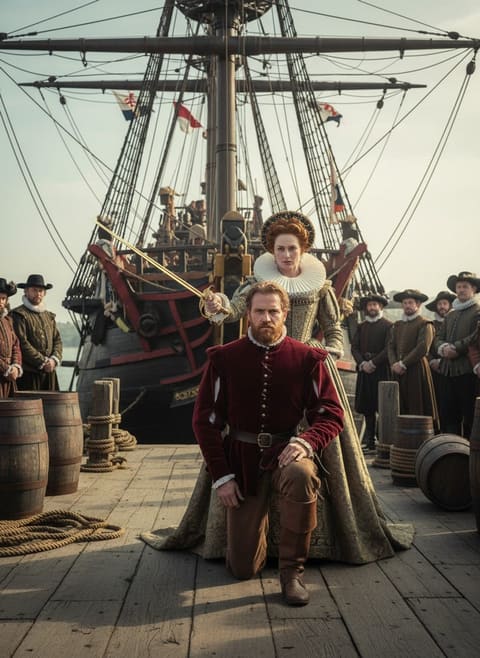
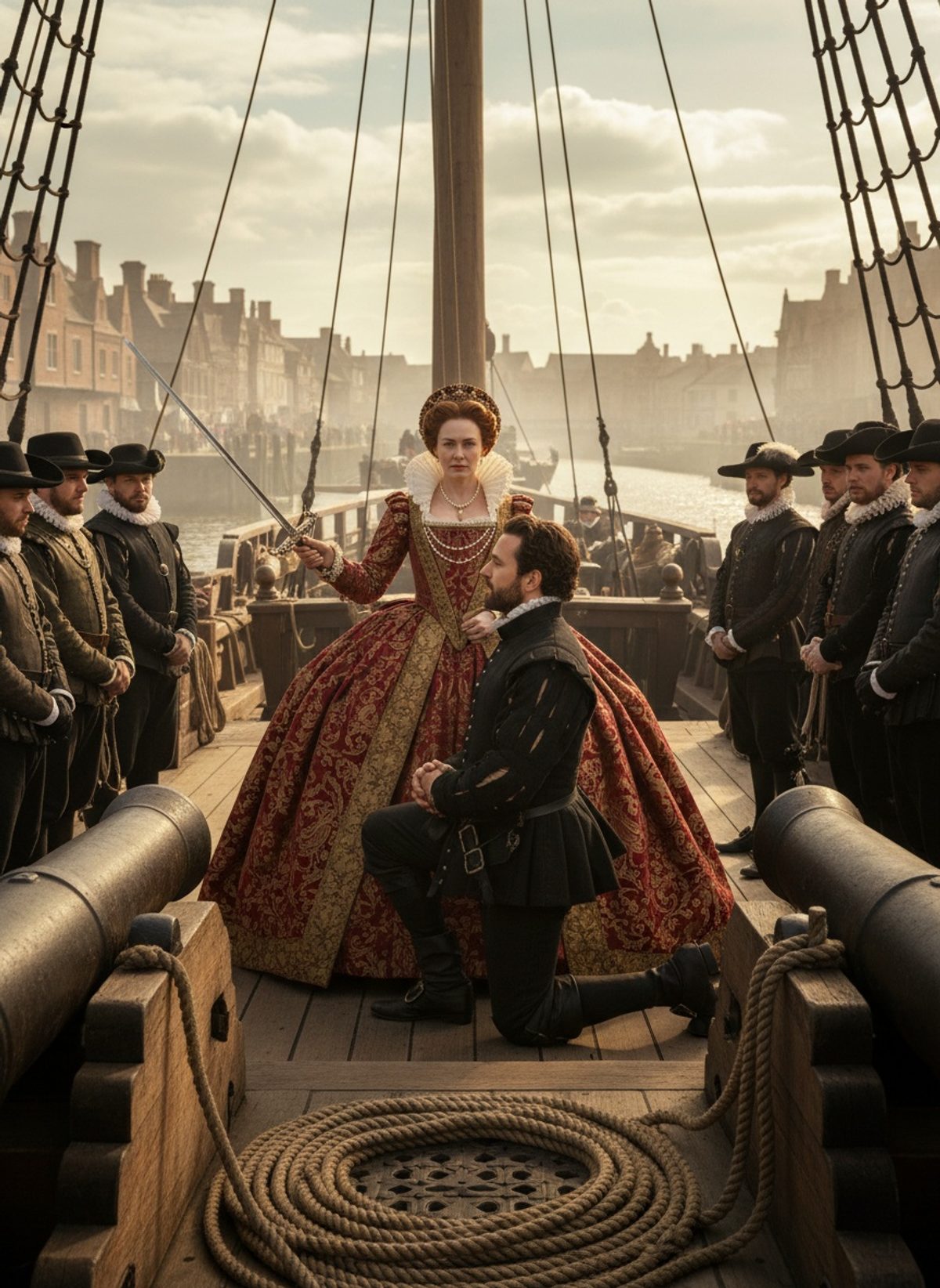
The docks of Deptford were alive with the rustle of activity, a thin salute of cannon fire announcing the Queen’s approach. Elizabethan England was a land of contrasts — ruffled hems brushing muddy paths, the chatter of court mingling with the low calls of riverboat men. Against this vibrant backdrop, Queen Elizabeth I, a monarch of formidable presence, stepped onto the Golden Hind, her regal bearing undiminished by the humbler setting.
Read next: When William Adams Knelt Before a Shogun, 1600
Here, upon a deck worn by winds that had roamed every latitude, Elizabeth did something unexpected: she drew a sword and, with a deftness wielded as much by grace as resolve, bestowed knighthood upon her captain. “Arise, Sir Francis,” she intoned, her voice carrying over the swell of murmuring waves and the whispered awe of those gathered. This simple yet profound act heralded a new chapter for England, charting a course that would see the small island nation defy giants.
The Power Within A Gesture
This was more than a mere honoring of one of her subjects; it was an astute political move, a casting of dice in a game of imperial challenges. By knighting Drake, Elizabeth publicly claimed his ventures as extensions of her crown, shielding him from Spanish reprisal under a thin guise of royal commission. Martin Frobisher, John Hawkins, and Walter Raleigh might possess similar ambitions, but it was Drake who had brought back physical proof of England’s prowess.
Under the cloak of legality afforded by his knighthood, Drake’s raids on Spanish ships and settlements were transformed into legitimate acts of warfare. It was a gesture weighted with irony; piracy clothed in nobility’s garb. The ceremony itself became a declaration — England was no longer content to revel in the relative obscurity of a European backwater. The empire had articulated its tangible presence upon the world stage, much to Spain’s alarm.
The Golden Hind: Her Voyage and Her Legacy
The Golden Hind, once a mere vessel among many, now anchored itself into the heart of English identity. Still bearing the scars of tempestuous waters and unfriendly shores, she exemplified the tenacity of those who dared to venture beyond familiar horizons. Drake’s offerings to Elizabeth included spices, gold, and gems — shimmering tokens of the lands untrodden by any of her fellow countrymen before him.
Read next: When William Baffin Sailed to the Edge of the World, 1616
Yet it was the ship herself that became the ultimate symbol of Elizabethan ambitions. Preserved and enshrined by public demand, she was a testament to an era marked by exploration and defiance. To the Spanish, she was a stark emblem of their most audacious foe. To the English, she was an invitation to dream ever larger, a rustic yet gallant herald of the empire they were beginning to build.
The Horizon Forward
In the world of 1581, the knighthood of Francis Drake aboard the Golden Hind was more than ceremony; it was prophecy. England, once a small player amongst towering European powers, charted a course that would steer it towards an empire on which the sun would never set. Each timber of the vessel bore silent witness to a future where English ships would traverse every sea, where the realm itself would grow vast and unparalleled.
Deptford remains a quiet echo of that monumental moment when queen met mariner on the deck of a ship. It challenges us to remember — that with courage to explore, zeal to innovate, and a little audacity, one can indeed stand against giants. England, through a simple gesture on a foggy April morn, had charted a path from the harbors of familiarity to the farthest reaches of imagination. For it was not merely a knighting on the Thames, but the arrival of an empire on history’s commanding stage.