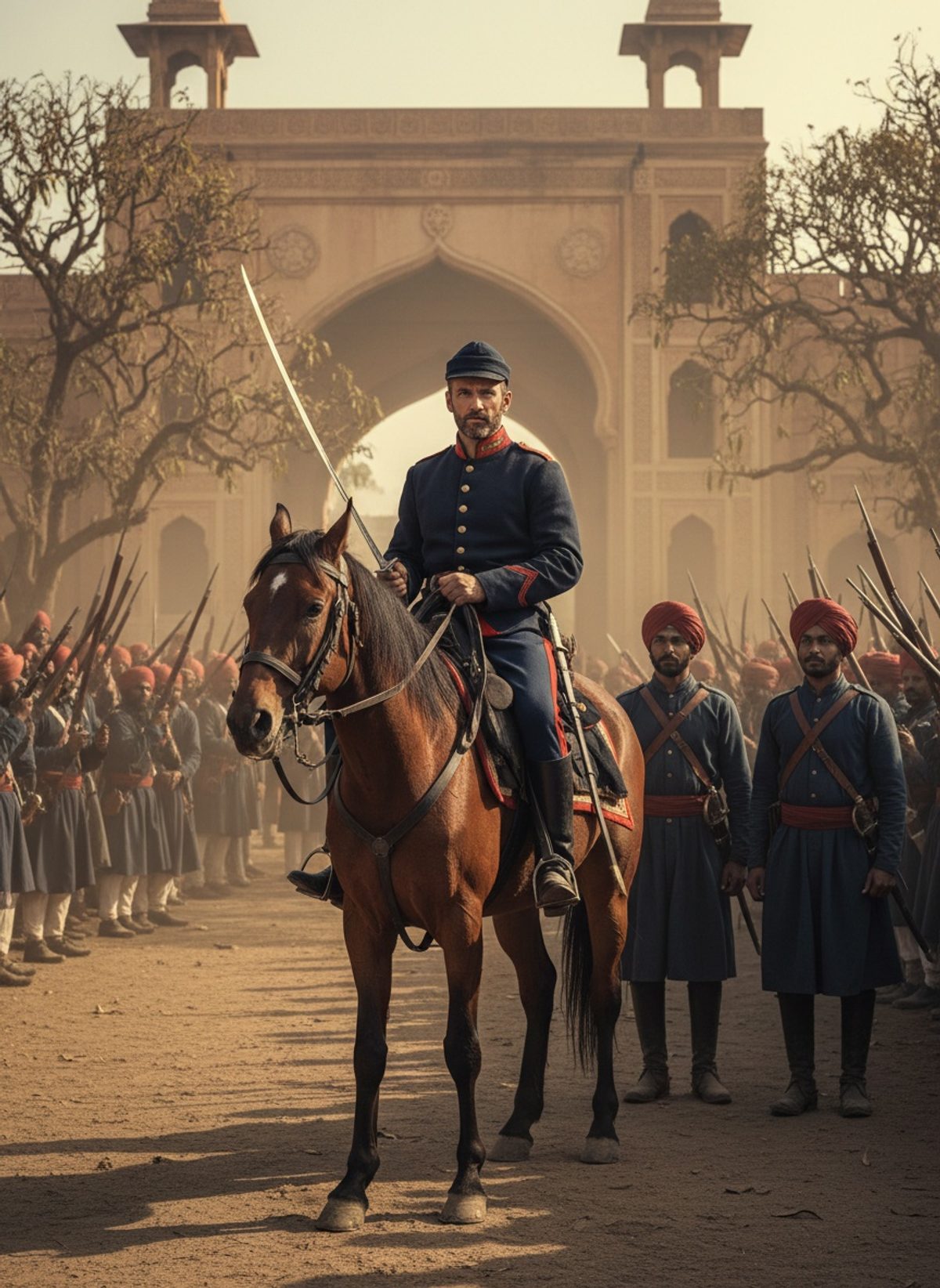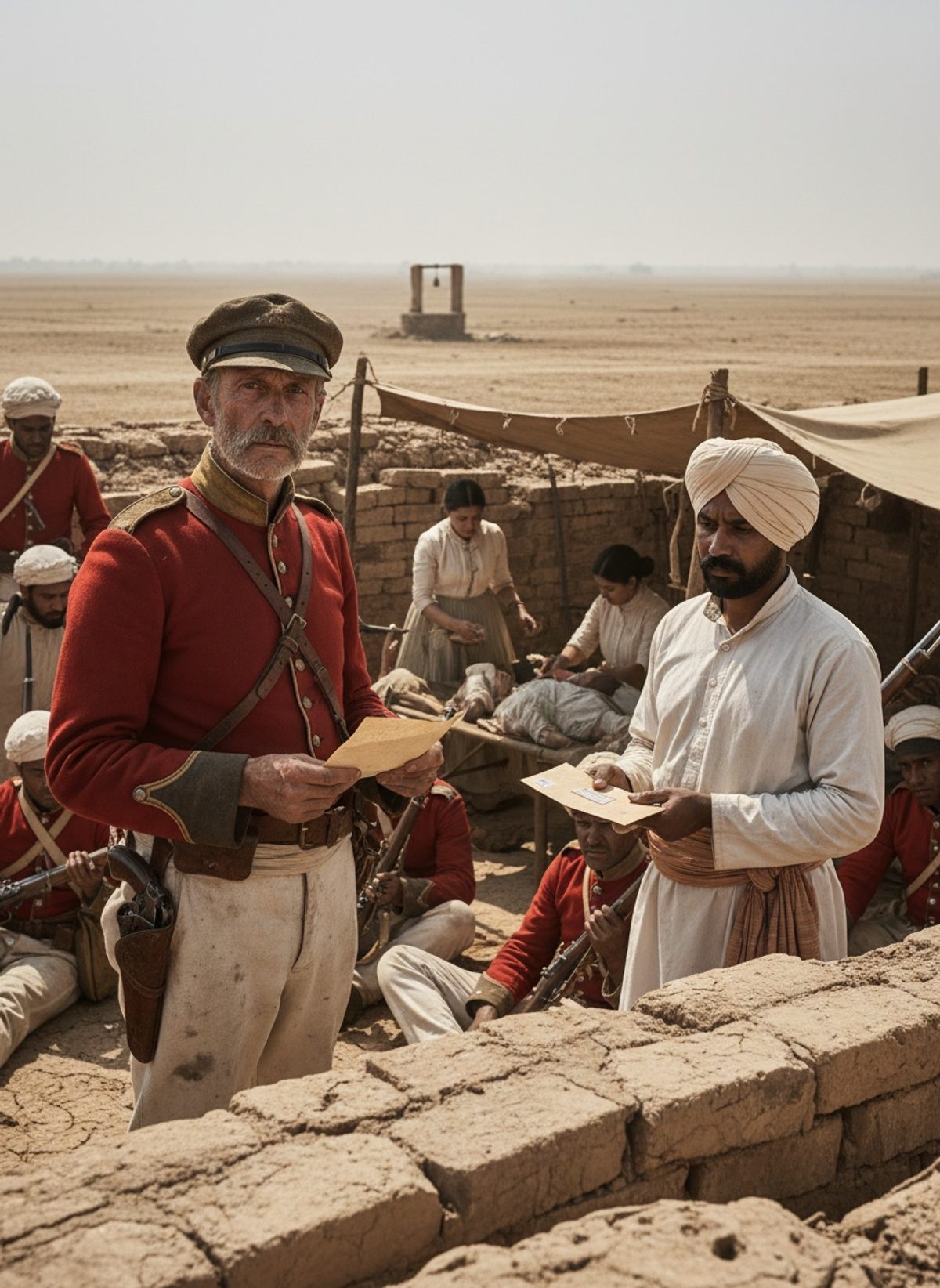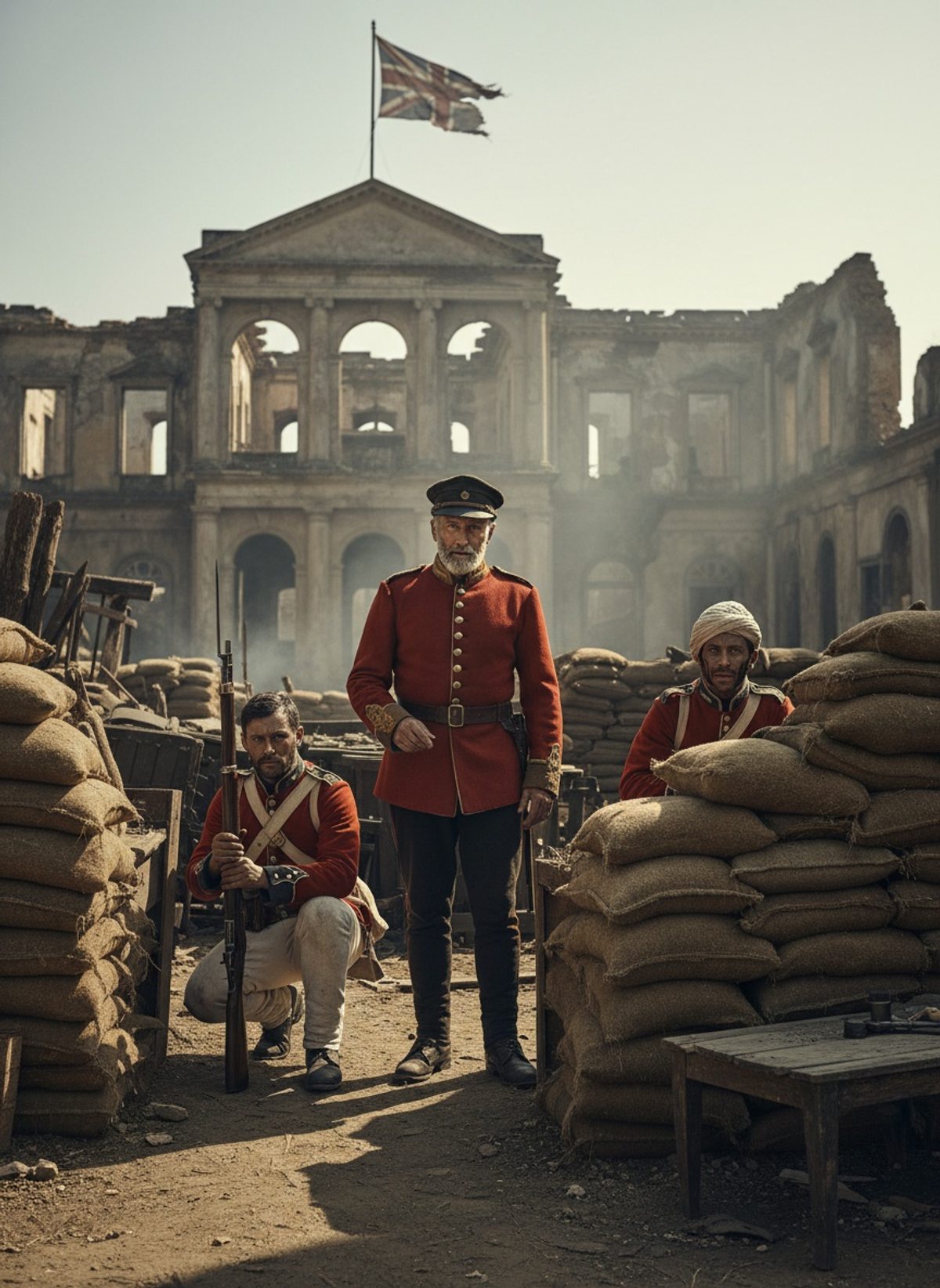
The air in Lucknow that June of 1857 was hot and heavy, the kind of sweltering intensity that pressed down hard on all it touched. The sun, relentless and unblinking, cast a harsh glare on the city, baking the ramshackle buildings and dusty roads alike. The sound of distant cannon fire boomed intermittently, a grim reminder of the conflict simmering beyond the high walls of the beleaguered British Residency. Inside its compound, Brigadier-General Henry Lawrence looked out over the parapet, knowing all too well the storm that loomed just beyond those gates. The great Indian Mutiny—a tide of rebellion sweeping across northern India—had already claimed countless lives, and now, it would take his, too.
Lawrence understood the gravity of the situation. A seasoned campaigner in the service of the British Empire, he had seen much in his time, but foresaw none more challenging than the events unfolding in Lucknow. As the Mutiny ignited across the subcontinent, sepoys—native Indian soldiers serving under British command—rose in revolt, driven by long-simmering grievances against their colonial masters. The once-unshakeable foundation of British authority in India cracked and crumbled under the rebels' determined onslaught.
For Lawrence, preparing the Residency compound for siege was an exercise in both strategy and foresight. The Residency's walls, steely symbols of colonial power, now became fortifications, buttressed and fortified under his command. Supply lines were established, munitions stockpiled, and men readied themselves for the siege they knew was inevitable. Inside, 1,700 men stood at the ready against the formidable force of 60,000 rebels gathering outside. Though his personal preparations would not extend beyond the month, the grim resolve he imparted would guide the beleaguered garrison long after his passing.
In those claustrophobic days preceding his death, Lawrence had twice sent pleas for reinforcements. On June 30, a stray shell burst over his head, inflicting wounds that would soon prove fatal. Yet, even in his dying moments, Lawrence's prescience shone through. "If you can hold out until November," he murmured, "Lucknow will be relieved." These would be among his final words, but they echoed with the weight of both prophecy and command. As he succumbed to his injuries on July 4, the responsibility for Lucknow's defense passed to the garrison he left behind, determined to hold firm against overwhelming odds.
Read next: When Cornelia Sorabji Crossed a Zenana Threshold, 1904
The siege that followed stretched across eighty-seven arduous days. Fortitude under fire became the garrison's strength as rations dwindled and disease spread mercilessly through the ranks. Yet courage found unexpected allies in those determined to endure the relentless shelling and assaults. In the cavernous, dimly-lit cellars of the Residency, women and children took shelter, forming a community united by fear but resolute in survival. Their stories, seldom told, were as indomitable as any; a testament to endurance in the face of adversity.
Despite the oppressive heat, monsoon rains would bring little reprieve. The siege intensified as torrents muddied the landscapes within and beyond the Residency compound, a liquid reminder of the life and land at stake. Knowing their lines of supply and communication were severed, defenders faced each rising day with the specter of annihilation. Yet, inspired by the hopes Lawrence’s words ignited, the garrison held on, driven less by obligation to Empire, more by sheer determination to survive and retain whatever dignity the circumstances allowed.
The tale that unfolded within Lucknow Residency was one wrought from a less visible strand of history, often overshadowed by grander narratives of imperial dominance and colonial ambition. Yet it was precisely this confluence of unwavering resistance and gravely stark reality that encapsulated the human spirit underpinning the great Indian Mutiny—one challenging the very bedrock of British rule in India.
When at last relief came in November, heralded by the arrival of British reinforcements under Sir Colin Campbell, it brought an end to the agonizing siege with shouts of salvation. The survivors—haggard and hollow-eyed—emerged into a world seemingly new again, minds framed by their ordeal and hearts steadied by the memory of the bravery and sacrifice entailed. The deeds etched within those ninety-four walls bore testimony to the fortitude displayed, a legend they left out of many textbooks, but no less significant in its historical repercussions.
The survival of those within the battered walls of the Lucknow Residency is more than a military footnote. It poses crucial questions about resilience under unimaginable pressure and the human cost of imperial entrenchment—matters that resonate far beyond Victorian pages. This narrative of holding against the tide, drenched in cultural and political symbolism, was not simply about the clash of empires but about the spirit that can transform impossibility into persistence. Lucknow, under siege and then reprieved, teaches us this indispensable lesson. The courage experienced there, amidst the chaos of revolt, serves as a powerful reminder of the endurance capable under duress, reflecting the multifaceted legacy the British Empire, and the peoples it touched, have left us.