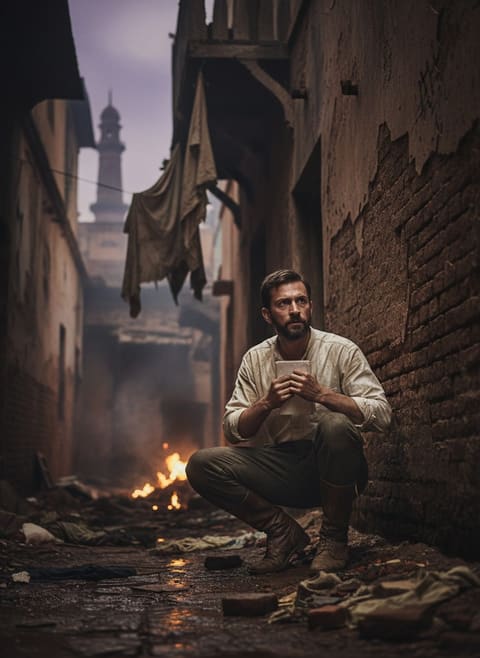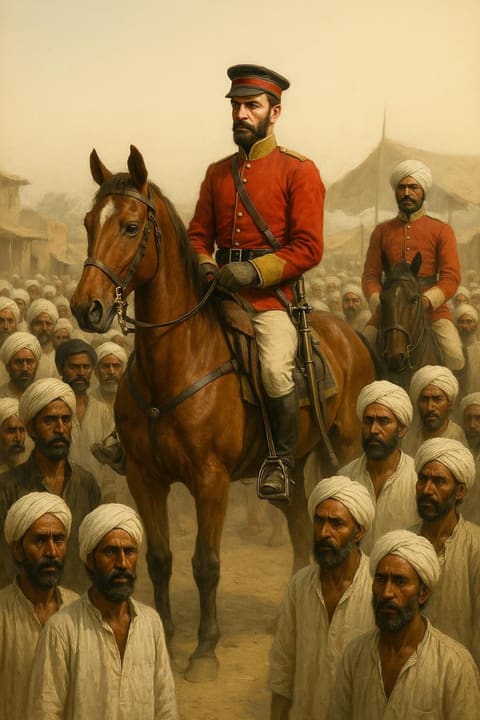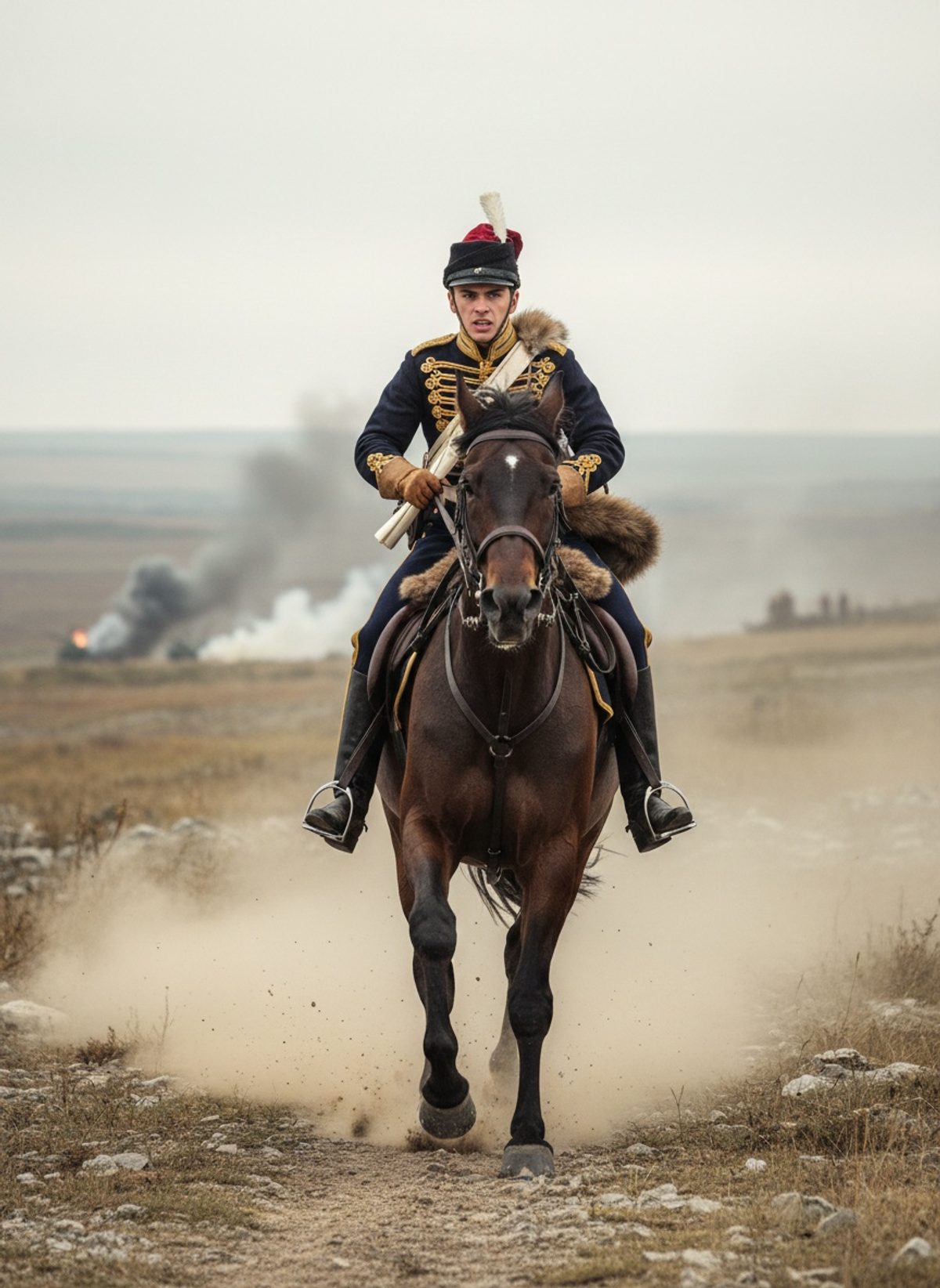
The chill of October had settled over the bleak landscapes of the Crimean Peninsula, a land smothered in the muted hues of autumn. Beneath a sky pregnant with steel-grey clouds, the harried quiet of dusk swept across the Valley of Death. The air was tense, punctuated by the distant rumble of heavy guns on that fateful day in 1854. Against this grim backdrop, a solitary figure cut through the growing darkness — Captain Louis Nolan, a man carrying not just a written order, but a harbinger of catastrophe.
The Ill-Fated Errand
Atop a horse galloping at the edge of madness, Captain Nolan descended from the heights where Lord Raglan and his staff surveyed the battlefield. The order in his hand, a scribbled missive of ambiguous command, would soon plunge the Light Brigade into their doomed charge. Lord Raglan, the British commander, had meant to rectify a strategic oversight: to prevent the Russians from removing artillery from the heights. But his words, marked by haste and vagueness, bore the seeds of disaster. “Advance rapidly to the front,” the order began — a handful of words that belied the clarity required in the heat of battle.
The fury of intent rode upon Nolan's breath as he reined his steed to a halt before Lord Lucan, the commander of the cavalry division. As the exchange unfolded, tempers flared amidst the smoke and confusion. Lucan, famed for a belligerent disposition, demanded clarification. Yet the briskness of the moment allowed no pause. Nolan's own frustration clipped his response, pointing ostensively towards the line of cannons in the valley below. It was there, amid the rolling clouds of pyric vapour, that destiny awaited. Miscommunication had sown the seeds of tragedy.
A Leap into the Maelstrom
As Lucan turned to pass the order along to Lord Cardigan, leading the Light Brigade, the wheels of fate were already in motion. Six hundred horsemen assembled, a procession of courage trailed by shadows of uncertainty. The air crackled with anticipation and the distant roar of artillery. As the bugle called the advance, the brigade rode into the valley, their silhouettes etching a brave but futile path against the cannon-laden crest.
Read next: When Britain Seized an Island and Dared the World to Stop It
The earth trembled under the thunderous advance, while the echoing clamor of hooves joined the symphony of battle. The sabres glinted briefly under a sun now obscured by the pall of war, a last gleam of glory before their plunge into the abyss.
It was precisely then that the first volley cut through. Captain Nolan, astride his horse and perhaps realizing the grim error, rode recklessly across their path, his voice lost in the wind and cacophony. A shell burst among the horsemen, killing him instantly. His body was found lying upon his horse's neck, a tragic harbinger reduced to silence, guiding no further.
The Valley of Death
The men rode onward through a hailstorm of lead and steel. The valley had become a crucible, a place where bravery and futility intersected in lethal embrace. Each man knew the stakes and yet charged on, driven by an unyielding sense of duty and honour. Smoke hung heavy in the air, and the piercing whistle of cannonballs rent the sky as horses fell beneath their riders, shattering the charge's once-proud formation.
Amidst the chaos, the true horror of modern warfare unfolded. The Light Brigade, outnumbered and outgunned, cut their path to the Russian lines, only to be met with resolute metal and fire. There were those who reached the cannons, only to find that victory was as ephemeral as smoke. The order had been fatally misconstrued, the wrong guns charged.
Read next: When Cornelia Sorabji Stood Before a Purdah Wall, 1904
When the remnants returned to their lines, they emerged from the valley haunted by the maelstrom they had survived — fewer than had marched in, bearing tales of a valor framed by tragedy. The survivors would stagger from the shadow of mortality, tethered forever to a bitter memory of steel and thunder.
Lessons Carried Forward
Though the Charge of the Light Brigade has since passed into legend, the events of that October day resonate far beyond the mist of Victorian martial pride. It stands as an enduring testament to the lethal consequences of miscommunication in warfare. Captain Louis Nolan’s unintended role highlights the fragile threads upon which the fate of many can rest. As scholars dissect the complexities of command and reports retell the tale from innumerable angles, the charge retains its place in the annals of military history as a study in hubris and heroism.
Yet, within this tragedy, there lies a stark reminder not just of the perils of war but of the human spirit’s ability to forge courage from chaos. The Light Brigade rode into legend not merely as an emblem of noble folly, but as a symbol of the enduring human endeavor to find purpose even in the heart of disaster. It is a tale that echoes through the ages, whispering its solemn truths to any who will listen — that valor cannot be confounded by error alone, and that stories of sacrifice demand both remembrance and understanding.