She wasn't a soldier. She had no rank or commission, yet she faced the missiles alongside men who held rifles. When the siege of Lucknow closed its iron grip in 1857, women were thrust into a maelstrom they neither sought nor escaped from.
As the mutinous tumult of the Indian Mutiny surged over the subcontinent, bearing down on British strongholds, Lucknow’s Residency became a bastion of despair and fortitude. Here, within its beleaguered walls, soldiers' wives served in a silent, unsolicited corps, their labor an undercurrent of resilience in a tide of chaos. They cooked meals under hostile fire, patched uniforms with trembling fingers, and whispered lullabies to drowsy infants as the rumble of danger droned ever closer.
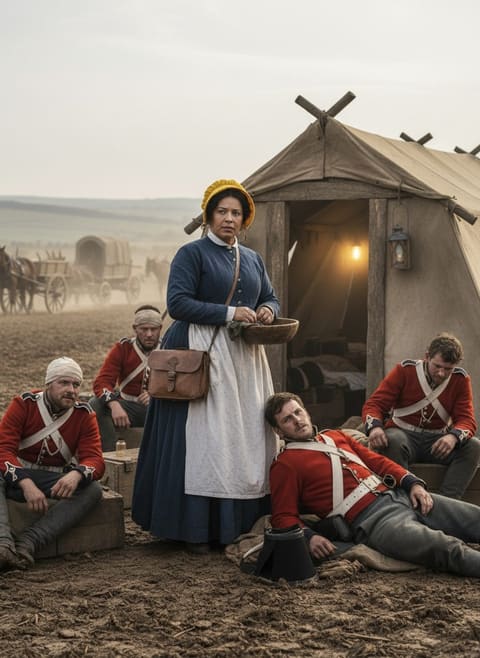
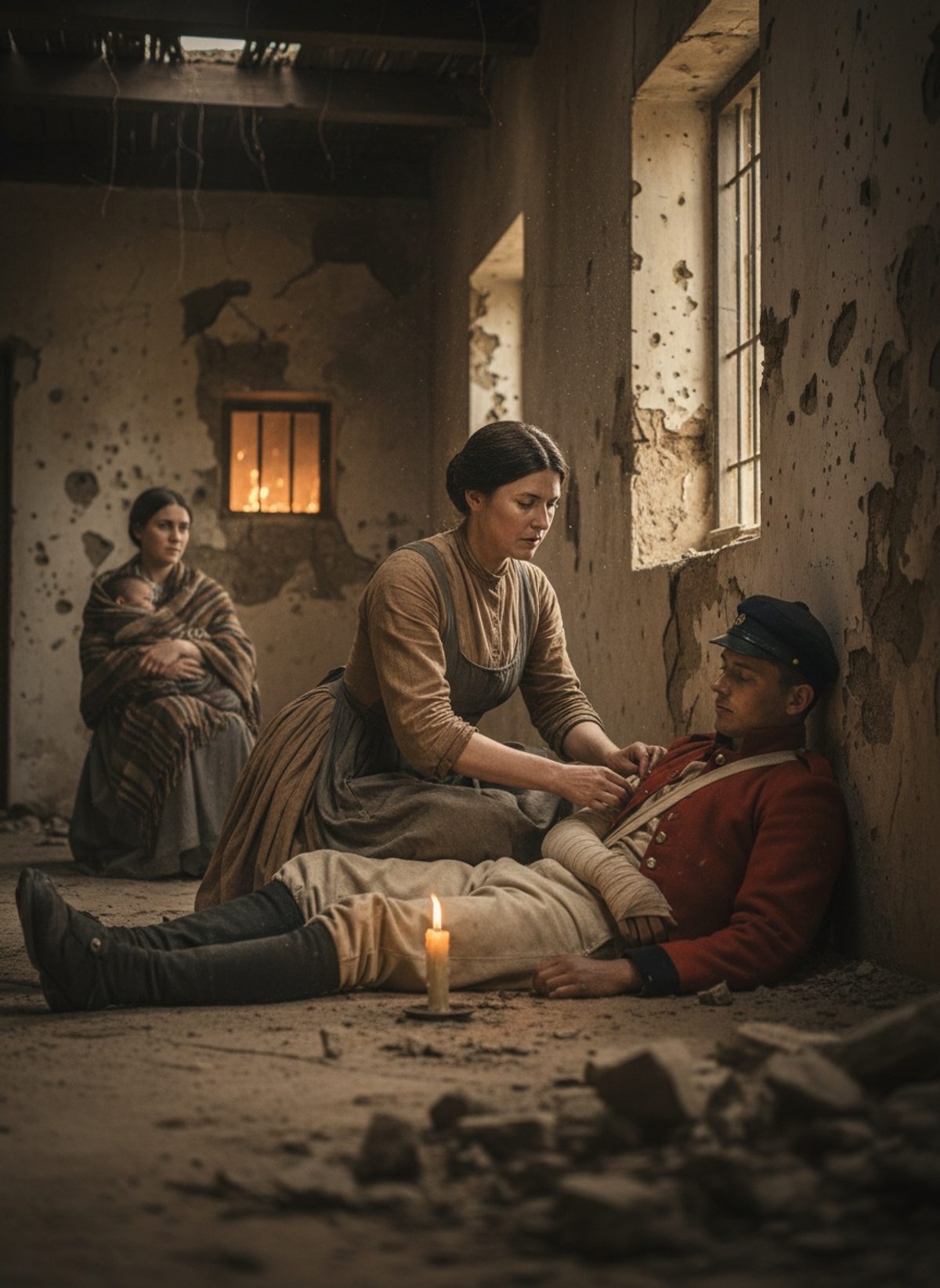
The Residency’s once stately grounds devolved into a crumbling battlefield. The siege wrapped its unyielding tendrils around the occupants for eighty-seven interminable days. Women with weary hands nursed the injured; every wound confronted them with a veiled question of mortality. They shared a grim kinship in their stoic tending to shattered men, often British soldiers whose strength ebbed amidst constant strain and uncertain odds. The kitchen became a crucible where bullets and mortar carried the scent of peril intertwined with the mingled aromas of austere meals eked out from dwindling stores.
Daily life beneath the threat of annihilation tested the mettle of these women in unrecorded acts of valor. Within the Residence’s battered walls, they stood as sentinels of courage. No coherent plan or majestic speech bolstered their spirits; it was the heartbeat of survival that thumped steadily — they simply endured. Amid explosions that tore the sky, they dug makeshift graves in silence, lives departing unceremoniously into the parched Earth. Their hands that once clasped beloved faces now labored with spades, doing the work of grieving but remarkably without public lament.
Read next: When the Dak Runner Carried the Empire's Word, 1880
The children, innocent residents of this defacto battlefield, played in powdery rubble, their lives interrupted by the discordant symphony of gunshots. Through their eyes, the siege was a grim adventure, a canvas painted with streaks of dust and courage. They climbed the steps of verandas, turned fortress parapets, concocting games that momentarily vanished the horror outside. While guns boomed and cannons roared, their laughter, though rare and fleeting, echoed defiantly.
In this crucible of war, women became stewards of hope and harbingers of an indelible legacy. They donned improvised uniforms of practicality — skirts stained with sweat, dirt, and defiance — and walked alongside men into corridors darkened by the specter of surrender. Each day the sun set on another fervent bid for survival, the horizon a quivering line between life preserved and anguish endured.
Perhaps no medal adorned their clothing; no citation echoed their deeds. Theirs was a victory rendered in the fervent breath they exhaled each dawn, alive to see another day, to stand guard over their newfound identity. The companionship of shared hardship laid bare the divisions of class and birth; it evaporated in the crucible of will where necessity blurred distinct lines. The unseen enemy was not merely those besieging blue coats in rebellion, but the gnawing hunger, fatigue, and despair that so steadfastly encroached.
Read next: When the Dhobi Ghat Became the Empire's Washing Line, 1895
As relief advanced, eventually lifting the suffocating siege, it bore witness to an unprecedented ledger of bravery etched in the worn faces of shadowed figures. Women whose names were seldom recorded and whose heroism pervaded the air like wafting smoke understood deeply the gravity of those long days and darker nights. For in that halcyon pause post-siege, the flower of quiet endurance bloomed in their collective memory.
In this hidden epic of survival against the odds, the contribution of army wives during the Lucknow siege grew roots in the storied soil of empire unseen. They were architects of determination and cultivators of an indomitable spirit. Their history unwritten in the annals of officialdom, nonetheless etched indelibly in the essence of what it meant to be steadfastly human in the face of unbridled hostility.
Through these stories of anonymous valor, one finds not just the tale of survival, but an enduring illustration of human tenacity. Within the shadows of a spotlight reserved for soldiers and generals, these women carved an unspoken narrative suffused with the same courage and endurance. Let us remember them not as footnotes to history but as integral actors who, unheralded and unbroken, stood unyielding when every shadow warned of defeat. These women remind us that might oftentimes lies not in the roar of cannons, but in the quiet resolve that musters behind unwearied eyes. In acknowledging their plight, we gain a fuller picture of the human spirit's finesse under duress. It asks us to consider: if courage could be personified, would she not harbor the heart of an army wife at Lucknow?