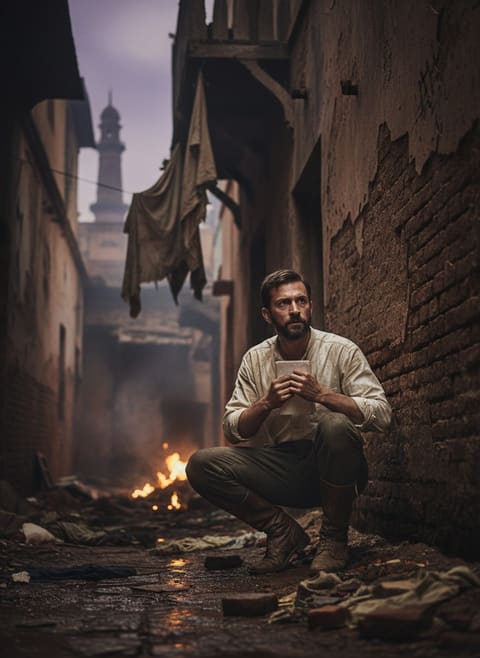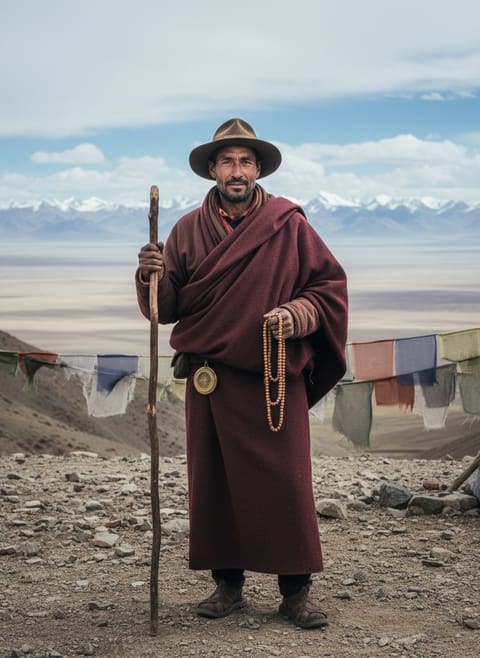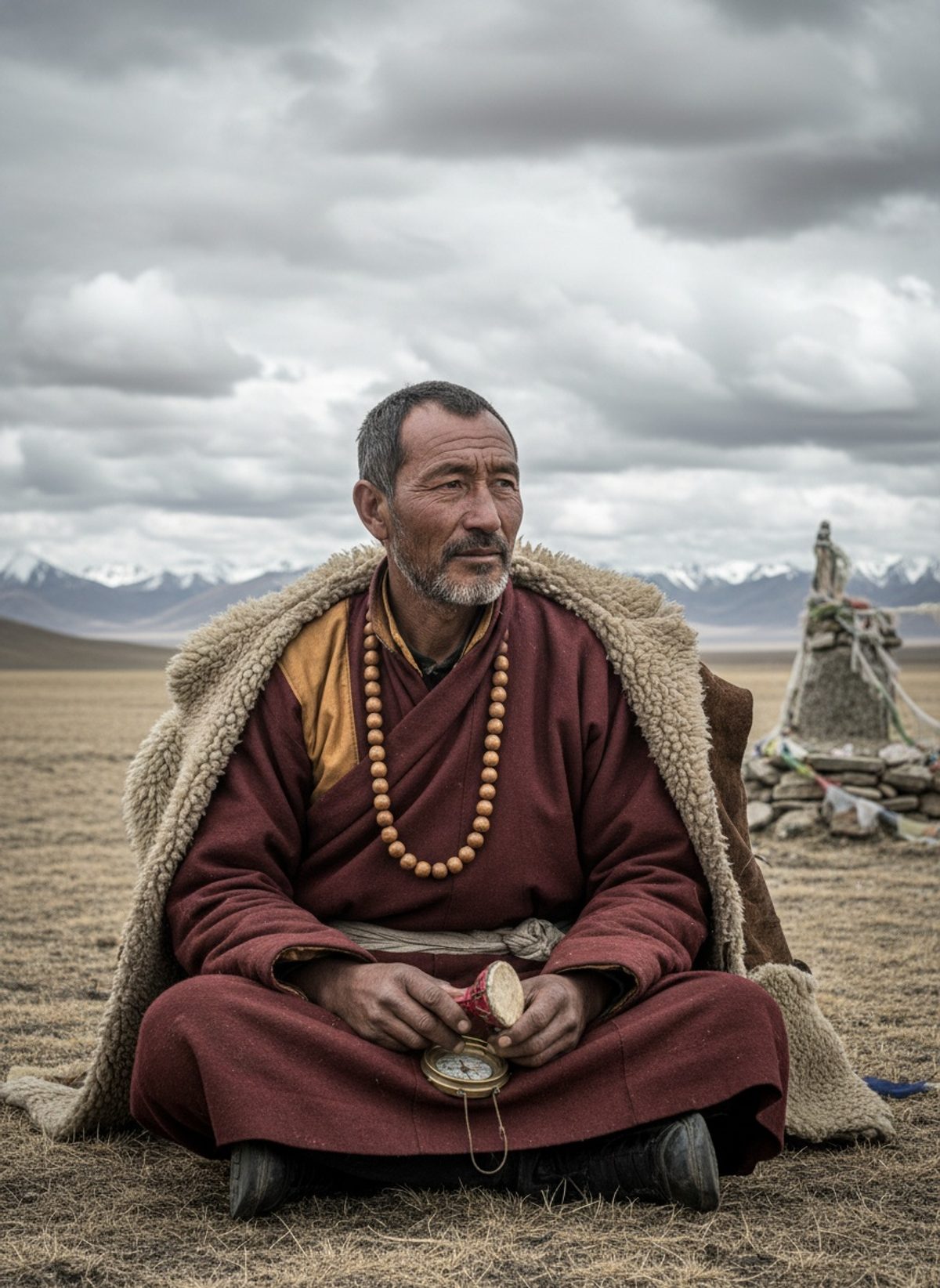
The icy winds bit through Nain Singh’s woolen robes as he squinted against the sunlit glare of the snow-covered pass. Around him, the vast silence of the Tibetan plateau stretched into the distance, broken only by the soft crunch of snow beneath his calculated steps. Each movement was precise, each step counted in secret with the beads tucked beneath his prayer shawl. Today, those steps took him along a path no European dared to tread, his keen senses attuned to the rhythms of the mountains, the sacred compass of his pilgrimage hidden within a simple altar drum at his side.
The Schoolteacher's Secret Mission
Nain Singh, a humble schoolteacher from the Indian Himalayas, found himself in the employ of the British Empire during the height of the Great Game—a period of strategic rivalry between the British and Russian empires for supremacy in Central Asia. The geopolitical drama often overshadowed the contributions of those who did not fit the mold of the typical Empire adventurer. Nain Singh, however, was far from typical. His mission, brimming with both peril and secrecy, was to map the uncharted interior of Tibet, a land closed to Europeans and fiercely guarded by its priests and regents. Disguised as a Buddhist pilgrim, he became an unlikely bridge between two worlds.
The journey required more than just courage; it demanded extraordinary endurance and a shrewd mind. Trained by the British surveyor Sir Henry Strachey, Nain Singh learned to measure distance by the pace of his stride, estimate latitude by observing the stars, and conceal instruments—such as compasses and thermometers—within religious objects. The altar drum he carried was no mere instrument of devotion. It was ingeniously modified to hide a compass, allowing the unassuming schoolteacher to mark latitudinal points as he traversed the harsh Tibetan terrain.
In the realm of espionage and exploration, Nain Singh’s endeavors were singular. He traversed over 1,200 miles, enduring the treacherous passes of the Himalayas, facing potential detection that could result in death. Yet, each village he passed through offered opportunities for the silent gathering of strategic knowledge: the height of peaks, the course of rivers, and the habits of monasteries, all meticulously logged in his memory. For more than a decade, between 1865 and 1875, his journeys provided the British with unprecedented insights into a land that legend deemed impenetrable.
Read next: When Nolan Carried the Order That Doomed the Light Brigade
The Rivals of the Roof of the World
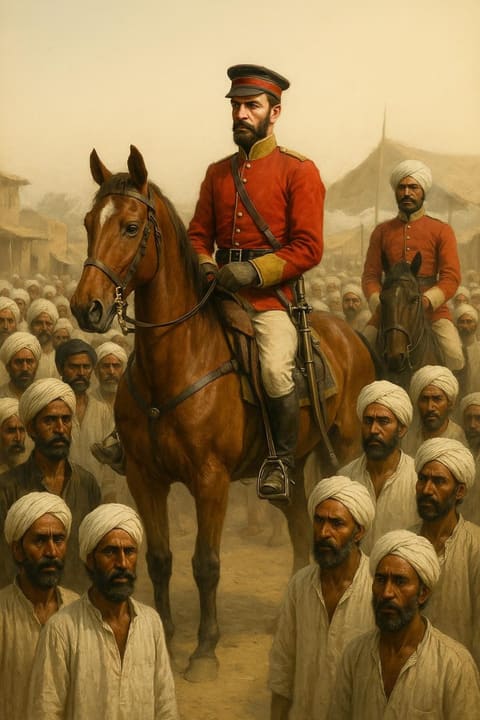
The "Great Game" era was rife with tales of dashing spies and debonair adventurers. However, Nain Singh was neither. His tools were modest and his ways humble. The looming presence of the Russian Empire to the north and its perceived threat to British India turned Tibet into a focal point for intelligence-gathering. The Himalayan region, with its peaks touching the heavens and passes shrouded in mystery, became a theater for exploration with stakes as high as its altitudes.
Tibet, a sanctuary of spiritualism and isolation, evoked an aura both sacred and forbidden. It is within this mystique that Nain Singh operated, a man of faith charting sections of lands that seemed ordained by destiny to remain unknown. The Tibetan platitudes were as vast as the ambitions of the empires vying for power. Europeans had been barred from traversing these holy lands, yet a disguised pilgrim could move with relative invisibility, leveraging the trust and hospitality often extended to those on sacred travels.
With each step, Singh dismantled the impenetrability of Tibet. His path, straddling strategic secrecy and the trepidation of cultural vigilance, unwound into a cartographic marvel handed to the Royal Geographical Society. The intricacy of his maps, revealing the Tibetan wilderness with startling accuracy, stood in stark contrast to the crude approximations that existed before his intervention. The maps demystified the route to Lhasa, the elusive capital, and outlined the course of the Yarlung Tsangpo River, later revealing its path as the Brahmaputra in India.
Read next: When Warren Hastings Prayed in a Mosque and Ruled an Empire
A Legacy Beyond Borders
In 1875, Nain Singh stood before the Royal Geographical Society, an institution renowned for celebrating the feats of explorers hailing from far grander backgrounds than his own. Yet, in that moment, none could deny the audacity and significance of his accomplishments. Though his name would never resonate as loudly as the Livingstones or Burtons of his era, Singh's contributions were undeniably monumental. His maps became crucial tools in the broader tapestry of global geography and colonial ambition, establishing a legacy interwoven with the land he trod with such forbidden familiarity.
Beyond the practical triumphs, Nain Singh’s story challenges the archetype of the explorer. It is a reminder that history’s pathfinders often emerge from obscurity, defying norms and expectations. His tale, marked by resilience and ingenuity, underscores a pivotal truth: the spirit of discovery knows no monopoly of background or birthright. By unwinding the veils around one of the world's most mysterious regions, he expanded our understanding of both geography and human capability.
The world has since been mapped with precision that Singh could scarcely dream of, yet his journeys speak to an age-old truth—that discovery, at its core, is a human endeavor. His mission, executed with devotion and disguise, reminds us that true exploration often demands stepping beyond the bounds of what is safe or sanctioned. In Nain Singh’s footfalls—silent snow-melt steps over the most secretive of lands—we find a testament to the endless curiosity and courage that have charted our course through history.