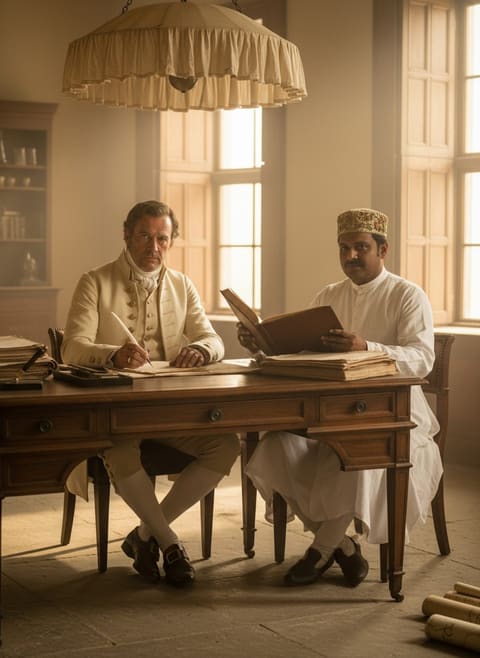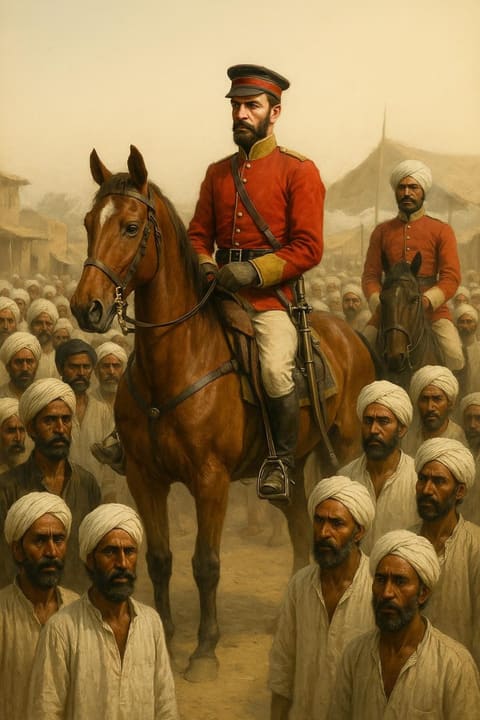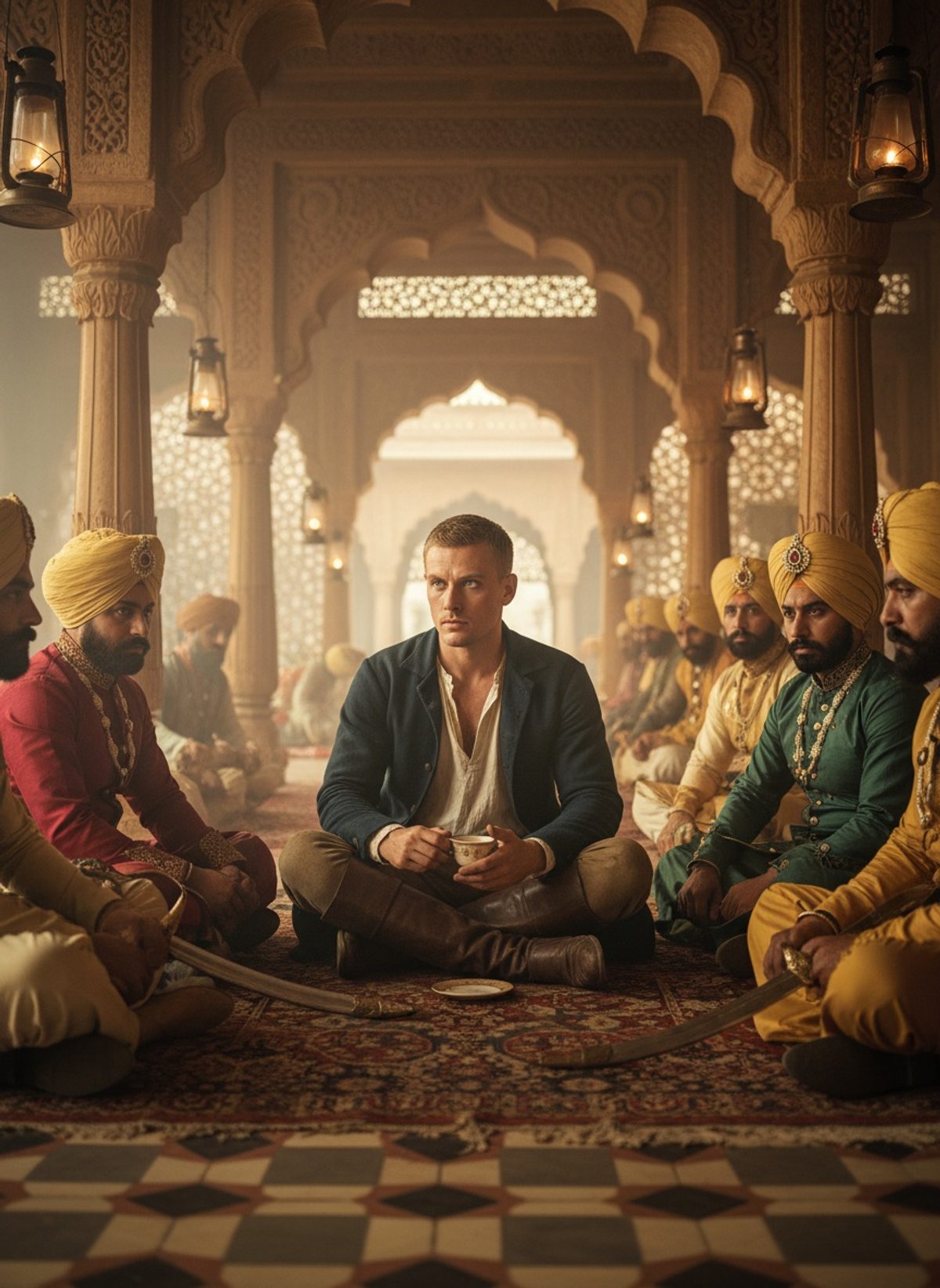
July 1848. The air in Lahore was tense and heavy with anticipation.
The Powder Keg of Punjab
In the sweltering summer of 1848, the city of Lahore seethed beneath the surface with an energy that promised chaos. The Second Anglo-Sikh War loomed, and the grand city at Punjab's heart was a pawn on a fierce geopolitical chessboard. British control teetered precariously as discontent simmered among the local populace and within the Sikhs' own ranks. Amidst this unrest, all eyes were trained on Lahore. Crucial decisions were being weighed in whispered discussions behind the closed doors of the Sikh court, the Durbar. The air was electric with rumors, spreading like wildfire among the city's bustling throngs and tight alleyways.
Enter William Hodson — a young British officer known as much for his audacity as his keen intelligence. The Empire's hold on the region hinged not on brute force but on the subtler art of espionage, discernment, and strategic foresight. Hodson, though unauthorized, understood the stakes and grasped the unique opportunity offered by the brewing conflict. He was not content to watch events unfold from the periphery; instead, he would wade directly into the heart of the storm.
The Bold Step into the Lion's Den
At a time when many would balk at such audacity, Hodson dared to ride into Lahore alone, without orders or an escort. His mission was simple, yet dangerous beyond measure: to gather intelligence directly from within the lion's den — the Sikh Durbar. Hodson knew the intrinsic value of firsthand information, a commodity capable of altering the course of war. It took a man of unusual courage and cunning to walk unarmed into a city teetering on the edge of insurrection.
Read next: When Edmund Burke Stared Down an Empire in Parliament, 1788
Lahore, with its exquisite blend of Mughal architecture and the looming fort, presented a stark yet mesmerizing landscape. Its streets echoed with the melodies of traders and craftsmen interwoven with the murmurs of political intrigue. Somehow, amidst all this, Hodson moved invisibly, listening, observing, and absorbing every detail the city divulged. The stark contrast of a lone British officer navigating the complex web of Sikh politics without fear was an image stark enough to capture the imagination of future generations pondering this history-altering moment.
The Gathering of Treacherous Whispers
Inside the Sikh Durbar, the air was thick with conspiracies and cautious alliances. Hodson took his seat among the courtiers, a foreigner in a sea of sceptical eyes. What played out before him was a theater of political chess, with each move potentially setting off ramifications that would echo across the subcontinent and beyond. Leaders debated, emissaries bargained, and all the while, tensions twisted tighter than a drawn bowstring.
Hodson listened closely, his keen senses untangling the labyrinth of languages and dialects that buzzed quietly around him. Through a deft combination of charm and quiet reticence, he gathered intelligence critical to the British strategy in the region. In those heated debates and hushed exchanges, he discerned the undercurrents of loyalty and dissent that dictated which direction the pendulum of power might swing. His presence was imperceptible, yet the information he acquired would luminous the roadmaps of British war planning.
Read next: When Nain Singh's Compass Beat the Roof of the World
The Impact on Imperial Strategy
The intelligence Hodson secured in Lahore transcended its immediate value, reshaping the British approach to the Second Anglo-Sikh War. Armed with unparalleled insights into Sikh strategies and factions, the British command could now recalibrate its tactics to exploit divisions and counter potential uprisings. Hodson's mission, steeped in audacity and marked by a singularity of purpose, reaffirmed the tenet that information could be as powerful as any army on the battlefield.
The narrative of one man walking alone into enemy waters captured the imagination of the British public and military alike, casting Hodson's role in near-mythical light. His actions proved pivotal, not just in securing victories upon the battleground, but in shaping the British narrative of mastery and cunning in the Jewel of the Crown.
A tale of boldness and intellect, Hodson's solitary mission into the heart of Lahore reveals much about the machinations of empire, the intricate dance of diplomacy and strategy, and the balance of power that defined an era. It's a story that underscores the far-reaching impact of a single man's courage amidst the tides of history — a forgotten legend that continues to inform our understanding of colonial ambition and resistance today.