The chill of an Atlantic autumn hangs over Stanley like an unwelcome shroud, the air crisp and biting. The streets of the Falklands' capital are quieter than usual, their stillness broken only by the occasional clatter of boots from an Argentine patrol. Shadows grow long under the spectral glow of streetlamps, casting twisted figures that echo the simmering tension among the residents. It is April 1982, and the Falkland Islands have been swept into the chaos of conflict.
The Unlikely Spy
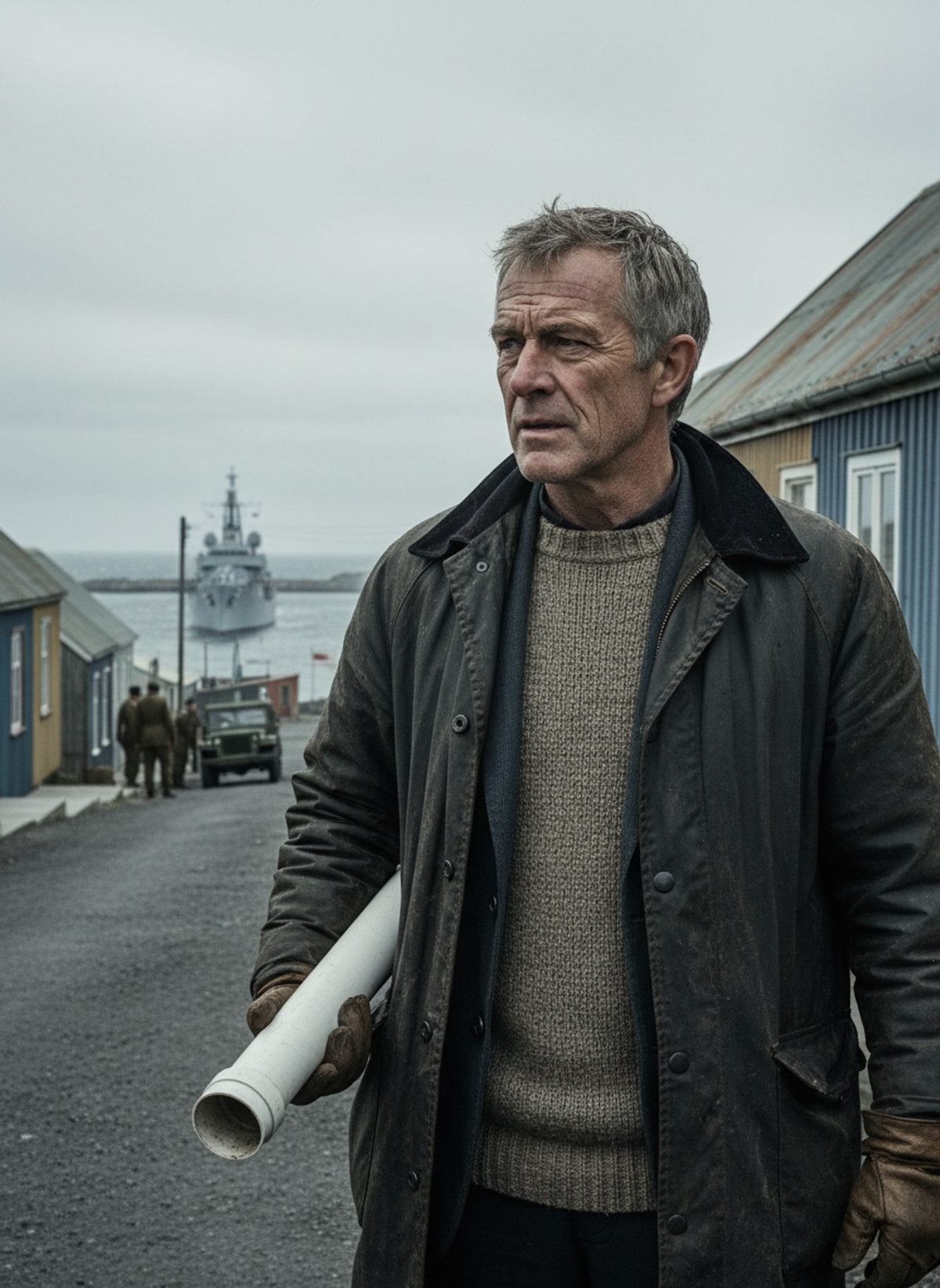
Amidst the occupied streets of Stanley walks Terry Peck, a former Chief of Police and a man known for his deep patriotism. Those who glance at him see a familiar face carrying an unfamiliar object: a piece of drainpipe. Yet inside this innocuous length of plastic hides the lens of defiance—a telephoto camera lens, capturing clandestine images of Argentine military positions.
Peck's resourcefulness and determination are rooted in years of opposing any territorial concession to Argentina. When British minister Nicholas Ridley visited in 1980 to propose handing the islands to Argentina and leasing them back, Peck fitted a loudhailer to his Land Rover, pillorying Ridley all the way to the airport. Now, two years later, his resolve is tested under occupation. Each click of his camera risks exposure, but the captured photographs—smuggled out by departing British contract workers—serve as precious intelligence for British forces yet to arrive.
Escape from Stanley
The Argentine military police, aware of his anti-Argentine reputation, place Peck's name on their list. Intelligence from Constable Anton Livermore reaches him just in time: The Argentine Major Patricio Dowling, notorious for his disdain for the British, plans his arrest. With urgency, Peck arms himself with a pistol, mounts a borrowed motorbike, and begins his escape from Stanley. His first refuge is Long Island Farm where a celebration is in full swing.
Read next: When Edward Gibbon Wakefield Dreamed a Colony Into Existence
Fate almost closes in at the farm when a Puma helicopter lands outside, and Argentine soldiers encircle the building. Yet fortune favors ingenuity; Peck locks himself in the bathroom, the search proves indifferent, and he slips away, continuing his flight to the remote sanctuary of Geordie's Valley.
A Cold Refuge
The valley, once a cherished fishing spot in peaceful times, becomes his hideout for ten bleak days. The environment is unforgiving; cold bites through his makeshift camp. Despite the discomfort, he endures until a cooking mishap extinguishes his morale along with his meal. Seeking aid, he finds solace at Brookfield Farm with Trudi Morrison—a hot meal and a bath restoring both body and spirit. With her support and the help of other locals, Peck retrieves cached weapons, preparing for a British return.
The British Return
The signal comes on 21 May 1982. "We've just received a lot of friends," announces Isabel Short over the radio from Port San Carlos. British troops have landed. Emboldened, Peck strives to reach the beachhead. Cresting the ridge, he is greeted by the sight of British forces, eight thousand miles from home, marching inland. For three days, he is debriefed by the intelligence division. By the second day, Major Roger Patton of 3rd Battalion, Parachute Regiment, requests his guidance—and Peck willingly joins 3 Para's D patrol company.
For ten nights, he guides them over familiar but now dangerous turf, identifying enemy strongholds and utilizing local knowledge to mobilize farmers and vehicles. His contributions are indispensable, providing critical coordination and insight at a time when every detail could mean the difference between victory and defeat.
The Battle for Mount Longdon
Mount Longdon rises in the darkness of 11 June 1982. Silence covers the troops as they advance, distant artillery suspended in favor of stealth. Yet a treacherous mine shatters their invisibility and with it, the quiet approach erupts into chaos. The battle is brutal and intense, one of the bloodiest of the entire campaign. Amid the fury, Peck’s resolve does not falter. When a paratrooper is shot near him, he courageously volunteers to carry the stricken soldier to safety. Under a canopy of artillery fire, they descend to the relative shelter of a shell crater, sharing the space with eight wounded comrades and two medics.
Surviving on captured rations, Peck remains alongside the battalion for the grueling days that follow, enduring the violent reprisal of Argentine artillery from distant Stanley. The road to victory is bloodied and fraught, but when 3 Para finally march into Stanley, Peck is among them, carrying the battle-worn pride of a man whose home is finally free.
Read next: When John Macarthur's Son Planted the First Vineyard, 1820
For his valor and service, Terry Peck is awarded an MBE. Still, the honorary membership from the 3rd Battalion holds the greater weight in his heart, for its maroon beret and winged cap represent a bond born on the fire-scorched stones of Mount Longdon. Each 11th of June thereafter, he climbs the peak once again, in the somber company of memories, honoring those who fell where he fought—where one man's love for his home shone bright enough to illuminate a path to liberation.
The tale of Terry Peck is more than history's curiosity; it is a testament to the unyielding spirit of those who, in their quiet resolve, change the course of events. Against the vast backdrop of geopolitical machinations, it is the hidden acts of courage—like Peck’s defiance behind enemy lines—that remind us why history must be told complete and untold legends, retold.
Last month, local reservists trained alongside British paratroopers on the islands he helped to free.
Part 20 of 24: One Falklands story a day until Remembrance Sunday