Elizabeth Macarthur had never intended to become a farmer, let alone a pivotal figure in the nascent Australian wool industry. Yet, when destiny placed the opportunity in her hands, she grasped it firmly and with a resilience that defied the expectations of her time.
The Unexpected Founding of a Wool Empire
In 1797, the hulking shadow of the Georgian Empire loomed over the newly established colony of New South Wales. The land was raw, untamed, and alien to British sensibilities. Yet it was into this unpredictable landscape that Elizabeth Macarthur found herself thrust. Her husband, John Macarthur, a lieutenant in the New South Wales Corps, had been charged with insubordination and subsequently arrested, leaving Elizabeth to shoulder responsibilities she had never been truly prepared for.
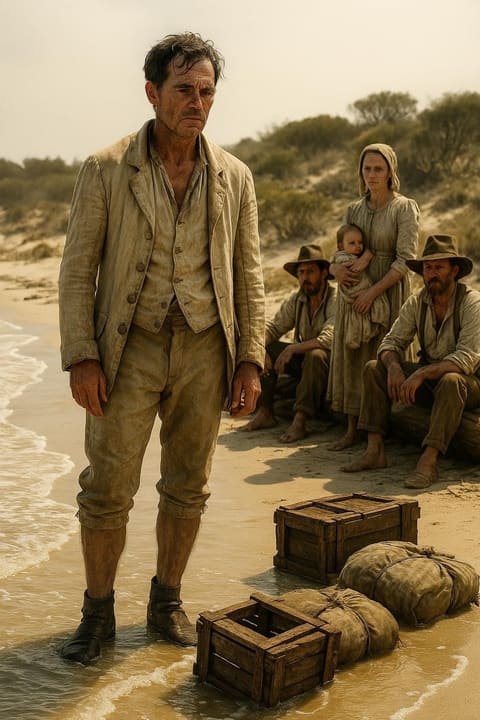
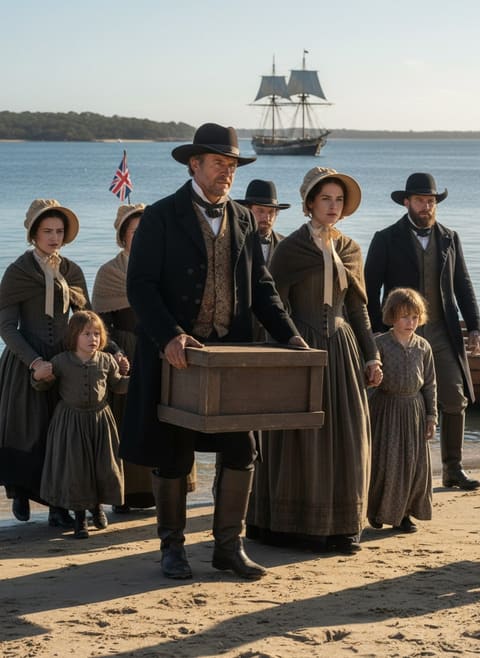
On a storm-tossed voyage across treacherous seas, Elizabeth was tasked with the care of an unlikely precious cargo: a consignment of Spanish Merino sheep. The Spanish embargo on the export of these remarkably fine-fleeced animals meant that these were among the very few to ever reach foreign shores legally, a testament to the tenacity and craft of John Macarthur before his legal tribulations. Yet, it was Elizabeth who ensured these sheep survived the journey when the vessel limped wearily into Port Jackson.
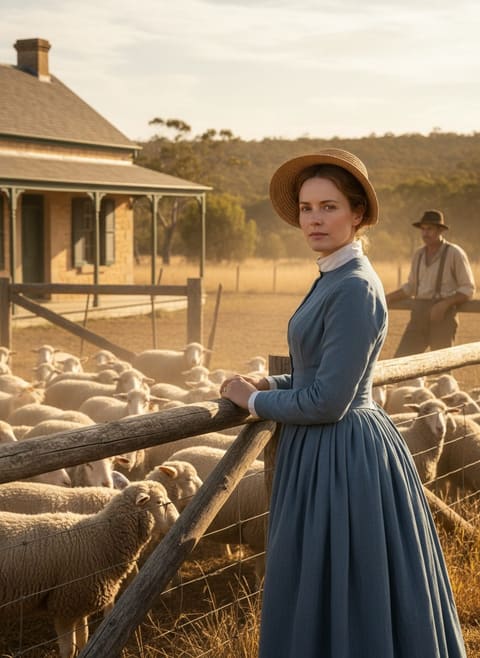
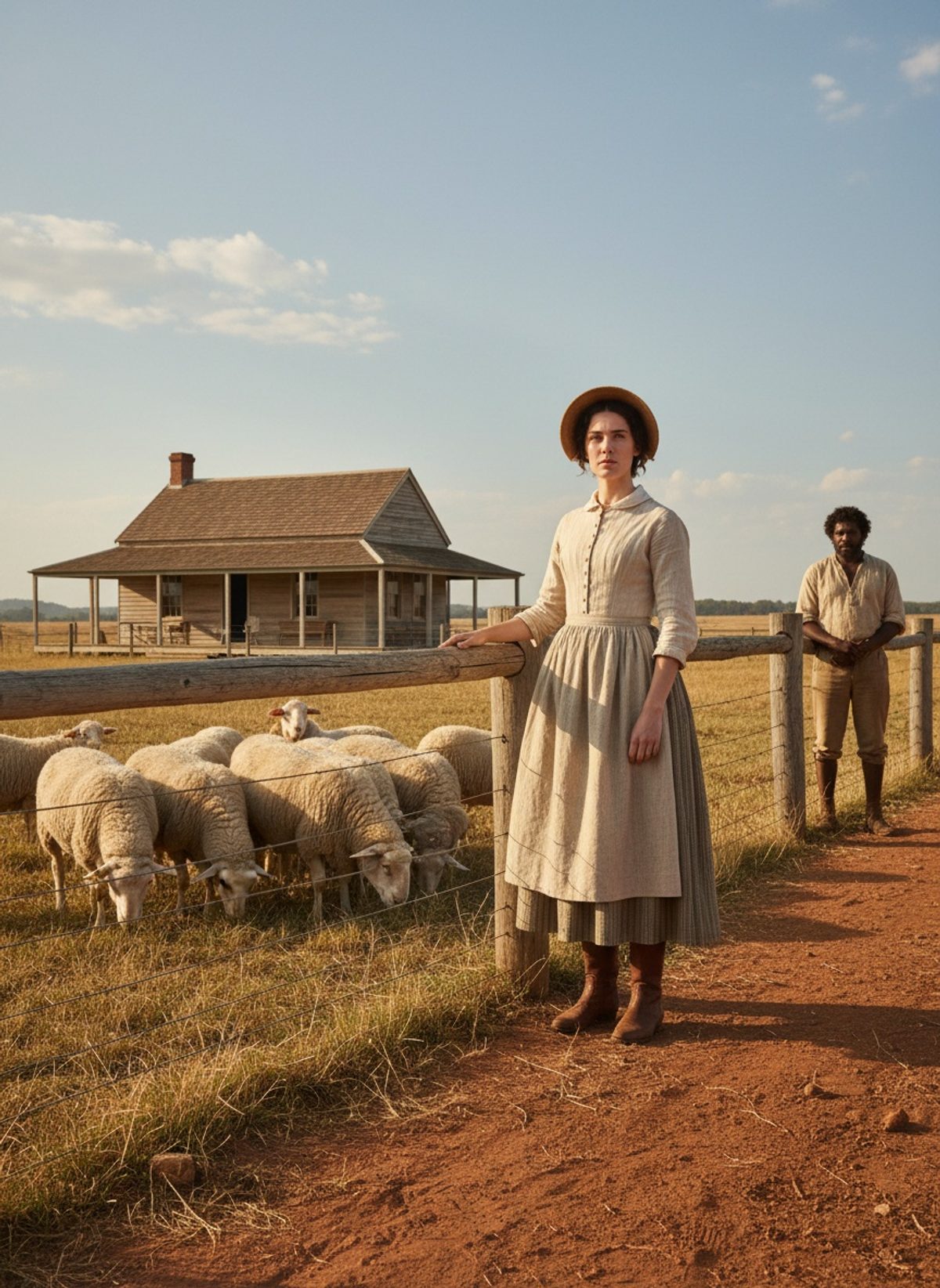
These sheep were far more than mere animals; they were an investment in a dream, a captivating vision of Australia's potential. With a quiet determination, Elizabeth navigated the complexities of running a farm alone in what was still a precariously established settlement.
Read next: When John Macarthur's Rival Built a Free Colony, 1836
The Struggle and Triumph of Elizabeth Macarthur
The colony was unforgiving, a place where hardship was as abundant as the hostile landscape. Elizabeth found herself at the heart of this challenge, balancing the demands of farming with the needs of her family and estate. It was the perseverance of a woman who believed profoundly in the future she was shaping with each arduous day.
Practicality was her guide. She kept meticulous records in a time when documentation was not often deemed a woman's pursuit. She managed accounts, coordinated supplies, oversaw the staff, and made pivotal decisions regarding the cultivation and breeding of the Merino sheep. All these while nurturing her children amidst the tensions of colonial life.
Her accounts show an industrious spirit, a mind adept at both nurturing life and nurturing profit. Knowledge of animal husbandry might have been limited, but she learned through necessity, dealing with the myriad complications these prized sheep brought. They were a delicate breed, demanding both care and innovation in an unforgiving climate.
Sowing the Seeds of an Industry
The significance of the Merino sheep's arrival was not celebrated with parades or proclamations. Instead, it was in the quiet labor of Elizabeth Macarthur's daily life that the antipodean wool industry found its humble beginnings. Her efforts laid the groundwork for what would become an economic cornerstone of the Australian continent.
Under her stewardship, the small flock did more than merely survive; they thrived. The success of the Macarthur sheep would ripple across the colony, inspiring others and gradually dispelling skepticism regarding Australia's potential to support such a specialized breed. Her vision was not simply to maintain; it was expansive, ambitious, setting a standard of excellence that others would soon aspire to emulate.
Read next: When Caroline Chisholm Fed the Hungry at Sydney's Gate, 1841
As the seasons turned, Elizabeth's well-tended Merino flock multiplied. Her practices improved wool quality and increased yields. By the early 19th century, the colony began drawing the attention of wool merchants from across the seas, eager to tap into the burgeoning supply. Through her labors, Elizabeth Macarthur had helped ignite a flame of prosperity that would fortify the young colony’s economic future.
A Legacy Beyond the Loom
Despite the gendered limitations of her era, where women's contributions were often relegated to the margins of history, Elizabeth Macarthur's impact is an undeniable testament to quiet tenacity and visionary work. She was more than a caretaker; she was a strategist, ensuring that her husband's vision did not falter in his absence.
Her unheralded actions bestowed wealth upon a fledgling settlement, setting into motion an evolution that would anchor Australia's relevance on the global stage, not through gold or coal, but through soft, sought-after wool.
In Elizabeth's story, there exists a rich narrative of overlooked influence and uncelebrated resolution. Her tale is a vivid reminder that progress often germinates from silent dedication rather than boisterous proclamations. As the wool industry grew, it would be easy to forget the singular determination that first shepherded it into being. In acknowledging her role, we rediscover a profound truth: that history is not only built by those in the spotlight but also shaped irrevocably by the steadfast, unsung efforts of individuals who see opportunity where others see only adversity.