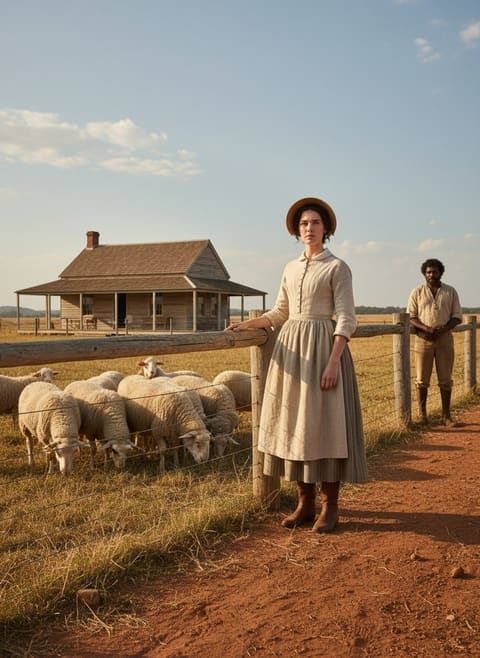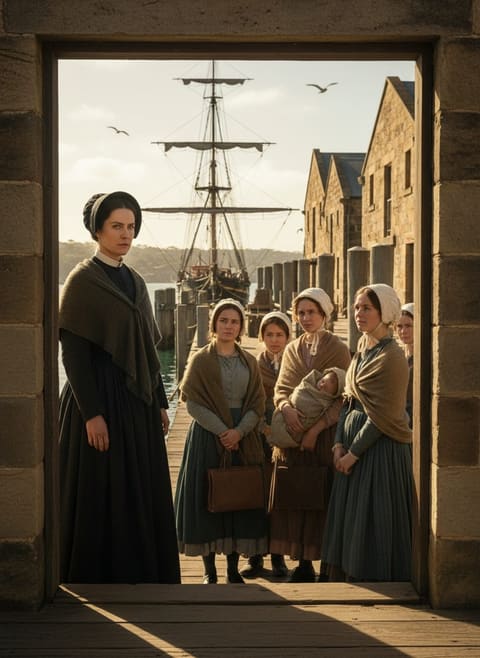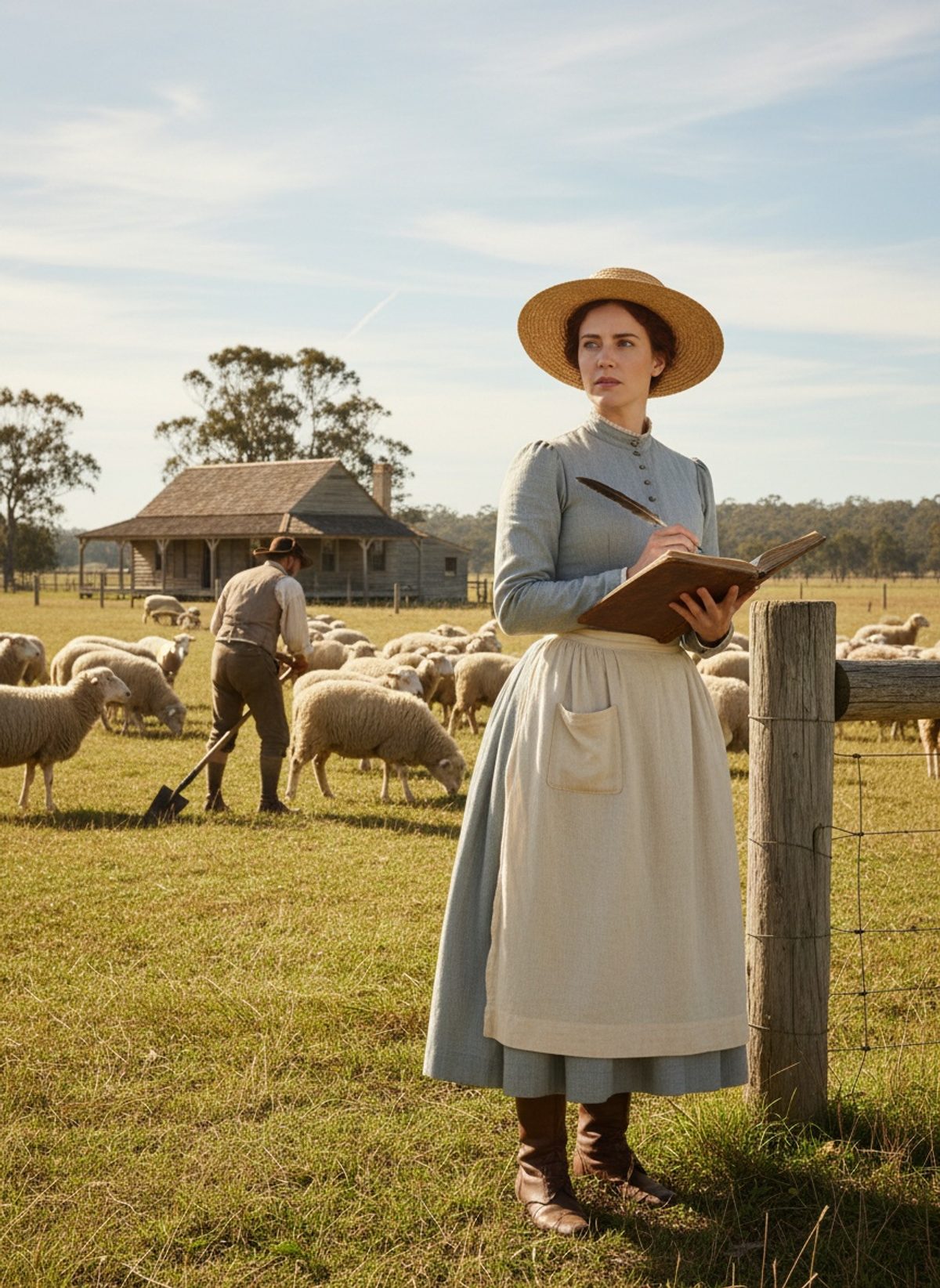
The clamor of sheep broke against Elizabeth Macarthur's ears like distant waves crashing against a rocky shore as she strode purposefully across the rolling pastures of their estate outside Parramatta. The sun bore down with fervent intensity on that sweltering day in 1801, illuminating the terrain she was determined to tame in her husband's absence. Each step she took seemed to mold more than just the dusty path beneath her; each decision she made would define the future of a colony on the brink of economic transformation.
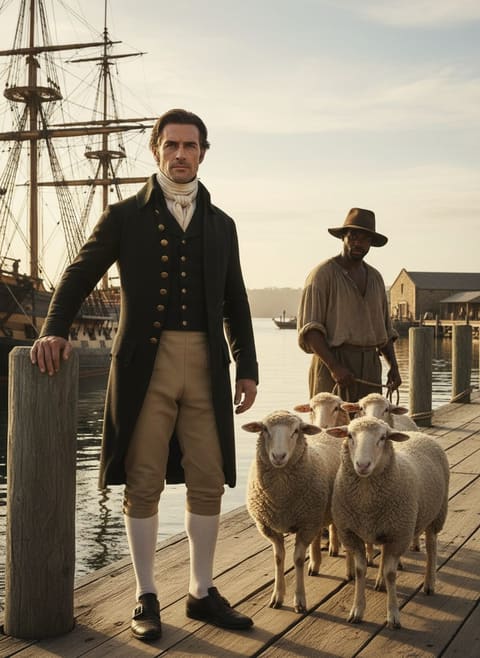
John Macarthur, the man whose name would eventually be synonymous with Australia's goat-like sheep, was not there to witness the seeds of ambition sown by his own partner. Instead, he was traversing the chilly corridors of power in England, summoned under military arrest, his future as uncertain as the growth of the fledgling wool industry he left behind. This left Elizabeth, a woman of quiet determination, faced with the formidable task of managing their entire estate—and the outcome of an improbable dream of transforming a penal colony’s landscape into a verdant empire.
Her hands, although not as rough as those of the convict laborers who diligently sheared sheep and tilled the soil, bore the calluses of responsibility. As she moved among the flocks, calculating their yield in terms not just of wool but of survival, she became an anchor from which ambitions could set sail. With a mind that scrutinized figures as deftly as it surveyed paddocks, Elizabeth meticulously kept the accounts—a ledger of numbers that soon transformed into tangible proofs of her business acumen.
The challenges she faced were formidable. The colonial soil was stubborn, resisting both plow and forethought. Yet, Elizabeth insisted on making amendments until it bore fruit—or wool, as fate would have it. Dealt with unfavorable climates and voracious pests, the smooth-handed settlers might have balked, but Elizabeth persisted. She recognized the importance of nurturing relationships and knowledge, not only with those laboring under the open skies but also with other settlers and indigenous people who understood this land’s untamed caprice.
Read next: When John Macarthur's Son Planted the First Vineyard, 1820
Elizabeth’s leadership defied the expectations of her era, particularly in a society that sorely underestimated the capabilities of women. As her husband found himself mired in the politicking and bureaucracy back home, she made decisions that fortified their estate and gained the grudging respect of military officials and settlers alike. Practically in isolation, Elizabeth expanded the flocks from just a handful to a burgeoning enterprise, overseeing the first shipments of wool back to Britain—fine enough to catch the attention of textile tycoons bleared by mediocrity and war.
The distant echo of conflict lingered as a reminder of the volatility of empires. The years trekked onward, yet Elizabeth remained steadfast, her gaze unyieldingly fixed on a horizon that unfurled nothing but opportunity. Under her vigilance, the estate not only weathered economic uncertainty but left behind the seeds of a legacy that would define a burgeoning Australia—the land of the golden fleece, where sunburnt ranchers might flourish fortuitously. Her correspondence—written in a flourish that belied her steely tenacity—revealed her as not only proficient but visionary, advocating for the mechanization of sheep shearing and efficient land management.
Read next: When John Macarthur's Daughter Planted a Garden at Parramatta
Elizabeth Macarthur carried not only her husband's name across this fledgling colony and into the realms of historical importance, but she also carried within her the unacknowledged weight of two empires' expectations: one marred by penal dysfunction, and another yearning to erase those inconvenient beginnings with waves of commodity-fueled prosperity. Nor did she falter under the scrutinizing gaze of society, which, even in the remote reaches of this newfound land, clung to the archaic tendrils of patriarchy.
When John finally returned to Australia many years later, he found not the remnants of a faltering enterprise but an empire meticulously cultivated by a hand less recognized by textbooks, but no less indispensable. The wool industry, under Elizabeth’s aegis, had quietly laid the foundation stones for a new economy, fueling the growth engine of a rapidly expanding settlement.
The story of Elizabeth Macarthur is one of ambition realized without tumultuous fanfare, overshadowed by narratives more attuned to dramatic conquests or flamboyant visionaries. It serves as a reservoir of inspiration, ripe for rediscovery. In our modern era, when the contributions of historically underrepresented groups have finally begun to shine through the pages of revisionist history, Elizabeth’s perseverance serves as a profound reminder: often, the legacies that shape us as nations were written in the quiet recesses of history, between the din of clattering looms and the lowing of sheep.