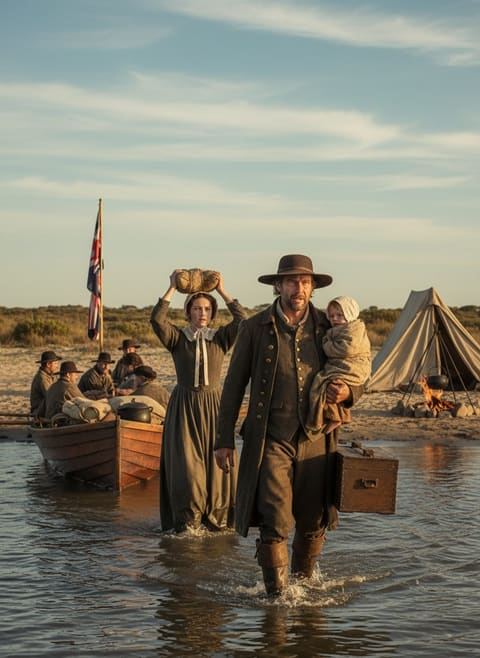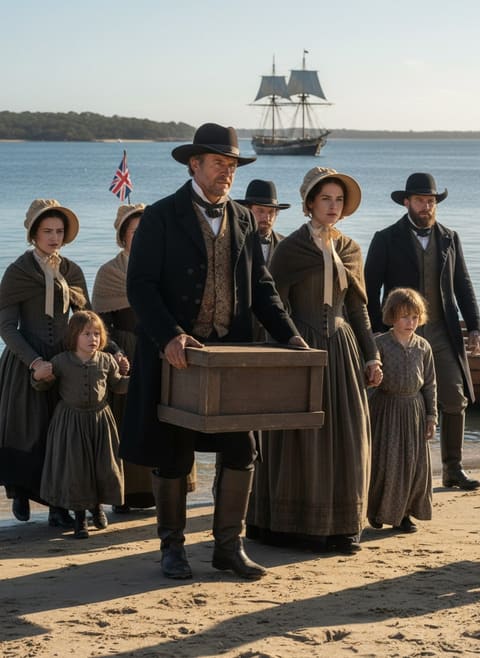
1793. The morning mist clung tenaciously to the trees at Parramatta, shrouding them in a silvery veil.
The Unexpected Steward of Camden Park
In the Georgian Colonial era, the vast expanse of the New South Wales colony was a world of opportunity and peril. Into this landscape stepped Elizabeth Macarthur, caught in the crucible of circumstance. Her husband, John Macarthur, a man of ambitious pursuits and frequent controversies, had departed to England in 1801 under a cloud of legal strife. The burden of their estate, notably the fledgling sheep station at Camden, fell unexpectedly to Elizabeth.
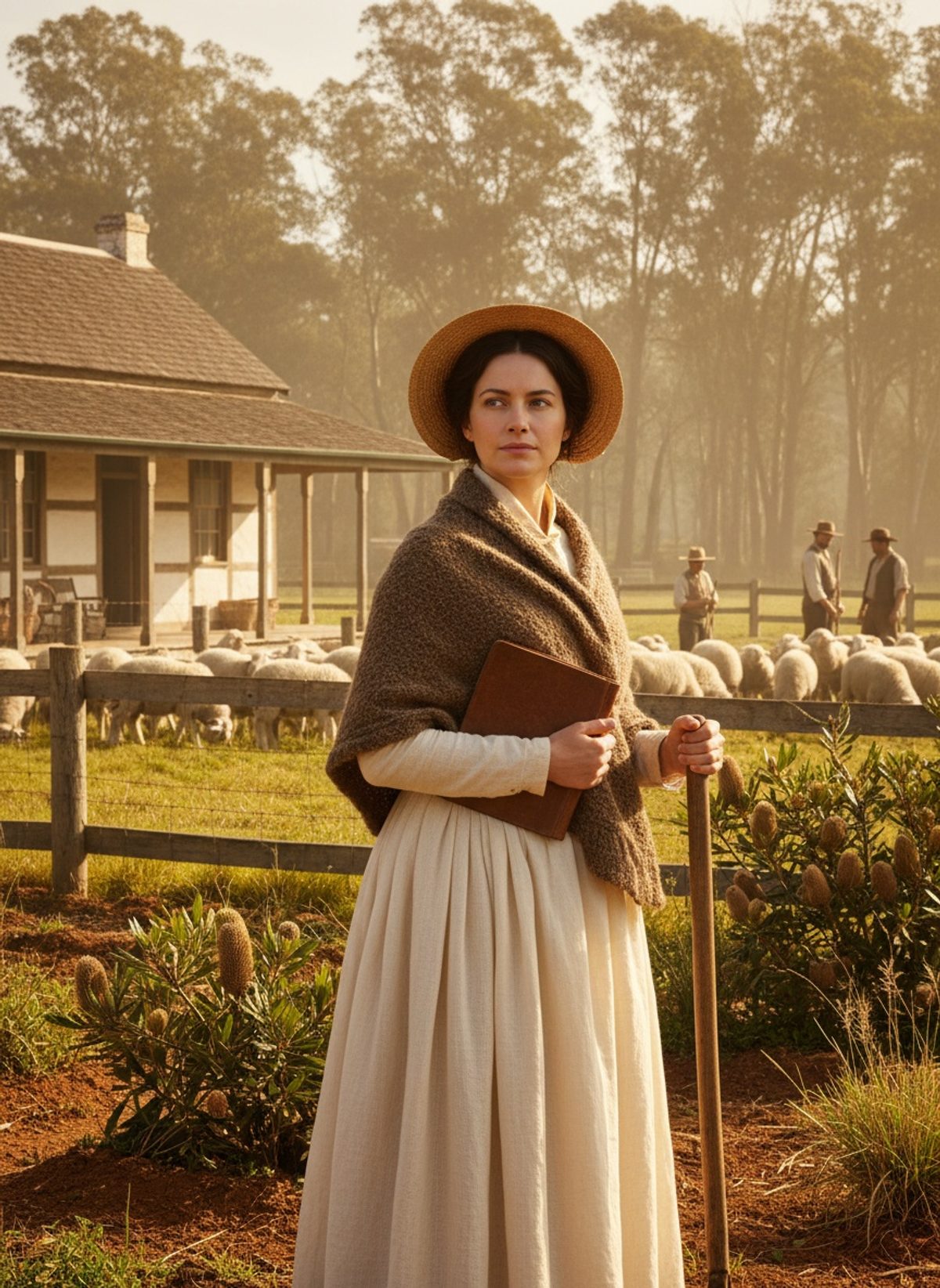
Left alone to tend to both her family and the expansive holdings, Elizabeth faced a daunting reality that required resilience and ingenuity. At Parramatta, the heart of their operations, the farm was failing. Yet it was here that Elizabeth's unyielding spirit found its canvas. With her hands steady and determined, she picked up the tools of her absent husband and dared to defy the odds.
Under Elizabeth’s stewardship, the neglected fields began to transform. She turned her attention not only to the basics of survival, focusing on the immediate needs of food and sustainability, but also on the potential of wool production—a venture her husband had envisioned but never seen to fruition. Elizabeth's garden became symbolic of her resolve, nurturing both botanical and agricultural experiments that would lay the groundwork for an industry that would define the nation.
Read next: When Caroline Chisholm Met the Ships at Sydney Cove, 1841
Cultivating a Dream
In those early years, Elizabeth's days were governed by the rhythm of the farm. She rose before the sun, meeting the morning dew with intention. Every decision measured, every seed planted a promise of future stability. Her approach was hands-on; she was not just the manager but an integral part of the work, embodying a pioneering spirit shaped by necessity and ambition.
Elizabeth embraced correspondence as a vital tool, writing frequently to her husband and others in England. Her letters provide a rare glimpse into her daily struggles and victories, chronicling both the hardships of colony life and her strategic decisions in managing the estate alone. She navigated the complexities of colonial trade and relations, often negotiating with the local indigenous people to sustain her efforts and build a thriving operational base.
Her efforts did not go unnoticed. The quality of wool produced under her care began to draw attention. While John Macarthur's name would later be celebrated for its association with Australia's wool industry, it was Elizabeth who, through her stewardship, preserved and propagated the merino bloodlines that proved pivotal. Her careful breeding allowed the flock to withstand the harsh Australian climate, outperforming expectations and increasing their value exponentially.
Read next: When John Macarthur's Wife Sailed Sheep to a New World, 1797
The Heart of a Legacy
Elizabeth Macarthur's life was anchored in her dedication to family and farm, her resolve echoing through the corridors of Australian history. As the years rolled on, she would see her children chart their own paths within the colony, buoyed by the stability and success she had cultivated. Yet, perhaps her greatest legacy lay not in the accolades of her husband's name or the expansion of their wealth, but in the quiet strength she embodied, standing as a matriarch and a steward in her own right.
Through her tireless efforts, Elizabeth not only kept the farm alive but set a precedent that charted a course for future generations. The foundations she established at Camden laid the groundwork for what would become a cornerstone of Australia's early economy. In an era where women were often left out of the narrative, her story whispers through time, challenging us to reconsider the roles we ascribe and the legacies we honor.
Elizabeth Macarthur's garden, and the wider estate at Parramatta, were more than mere landholdings. They were her offering to a burgeoning nation. Her story, untold in many a textbook, reminds us that history is rich with figures who quietly defy the status quo, wielding influence in profound and understated ways. In her legacy, there is inspiration to be drawn in acknowledging the unnamed architects of our shared past.