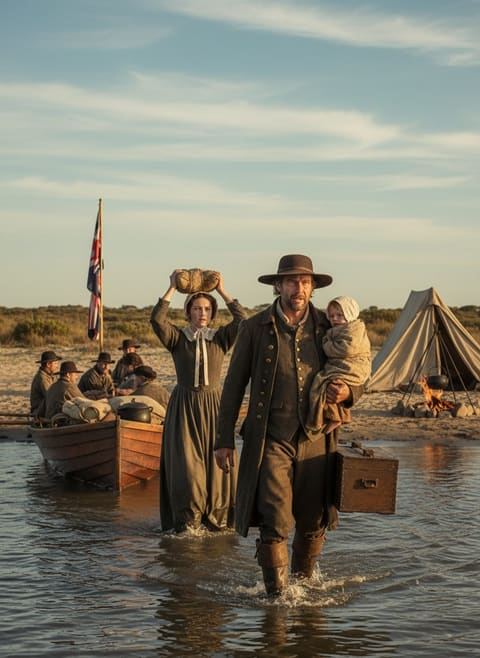
John Macarthur's son did not initially set out to build a road. Like many of his contemporaries, he was primarily invested in wool. Yet, in the grip of the Georgian era's pioneering spirit and under pressure from colonial expansionism, he found himself crafting the path that opened the impenetrable Blue Mountains to a world beyond them. The road would change not only the geography but the very destiny of a continent.
An Impassable Wall
For nearly thirty years, the Blue Mountains stood as a giant monolith on the edge of New South Wales, defying the advancements of colonial ambition. This rugged stretch of terrain, a mere seventy miles from Sydney, symbolized the limits of European settlement. The Blue Mountains, with their dense eucalypt forests and daunting escarpments, were more than a geographical barrier; they were an enigma that jeered at the adventurous resolve of settlers. In the courtyard gossip of Sydney Town, the mountains’ sheer cliffs and shadowy ravines sparked tales of horror and wonder, with rumors of strange lands lurking just beyond the next rise.
Since the foundation of the colony in 1788, explorers had repeatedly attempted to breach this natural fortress. Yet each expedition seemed to return with stories of caution and defeat, each one leaving the settlers more convinced of the impossibility of westward expansion. It was crucial for the survival and growth of the colony—land was scarce, and hunger drove the need for grazing pastures. Still, without a safe passage, the colonial clutch remained tight on the coast. The Macarthurs and other leading settlers knew that beyond those steep slopes and endless canopies lay the dream of vast fertile plains yearning to be unlocked.
The Road in the Wilderness
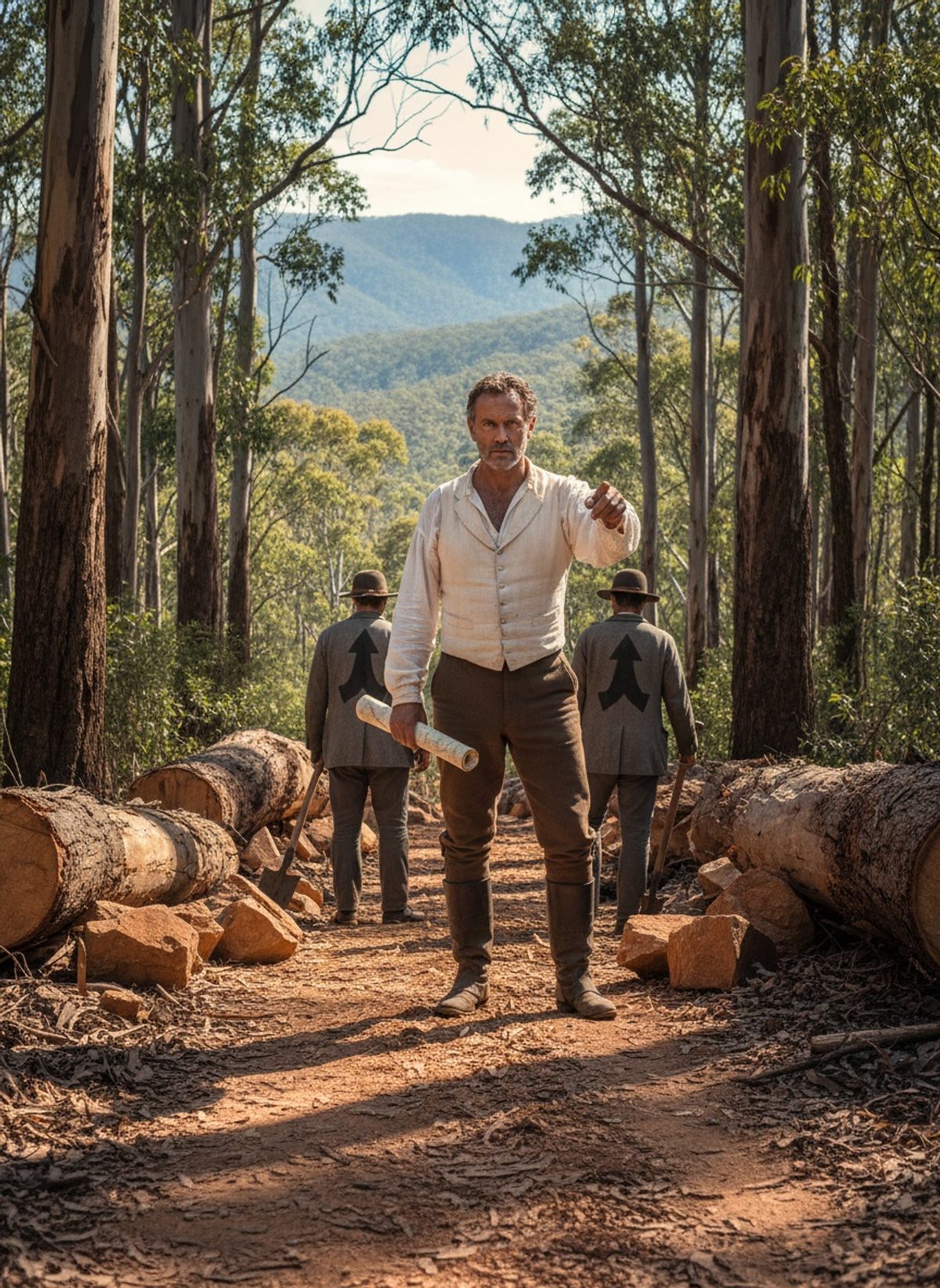
Enter William Cox, a government surveyor who, in 1814, was given a seemingly impossible task: to build a road through this treacherous wilderness. With little more than determination and rudimentary tools, he embarked on this monumental endeavor with a crew composed largely of convicts, underscoring the interdependent fates of Britain's penal settlers and free society. Cox commanded iron will and remarkable ingenuity, attributes essential for transforming abstract plans into reality against the land's brutal, unforgiving face.
Read next: When John Macarthur's Wife Ran the Farm and Fed a Colony
The work was both perilous and relentless. Each day, scores of men, driven by the watchful eye of their supervisors, chiseled and hacked their way into the granite and dense underbrush. The forest resounded with each thud of an axe biting into a tree, each low call exchanged between men as they labored under the punishing sun. In just six months, a fifteen-foot-wide track snaked its way over cliffs and through valleys, every foot oweing its existence to sweat and desperation.
In the eerie stillness of early morning, the road wound its way into unknown territory, bridging the chasm between promise and precarious reality. The persisting legend of this construction notes the seemingly insurmountable odds faced but conquered by determination and basic tools—no more than picks, spades, and sheer human endeavor. What Cox and his band of wayfarers achieved was no quiet miracle but rather a raw testament to human resilience and the inexorable push of ambition. Underneath the manifold trials lay a binding resolve, for the settlers understood they were not merely pathfinders but architects of a new frontier.
Read next: When Edward Gibbon Wakefield Dreamed a Colony Into Existence
A Continent Unlocked
When the road was finally completed in 1815, it did more than connect the coast with the continent's interior—it opened a route that heralded a new epoch. It was as though the colony had found its own Siegfried’s sword, allowing it to cut through the supernatural, heralding expansion far beyond the punitive boundaries of a penal outpost. Sheep from the famous Macarthur flocks now grazed beyond the mountains, and the settlers’ homesteads followed in earnest, spreading across the new lands with rapid intent. These fields would eventually become the breadbasket of the Australian economy, a transformation that traced its origins directly to the work of Cox and his road-building crew.
This tale of grit and courage is intertwined with the legacy of the early colonial enterprise and the ambition and sacrifice that characterized it. Yet it also stands as a profound reminder that history often unfolds in uncertain wilderness—shaped by those whose isolated acts echo through the ages. It is a narrative etched into the very rock of the Blue Mountains, whispering to anyone who stands atop and looks westward that the boundaries of empire were not just geographic, but deeply human. Each cut stone, every formed path, still hums with the reverberating proclamation—all roads, no matter how formidable, are traversable if only there’s the will to stride forward.