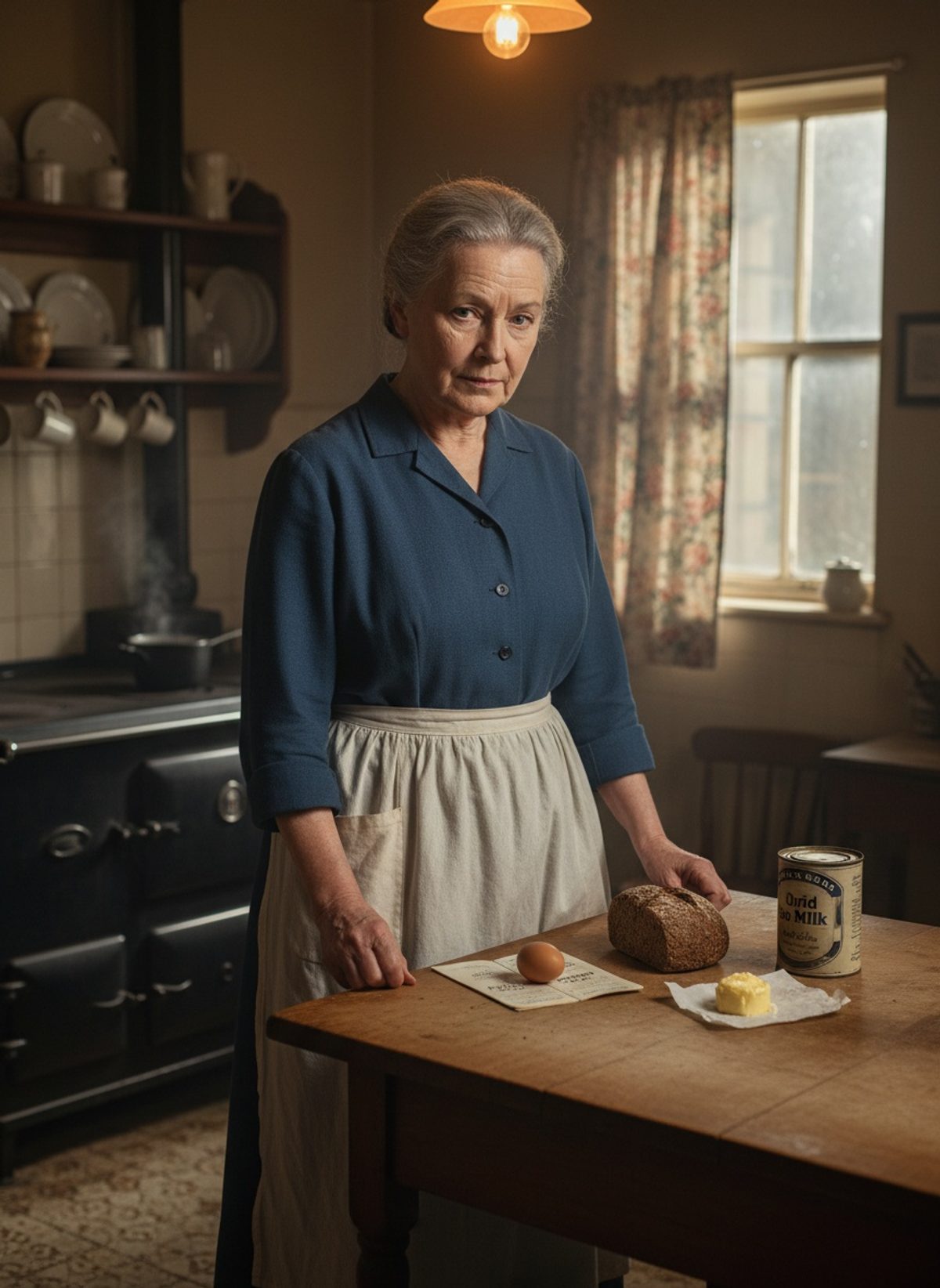
November 18, 1940. The chill in the air wove through London’s streets like a lingering specter of uncertainty.
The Hearth of the Home Front
The pulse of any nation beats strongest in its kitchens, and in wartime Britain, it was the humble, smoke-filled domain of grandmothers that rose to the occasion. As Adolf Hitler's ominous shadow spread across Europe, the British public faced a new kind of warfare — one far removed from the pewter flak of the Blitz. Rationing slashed the nation’s food supplies, marking the grim onset of a battle fought not with soldiers and guns, but with ingenuity and resolve.
With the Ministry of Food cutting rations in 1940, plates across the nation grew sparse, yet the resolve to keep families nourished grew stronger. It was in the simple and conjuring hands of grandmothers that leftovers turned to feasts, and the art of culinary invention took center stage. Root vegetables, seldom celebrated in ordinary times, were peeled, boiled, and mashed; graced with the rare morsel of meat marrow or a drop of re-used dripping — the rich grease left from cooking fat. These were the unsung heroes of the dining table, turning necessity into a witness of human resilience.
Half a Loaf and a Whole Lot of Wisdom
A savvy grandmother knew well the value of a stale loaf. Bread, though now rationed, was stretched through every means possible. Crusts became breadcrumbs and melded with herbs and leftovers to form stuffing. Oftentimes, what once would have ended in the waste bin found new life. Yet, the real art lay in subtraction. A known truth from aged hands — the less you use today, the more you may have tomorrow.
Read next: The Day a British Padre Walked Into a POW Camp Alone
In these kitchens, milk was bread’s steadfast companion. From the dreariest of days, emerged the comfort of bread pudding; cubes of crusty bread softened with watered-down milk and dotted with any fruit that could be foraged or bartered for. It was simplicity born from struggle, yet therein lay its beauty; a soft sweetness against the backdrop of uncertainty.
Another cherished creation was the ‘mock’ everything; mock cream, mock fish, mock meat pie — food that was not quite what it seemed, but held the comforting illusion of plenty. When egg rations dwindled, inventive cooks turned to 'mock' eggs crafted from reconstituted dried eggs, beaten and transformed into omelets and custards, reliant on a grandmother's resourceful touch to bring it forth from concept to kitchen table.
Bitter Greens and Growing Returns
Public spaces sprouted new life. Victory gardens, a harmonious blend of community effort and self-reliance, flourished in gardens, parks, and even the smallest patches of backyard soil. Grandmothers, with their decades-old gardening lore, taught younger generations how to nurture potatoes in sacks by the stove or coax carrots from the smallest of beds.
In the face of limited supplies, these gardens yielded precious greens — cabbage, carrots, and turnips — often served in stews so diluted that at times warmth was their only sustenance. But even amidst the paradox of plenty, cabbage water saw use not dismissal; its nutrients extracted to craft soup, testament to the guidance of elder wisdom.
With meat scarce, protein often derived from legumes; beans and lentils, transformed into savory paste to spread over thin slices of bread or ladled into soups. Meanwhile, nettle soup, once looked at askance, became a staple tonic in leaner months, a reminder that verdant life slipped through the cracks of hardship.
Silent Triumphs of Taste and Tenacity
The Ministry of Food may have drafted the blueprint to survival, but it was these quiet victories in kitchens across Britain that forged a resilient nation. Grandmothers crafted meals from what meager scraps could be gathered, instilled with the love and determination that neither bombs nor shortage could extinguish.
Meals became rituals, a blending of old traditions with newfound invention. In these kitchens, conversations weaved around the lingering warmth of the oven and the aroma of what could be concocted from scant ingredients. They offered solace, where stories of the past mingled with dreams of a post-war future. Quiet, yet dogged determination infused every pot and plate — a defiantly lush symphony amidst war’s harsh silence.
While rationing drew the lines of what could once have spelled defeat, it was this collective culinary spirit that pushed back the darkness. Today, as we ponder the lineage of resilience and the quiet ministrations that shaped a nation's endurance, one realizes that history’s heroes thrive not just in battlefields and halls of power, but often simmer quietly in the heart of a grandmother's kitchen — true sentinels against despair, proving that the human spirit always finds a way to turn nothing into something beautiful.