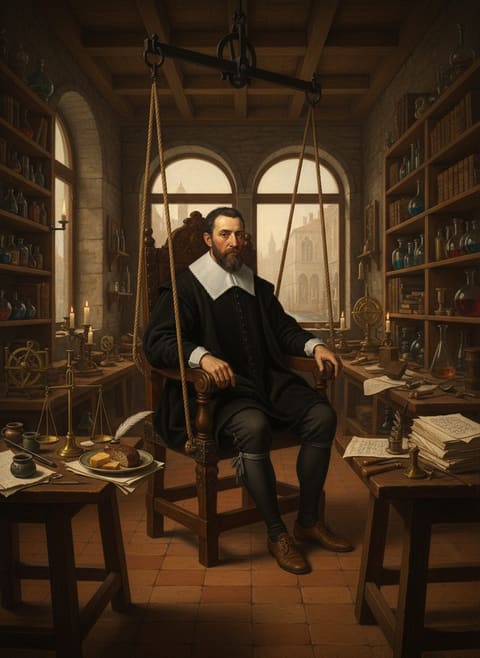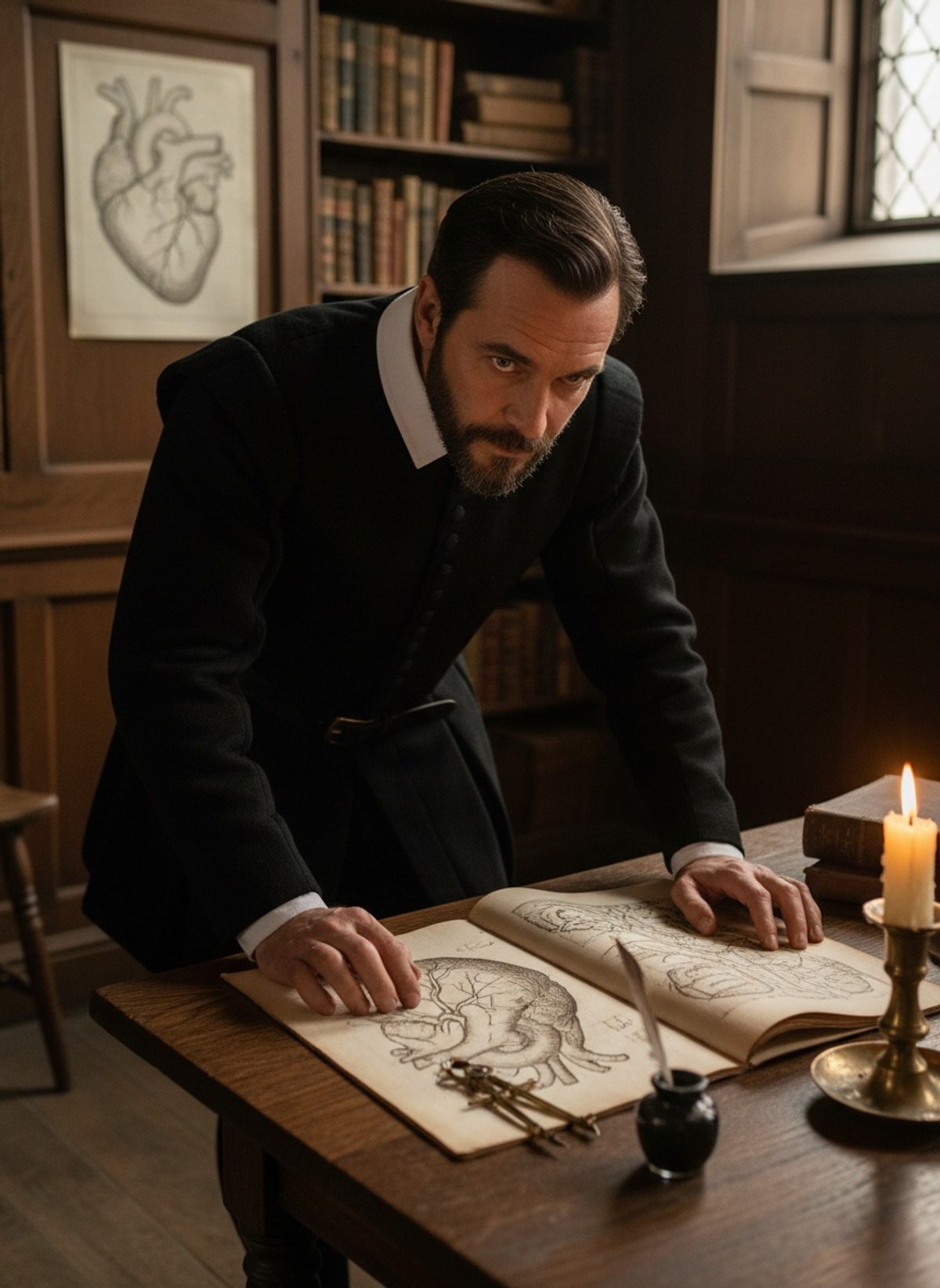
He carved through flesh with surgical precision, but remained untouched by fame until well after his death. William Harvey was the man who propelled medicine into a new era with his groundbreaking discovery of blood circulation.
The Journey to Understanding
In the bustling heart of early 17th-century London, William Harvey pursued knowledge that defied the ancient wisdom of Galen, whose ideas had shaped the medical world for over a millennium. In Galen’s view, blood was a product of the liver and was consumed like fuel by the body, a belief held firmly across Europe.
Yet, Harvey’s intellectual curiosity led him down a different path. Born on April 1, 1578, in Folkestone, England, Harvey began his education at the King's School in Canterbury before venturing to Gonville and Caius College, Cambridge.
His thirst for anatomical understanding led him to the University of Padua, a bastion of medical learning. It was here, under the distinguished tutelage of Hieronymus Fabricius, that Harvey was introduced to the concept of venous valves—clues that were to become integral in his later theories. He graduated as a Doctor of Medicine in 1602, his brilliance noted even at that young age.
Read next: Caroline Herschel Found Eight Comets With a Homemade Telescope
Upon returning to England the same year, Harvey's journey through the intricate corridors of human anatomy continued. His appointment as Physician at St Bartholomew's Hospital in London in 1609 was a turning point, allowing him to dive deeper into the mysteries of the human body.
As he dissected cadavers and conducted vivisections on animals, Harvey meticulously noted every observation. He painstakingly timed the heartbeats and measured the volume of blood pumped, a task requiring not only precision but a confrontation with the prevailing dogmas of his time.
A Revolutionary Discovery
In 1628, twelve years of inquiry and dozens of dissections culminated in the publication of a book that would shatter antiquated theories: Exercitatio Anatomica de Motu Cordis et Sanguinis in Animalibus, or simply, "On the Motion of the Heart and Blood." With unwavering conviction backed by empirical evidence, Harvey took the bold step of refuting Galen’s age-old doctrine. He proposed that the heart acted as a pump, propelling the blood through a closed circuit of arteries and veins.
This elegant cycle described systemic and pulmonary circulation and portrayed the heart as central to the volume of blood processed. Harvey calculated that the heart moved about six ounces with each beat, adding up to over one thousand gallons of blood circulated daily. These figures starkly contradicted the notion of blood burning away, challenging generations of established beliefs.
Despite its revolutionary content, Harvey's treatise was met with skepticism. His ideas disrupted the comfortable certainties of many of his contemporaries. The medical community in England and beyond struggled to digest this novel view on blood flow. Nonetheless, it was inevitable that this revelation would echo through the annals of medical history, as irrefutable as the steady beat of a pulse.
Read next: Tycho Brahe Measured the Stars Without a Telescope
The Ripple Effect of Innovation
Although William Harvey’s work faced resistance, his commitment to observation and data sowed the seeds for future breakthroughs, influencing countless physicians and scientists who followed in his footsteps. Harvey had reignited the fervor for scientific exploration, urging others to question, to observe meticulously, and to build upon his foundation.
His contributions profoundly impacted anatomy and physiology, making it clear that the body's function was mechanical, predictable. Far beyond his era, Harvey’s work informed the eventual understanding and treatment of cardiovascular diseases, shaping the practice of medicine in ways he could scarcely have imagined during his lifetime.
Not one for personal accolades, Harvey must have sensed the quiet justice of natural laws over tradition. In revealing blood's path through the body's labyrinth, he demonstrated the vital role of empirical evidence over inherited dogma.
This discovery underscores a timeless truth: understanding often comes at the cost of formidable challenges to preconceived ideas. Embedded within Harvey's story is a universal message: the value of ingenuity and perseverance over convention, and the unending quest for knowledge that drives human progress. His incisive question, "Where does the blood go?" prompted the world not just to think into the possibility but to observe its evident truth.