He was a crofter's son from the remote glens of Ross-shire. Yet, he would become the indomitable force at the Battle of Omdurman.
The Unexpected Commander
The late Victorian era was a time rife with tales of intrepid conquest and glittering military victories, where empires clashed on the bloody stages of far-flung lands. Yet, amidst these grand narratives, the story of Hector Macdonald stands out—a man whose origins defied the patrician norms of military leadership. Born into a humble farming family in the Scottish Highlands, Macdonald's rise from private to general was nothing short of extraordinary. His career began without the grooming of elite academies; instead, it was shaped by his tenacity, shrewdness, and an innate sense of leadership.
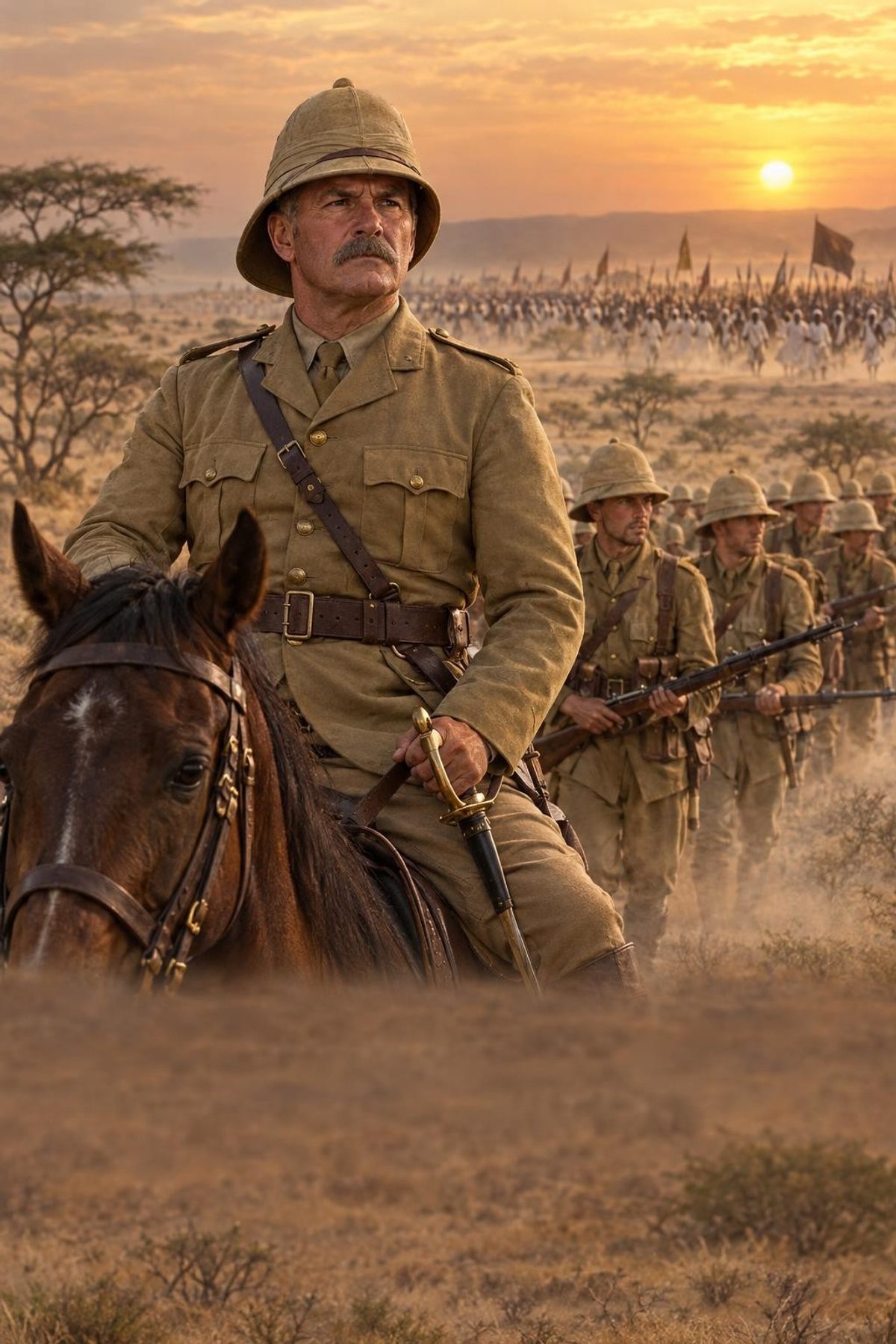
On September 2, 1898, at the dusty plains near Omdurman—a mere crescent of land on the Nile's banks—Macdonald faced a test that would cement his legacy. Here, the Mahdist army, led by the formidable Khalifa Abdullah, swarmed toward the encroaching British-Egyptian forces under General Herbert Kitchener. The Mahdists numbered around forty thousand, a tidal wave of warriors ready to defend their hard-fought independence against foreign dominion.
Battlefields are known for their chaos and uncertainty, yet when the Mahdist army turned toward the British left flank, it was more than a mere tactical maneuver; it was a dire threat capable of unraveling Kitchener's meticulously laid plans. Panic gripped the British lines as the Khalifa's men charged with unwavering fervor, their war cries reverberating in the dry air. In the midst of this turmoil, Macdonald, commanding the Second Brigade, acted with the calm precision that belied his lack of formal military upbringing.
Read next: When Hector Macdonald Rose From the Ranks to Save Sudan
Turning the Tide
The scene at Omdurman was one of high stakes and tense anticipation. The Mahdist forces, motivated by religious zeal and a deeply ingrained desire to repel the invaders, fought with a ferocity that was both awe-inspiring and terrifying. As they surged toward the British left, their number presented an overwhelming strength that threatened to dismantle the entire British operation in Sudan. Kitchener’s staff, anticipating annihilation, began to waver, their resolve as fragile as the dust swirling around them.
However, Macdonald remained unflinching. Recognizing the danger, he quickly orchestrated a maneuver that turned his brigade to meet the oncoming assault head-on. Such a swift and decisive action required not only strategic acumen but an unyielding presence that could inspire confidence and courage among the men under his command. His voice, hardened by decades of service, carried across the ranks, steadying nerves and renewing resolve amidst the chaos.
As the battle raged, Macdonald’s tactical prowess came to the fore. He arranged his men into a defensive crescent, creating a barrier of disciplined infantry fire that repelled wave after wave of the Khalifa's troops. Despite being outnumbered and flanked, they held the line, each volley punctuating the air with the dull echo of defiance against oblivion. It was a testament to Macdonald's leadership that the line never broke, instead holding firm and reframing the British plight from impending disaster to a gradual, stark victory.
Read next: When Hicks Pasha Marched 10,000 Men Into the Desert, 1883
The Legacy of the Crofter's Son
As the sun dipped lower into the horizon over Omdurman, the Mahdist army's will began to falter. Against Macdonald's unyielding brigade, the resolve of Khalifa's men splintered, eventually collapsing entirely. The battle that day marked a significant victory for the British forces, paving the way for their control over Sudan and the subsequent expansion of the Victorian Empire’s reach. However, what truly resonates from this historical confrontation is not the geopolitical overhaul, but the singular resolve of one man amidst the cacophony of war.
Hector Macdonald’s story transcends the mere recounting of military strategy or the relentless march of imperialism. It exemplifies how individual valor and strategic ingenuity can alter the course of history. His journey from crofter's fields to commanding one of the Victorian era's most fiercely contested battles speaks volumes about the potential for greatness that resides beyond societal expectations. It is a reminder that true leadership is not conferred by birthright, but rather, forged through resilience, vision, and the courage to stand firm when faced with overwhelming odds.
And so, the story of Hector Macdonald at Omdurman endures, not only in the annals of military history but as a lasting testament to a time when the fate of nations could hinge upon the integrity and determination of a crofter’s son from Ross-shire.