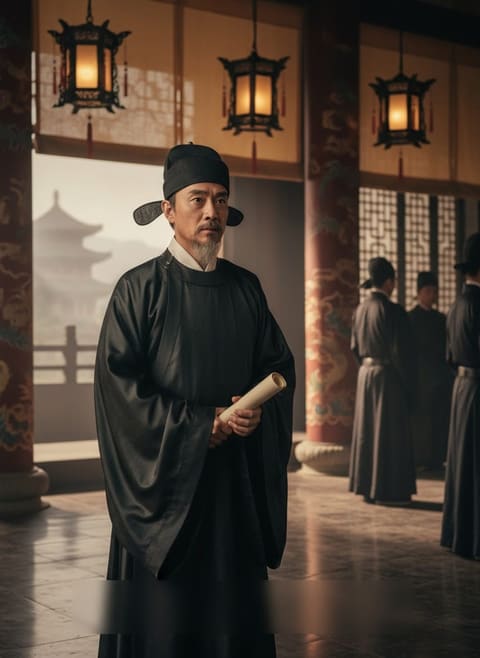
Kaifeng, the capital of the Song Dynasty, shimmered under the midday sun. The vibrant silk banners fluttered gently in the breeze, their colors mirroring the bustling vibrancy of the city. It was 1050 AD, and a fateful decision was being made that would reverberate through the corridors of power.
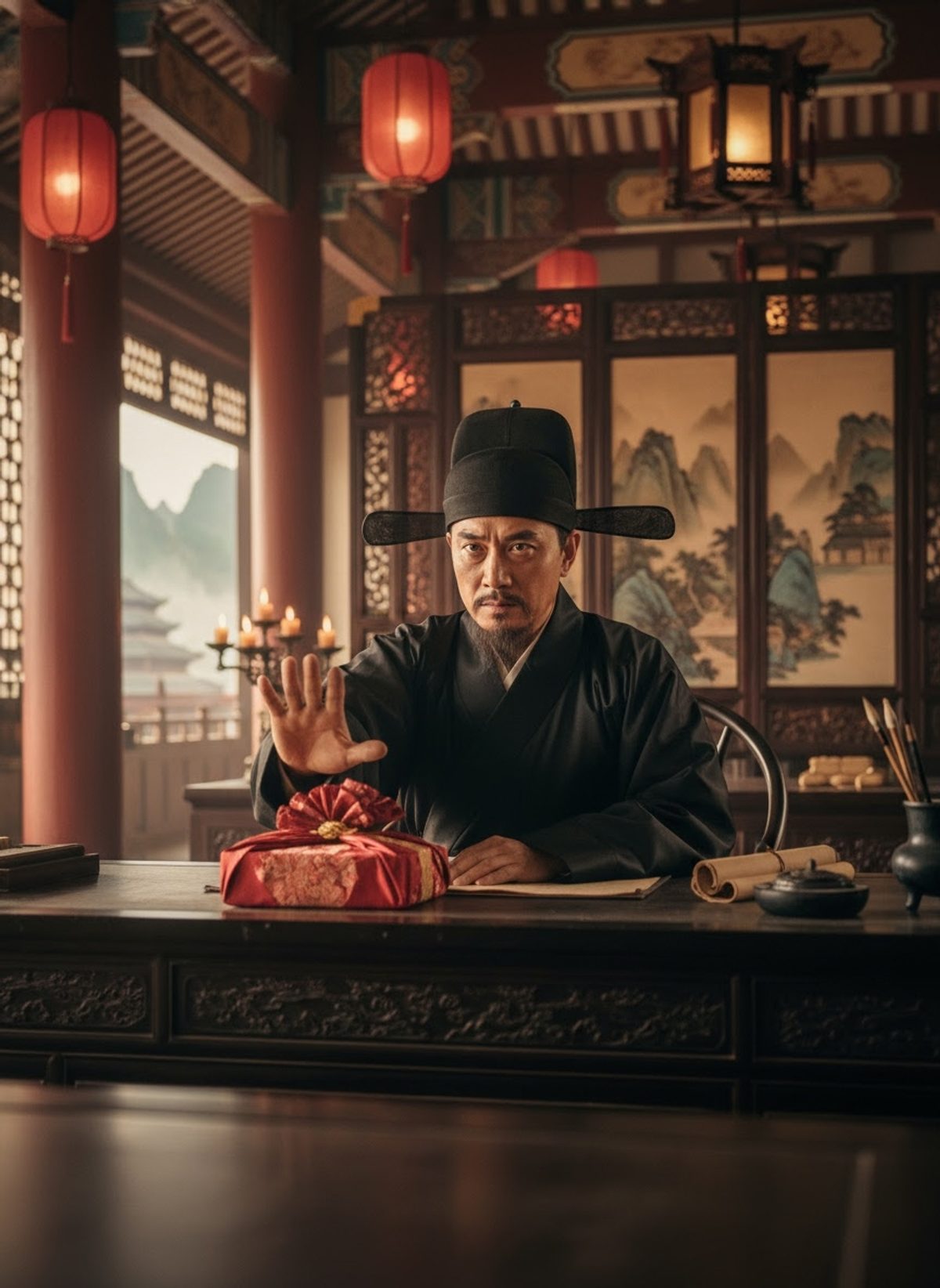
In a modest office behind the grandeur of the imperial buildings, Bao Zheng, the upright judge known as "Justice Bao," was staring down a challenge as consequential as any he faced in the courts. Before him lay an unopened box, a gift from the Emperor himself, gleaming with the promise of riches and influence. Yet, true to his reputation for unwavering integrity, Bao Zheng was preparing to return it without as much as a peek inside.
Unyielding Integrity in a Sea of Corruption
Bao Zheng, born on March 5, 999, into a modest scholar family in Shenxian, was not your typical magistrate. Known as Bao Gong, the legendary figure had already established a fearless reputation as the unwavering force against corruption throughout the 25 years of his civil service career.
He became a Jinshi, passing the highest-level imperial examinations, and yet deferred his career to care for his aging parents, showing devotion and discipline often rare in officialdom. Once his filial duties were fulfilled, he embarked on his official career as a magistrate of Tianchang County at age 39, where he began to earn his legendary status.
Read next: Bi Sheng Carved 1,000 Clay Letters and Invented Movable Type
In Tianchang, Bao earned a reputation for his sharp mind and even sharper sense of justice. His judicial career was punctuated with defining moments, including the famous case of the accursed ox.
Through shrewd questioning, Bao not only resolved the wrongdoing but also exemplified his acute ability to bring truth to light. By the time he became the prefect of Duanzhou in 1040, Bao Zheng already stood as a beacon of rectitude in a world frequently marred by bribery and nepotism.
The Emperor’s Gift: A Test of Principles
As Bao Zheng's reputation for incorruptibility spread far and wide, it caught the attention of Emperor Renzong. The emperor, often involved in delicate political balances, regarded Bao not just as a magistrate but as a symbol of justice personified. In 1050, as a gesture either of admiration or a subtle test of loyalty, the Emperor sent Bao a gift of rare silk, an opulent token fit for befitting a man of his stature.
However, what Emperor Renzong possibly failed to grasp was the steadfastness of Bao Zheng’s code of ethics. Bao had spent years defending peasants against unjust exactions and cross-examining powerful figures with equal rigor. To him, accepting the imperial gift would have meant a tacit approval of the very corruption he detested.
Bao returned the silk to the emperor, unopened, a gesture underscoring his unwavering principles. This act echoed through the halls of power, striking fear into the hearts of the corrupt and cementing Bao Zheng’s name firmly in Chinese lore. His refusal to be swayed by wealth and the implied honors therein underlined the essence of impartiality—a quality that backroom deals and influential families could never undermine.
A Remarkable Legacy
As the prefect of Kaifeng from 1057 to 1058, Bao Zheng initiated reforms that further endeared him to the commoners. He listened to their grievances and applied justice with the same unwavering hand, whether the accused was a pauper or princeling. From prosecuting an uncle of the Emperor’s favored concubine to advocating for wrongly condemned prisoners, Bao wielded the law like a lantern to expose the darkest shadows of governmental malfeasance.
Read next: Feng Dao Printed the Confucian Classics Under Five Dynasties
Stories of Bao Zheng's unparalleled fairness inspired writers and playwrights, with his life becoming the foundation for a rich tapestry of Chinese mythological and literary tales. Often depicted wearing a judge’s zhanjiao futou hat and a crescent moon on his forehead, he was elevated to mythic status as the Astral God of Civil Arts.
To the public, Bao Zheng stood as more than just a historical figure. He was the embodiment of ethical governance, and in some provinces, a deified symbol equated with Guan Gong, the god of war.
Bao Gong’s unwavering dedication to impartiality and justice serves as an eternal standard. In today's world, where power often corrupts, Bao's story is a time-honored reminder of integrity's indispensable role in governance.
Bao Zheng's deeds encouraged many to hold justice not as a concept but as a vibrant practice—a vital compass directing society toward equity and fairness. Long after his passing, the tale of a judge from the Song Dynasty who refused to bow to gifts and influence continues to resonate strongly, echoing the tenets of true justice that know no bounds of time or power.