The horse's hooves drummed a steady, rhythmic beat against the packed earth of the northern road as Wang Zhaojun glanced back one last time at the distant silhouette of Chang'an. The city's grandeur faded into the horizon as she undertook a journey that would change the course of history.
Her fingers danced across the strings of her pipa, the haunting melody carried by the wind as her heart ached with both loss and resolve. The geese overhead seemed to respond, spiraling down towards the ground, captivated by the beauty they bore witness to—a beauty the Chinese Emperor had failed to see beneath a painted facade.
A Beauty Overlooked
Wang Zhaojun was born Wang Qiang around 51 BCE in Baoping Village, located in what is now modern-day Hubei Province. She grew up enveloped in the natural beauty of the Yangtze River region and was blessed with a radiant beauty that would later cause great regret in the Han imperial court.
A woman of many talents, she excelled in music, calligraphy, and painting, epitomizing the ideal of the cultured Chinese woman. She was a beacon of grace and intelligence, destined for an extraordinary path.
Read next: Sima Qian Wrote China's Greatest History From a Prison Cell
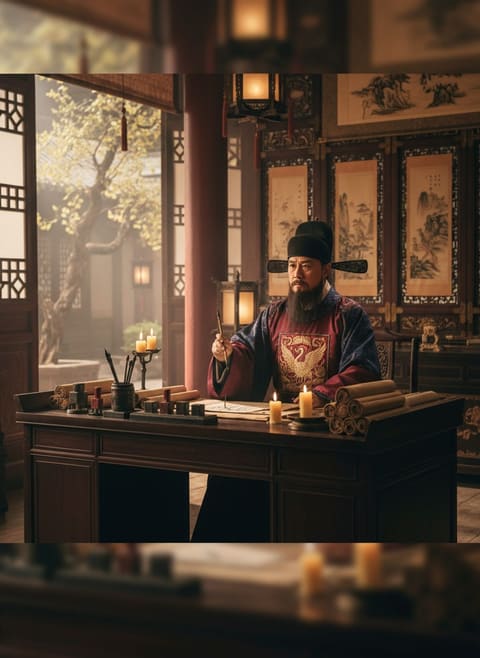
When Emperor Yuan of Han sought new concubines, Wang Zhaojun became one of many young women drawn to the court, destined to be kept unseen among the multitude of palace ladies-in-waiting. The Emperor’s choice from this gathering was to be based on portraits provided by Mao Yanshou, an artist notorious for accepting bribes to flatter the features of his subjects.
Unlike others, Wang refused to comply with this dishonesty, standing firm in her integrity. Her refusal resulted in a deliberately unflattering portrait, featuring a mole of tears painted with malicious intent.
This artistic misrepresentation led her to be overlooked by the Emperor, who never summoned her from the depths of the harem’s hierarchy. Thus, Wang remained unseen, her true elegance hidden beneath a canvas of political machinations. While others jockeyed for favor, she continued her life amidst the shadows, until events beyond her control offered an unexpected break.
Journey to the North
In 33 BCE, a pivotal moment emerged when Huhanye Chanyu, the leader of the Xiongnu, visited Chang'an. Part of a tenuous tributary relationship aimed at averting the age-old threat of the Xiongnu, his request for marriage into the Han imperial family promised an opportunity for peace. Emperor Yuan, reluctant to surrender an actual princess, ordered a selection from the harem, seeking the plainest among them.
As the court braced itself for what seemed an eternal moment of anticipation, the women remained silent, unwilling to leave behind the comforts of their well-gilded cages for the unpredictable steppes of the north. Yet, Wang Zhaojun stepped forward, her decision the culmination of both courage and necessity. Her spirit shone through the confines of the court, drawing attention only as she emerged before the Emperor.
Read next: Pang Juan Led 100,000 Men Into a Valley. Sun Bin Had Written on the Trees.
The revelation of her beauty astounded those present, creating an immediate ripple of remorse throughout the imperial palace. Emperor Yuan was taken aback at the mismatch between the painting and the woman before him. Despite his regrets and the chaos that her absence might cause, he could not reverse his decision without forsaking his commitment to Huhanye Chanyu.
Architect of Peace
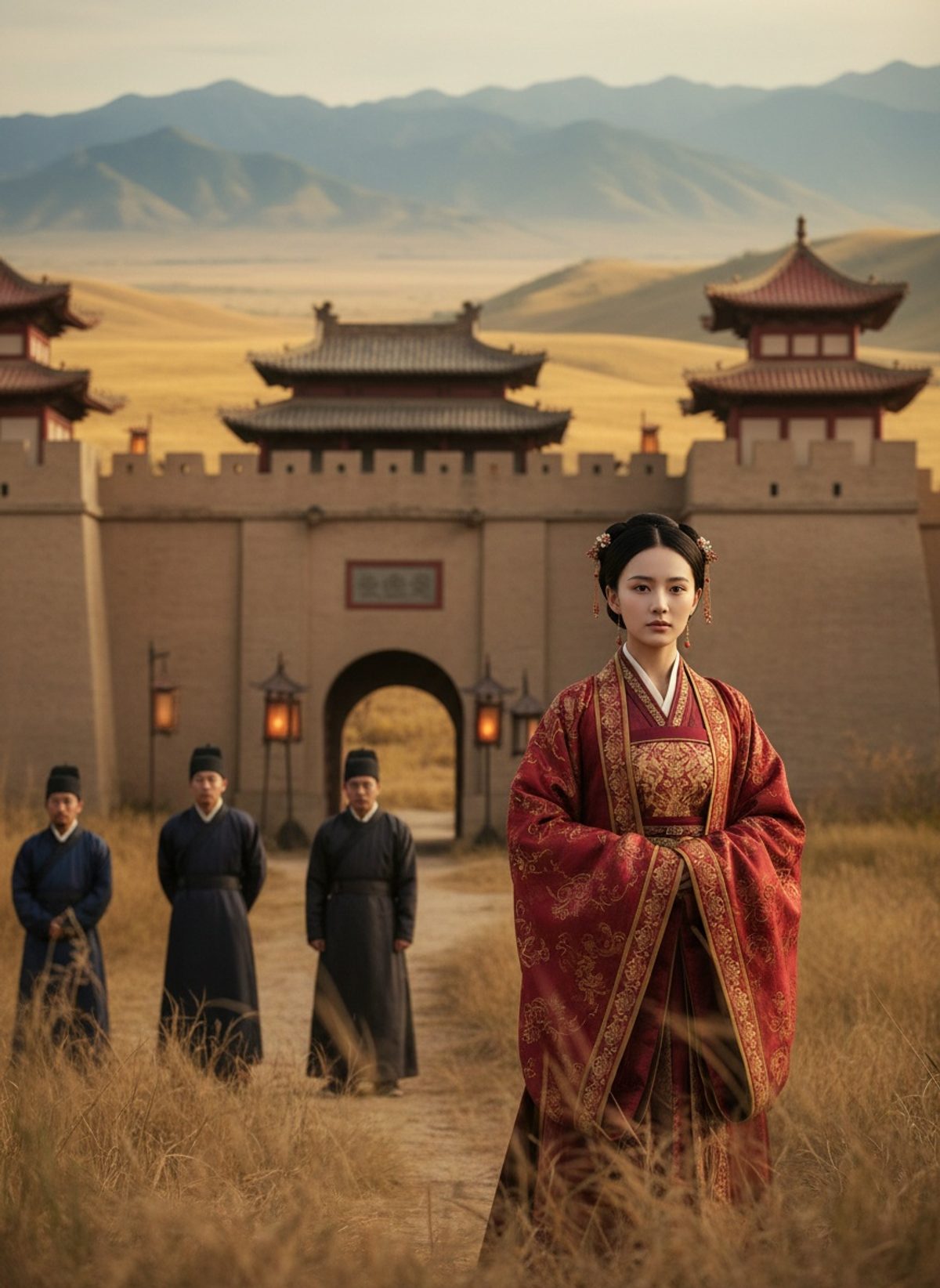
Wang Zhaojun crossed from the Han into the vast, sweeping plains of the Xiongnu territory, her presence marking a new chapter in the relationship between these ancient adversaries. For the Xiongnu, she was not just a bride but a symbol of their newfound link to the great Han dynasty. Her life as a queen was one of diplomacy and cultural exchange, nurturing peace from the seeds of alliance secured through her marriage.
Her name traveled far beyond the reach of her homeland, intertwining with legends and melodies, stories of beauty that stood strong amidst harsh lands. For over forty years, her choice laid the groundwork for peace, maintaining harmony across the border as the natural rhythms of life continued on those vast plains.
To nations governed by iron and honor, her sacrifice and wisdom were lessons in the power of diplomacy over war. Wang Zhaojun's legacy endured long after her death in 15 BCE, echoing through the annals of history as one of the "Four Beauties" of ancient China. It is a narrative of enduring boldness that reminds us of the ability individuals have to alter history’s course—not through armor or arms, but through courage and resolve, choosing hard paths for futures unseen.