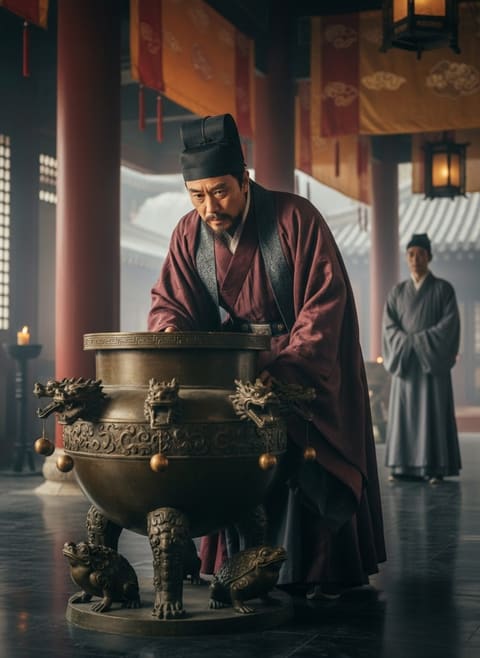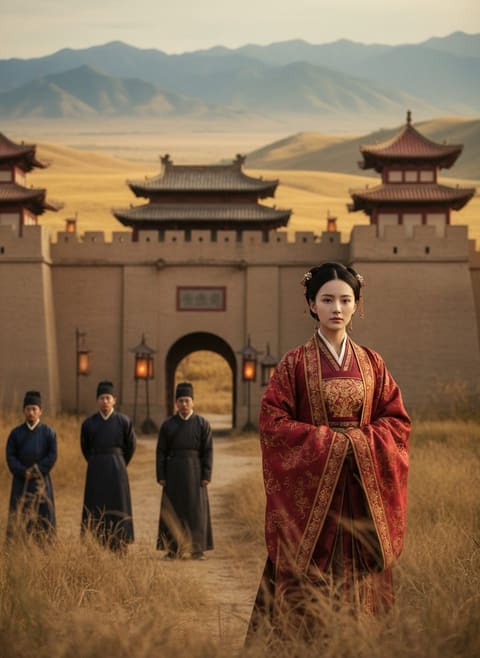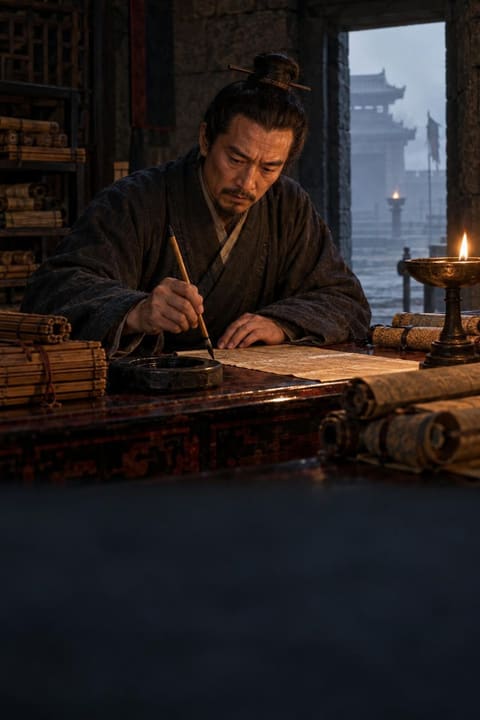
The mist hung thickly over the broken relics of what once had been glittering capitals of China, diffusing the fragile morning light into a somber haze. It was a familiar scene, as power shifted on almost every gust of war-torn wind.
This was the Five Dynasties and Ten Kingdoms period, an era of relentless upheaval, where emperors rose and fell with dizzying speed. Yet amid this chaos, one man moved unflinchingly, crafting something far more enduring than any fleeting sovereign. His name was Feng Dao.
The Relentless Rise of One Man
Feng Dao was born in 882, during the waning days of the Tang Dynasty, in Jingcheng, what is today known as Cangzhou, Hebei. His youth was marked by a relentless dedication to virtue and scholarship. By all accounts, he was a man of purpose and profound ability, characteristics that carried him through the turmoil that would mark his life’s work.
His early career began under Liu Shouguang, the warlord ruler of Yan. Desiring peace over ambition, Feng's advice to avoid needless conflict was, however, sorely ignored. Imprisoned for speaking against rash military campaigns, he was spared execution through the intervention of allies.
Read next: Fan Zhongyan Defied the Emperor's Court to Reform China's Schools
Undeterred by his abrupt dismissal from Liu’s court, Feng found his way to Jin. There, Zhang Chengye, a high-ranking official, saw promise in Feng and recommended him as a secretary general to the Jin capital, Taiyuan.
By the early 10th century, Feng was amidst dense webs of political strategizing as Li Cunxu of the Jin embarked on capturing Later Liang territories. Feng’s role was pivotal — he drafted countless military orders, shaping the future not only of his lords but also of himself.
In this whirlwind of ambition and warfare, few would have gambled on survival, let alone on ambitions beyond militaristic conquest. But Feng Dao held a different vision. For where others saw transient opportunity in political ascendancy, Feng Dao envisioned a legacy beyond ephemeral power — the perpetuation of knowledge itself.
Timeless Wisdom Amid Fleeting Power
In the later stretch of his life, Feng Dao's journey turned audacious. Amid the turbulent revolutions of reigning dynasties, he quietly began advocating for a project that would not be bound to any one emperor’s reign. With China being torn from one ruler to the next, and its libraries frequently reduced to ashes, Feng saw the urgent need for preserving the intellectual heritage of the nation: the Confucian Classics.
It was during Feng’s tenure as a high-ranking official that the notion of printing emerged as a grand project. Prior dynasties valued the Confucian texts, treasures that guided ethical governance and administrative prowess. Yet in the fractious times he lived, their survival was increasingly precarious.
Recognition of these texts’ worth beyond transient governance brought Feng both criticism and praise, as he courted emperor after emperor with his vision. He expertly played the politics of transition, persuading each new ruler of their stake in a project that promised immortality in the state of knowledge.
This approach spoke volumes of Feng’s character, one able to shift with political tides without losing sight of his broader mission. His contemporaries might have criticized what they called a lack of dynastic loyalty, but within those criticisms lies a nuanced understanding of his deep loyalty to the cultural edifice of China itself. Through his advocacy, the physical printing of Chinese literary canons became indelibly linked to his efforts as block after wooden block emerged under his steady hand.
Read next: Zhu Shijie Unified Two Rival Maths Traditions in One Book
To Print Eternally, To Last Forever
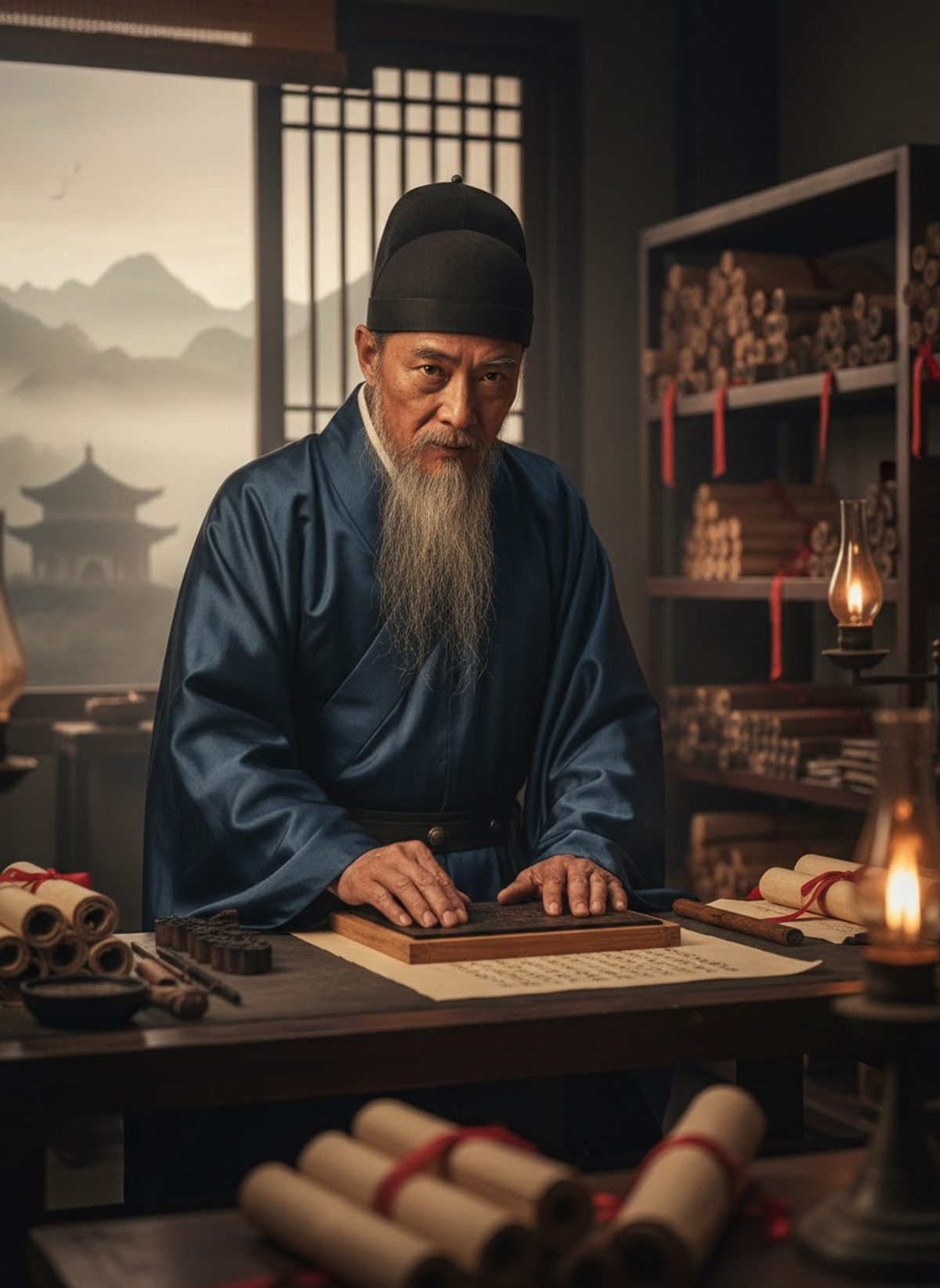
The endeavor to print the Confucian Classics was staggering, both in scope and tenacity, yet it unfolded with the quiet persistence of riverstones smoothing under the flow of Feng’s unwavering determination. Picture the scene: artisans tapping into the grain of almost untouched wood, carving precise ideograms where none yet existed across nine hundred wooden blocks. The elegance of Chinese characters forever preserved under the musty scent of ink and wood shavings, their secrets ready to be passed to future generations.
The impact of Feng Dao’s resolve outlasted the rise and fall of five dynasties — the Later Tang, Later Jin, Later Han, Later Zhou, and even the Liao. He lived through political inertia to see his legacy transferred into the hands of scholars, safe from the reach of political strife and the fires of rebellions. By the time this monumental project drew to a nuanced close, the once vulnerable treasures of knowledge stood resilient, steadfast against time’s erosive march.
Feng Dao’s initiative did more than just safeguard texts. He laid the groundwork for a culture that could flourish despite adversity, a subtle defiance against the destructive nature of war and chaos. Through his pioneering in printing, Feng was at once both guardian and liberator, ensuring that the essence of Chinese wisdom remained untouched and available for the minds of future generations to drink from its time-honored wisdom.
Even today, Feng Dao’s story beckons out of the shadows of obscurity, reminding us of an unwavering zeal for preservation. In an age where knowledge can vanish as soon as it appears, his work continues to resonate — not just as an achievement of technological innovation but as an eternal lesson in the preservation of humanity’s collective wisdom against the ravages of time and conflict.