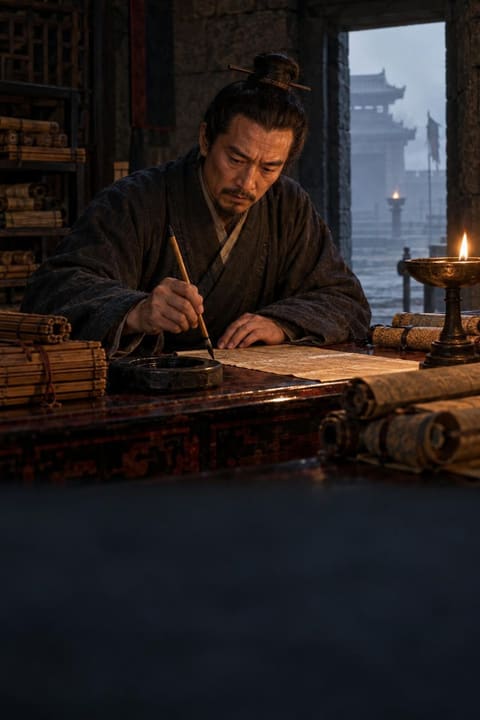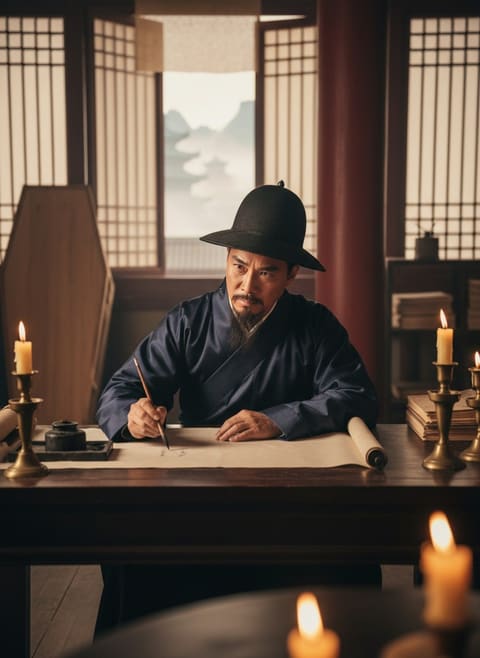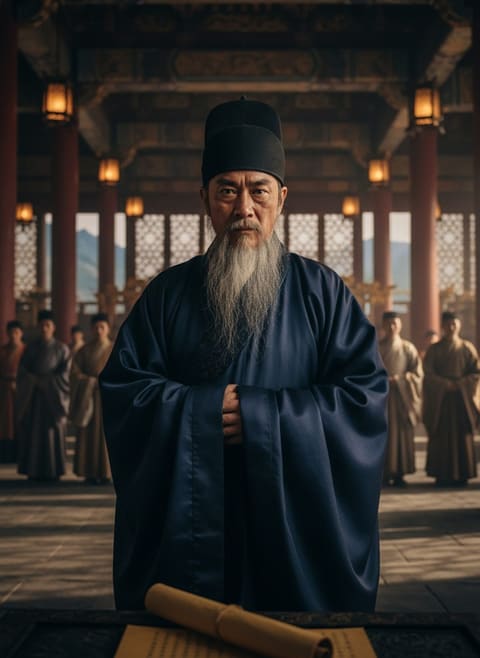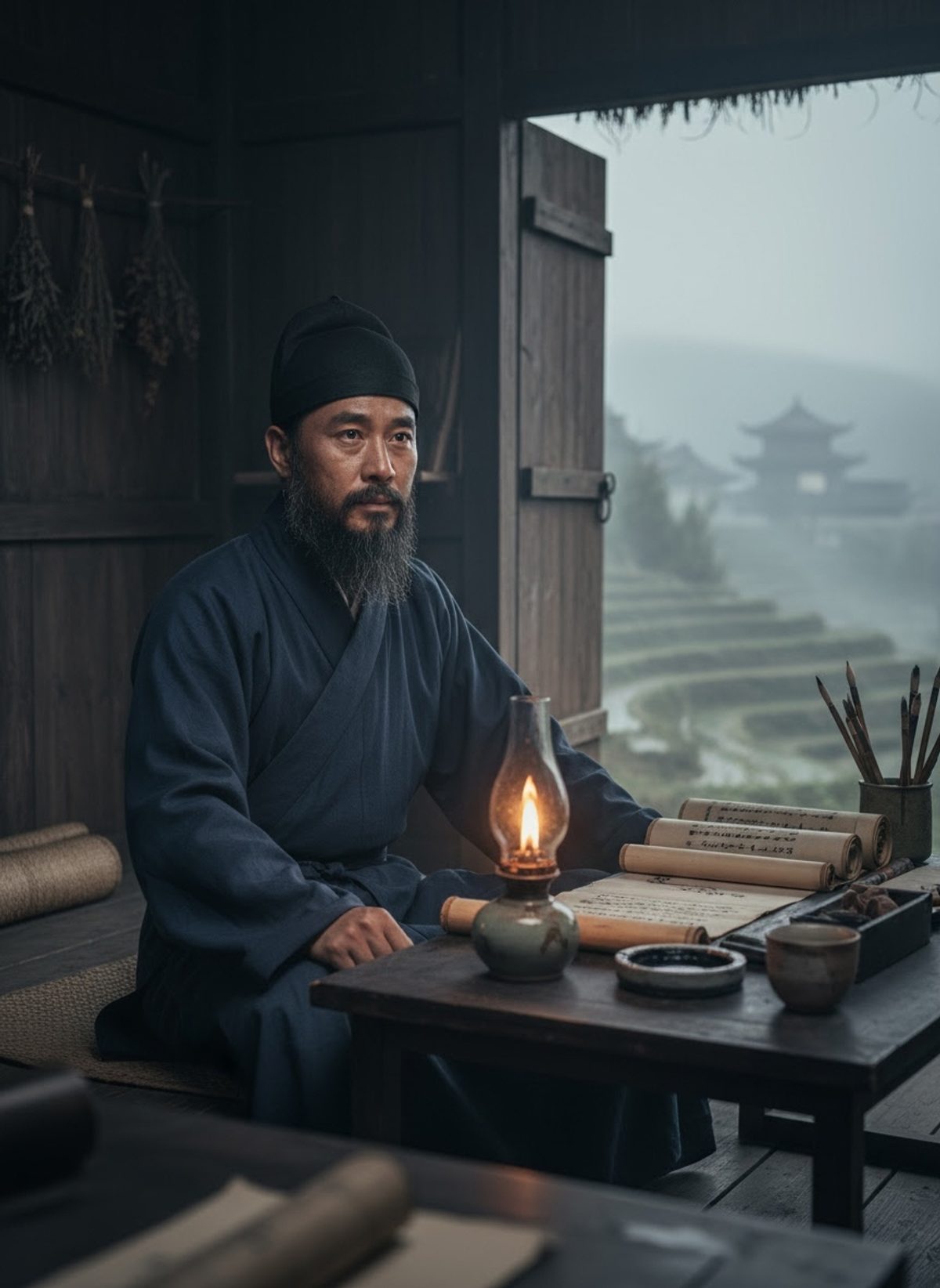
In 1080, Governor Su Shi settled on a muddy slope by the Yangtze River. Known as one of China's greatest literary minds, he now found himself penniless and exiled. His misfortune, however, paved the way for artistic immortality.
Sedition in the Written Word
Despite being celebrated for his literary brilliance, Su Shi's meteoric rise was marred by the tumultuous political climate. The Song Dynasty court was embroiled in a fierce struggle between reformers, led by Wang Anshi, and conservatives, who sought to preserve the old ways.
Su found himself at the center of this vortex, not for any grand conspiracy or defiant act, but for his words. In 1079, an act of poetic expression intended as critique landed Su in hot water, when he was accused of mocking the emperor's policies. His essay on the fiscal policies of Wang Anshi, though penned with intellectual rigor, was branded as seditious.
Dragged through a farcical trial, Su's political enemies seized the opportunity to crush him. In a twisted display of justice, Su was condemned to harsh punishment—stripped of his rank, marched away from the imperial court, and exiled to the remote river town of Huangzhou with neither income nor prospects.
Read next: Wang Zhaojun Chose Exile on the Steppe to Bring China Peace
The Eastern Slope Awakens
Cast off to Huangzhou, Su Shi faced an uncertain future. With no official duties or salary and barred from leaving the region, he sought solace in humble labor. Nestled beside the Yangtze River, Huangzhou was isolated yet beguilingly beautiful. There, Su sought solace in the land, transforming a barren hill into the Eastern Slope, Dongpo, a place that would forever be interwoven with his legacy.
Farming on the unyielding Huangzhou land was grueling, yet it reignited something within him. As he sank his hands into the earth and turned the muddy plot into a fruitful garden, Su fostered a new perspective. Here, under the vast expanse of the Chinese sky, he crafted some of the most enduring verses in Chinese literature. His attachment to this land gave birth to his poetic identity, Dongpo, and instilled his work with vitality and spirit.
Verses Against the Grain
Without the burdens of court life, Su Shi's writing thrived in exile. He carved out profound poetry that continues to resonate through centuries. Works like "The Red Cliff Ode" and "The Cold Food Festival" emerged during these years on the Eastern Slope, exploring themes of nature, impermanence, and personal strife. His poetry became a vessel for personal and philosophical thought, seamlessly weaving motifs of despair with transcendent beauty.
Read next: Gao Lishi Refused to Betray the Emperor Who Exiled Him
What made Su Shi's poetry timeless was not merely the mastery of form, but the depth of emotion and wisdom. His work eschewed the platitudes expected from court poets, instead offering readers glimpses into the human condition. It was not only daring for its time, but defiant in its persistence, outlasting an empire that sought to render him invisible.
A Legacy of Resilience and Renewal
The Song Dynasty attempted to silence Su Shi's revolutionary voice, yet the quiet power of his poetry endured. By embracing humility and adversity, Su transformed his circumstances into creative opportunity. His exile, a period meant to erase his influence, only served to amplify his legacy.
Beyond words themselves, Su symbolized the indomitable spirit of creativity. Despite physical exile, his thought traversed boundaries, inspiring generations across China and beyond. His works were cherished by scholars and ordinary people alike, who found solace and connection in the humanity of his verse.
Through a life marked by turbulence, Su Shi crafted art that transcends time. His experience in Huangzhou stands stark as a testament to the power of perseverance against the confines of repression. Though the Song Dynasty's voices of authority have faded, Su’s poignant poetry continues to speak — celebrating a life lived in pursuit of beauty and truth. It reminds us that the spirit of creativity cannot be easily silenced, and that art endures beyond its own era, outliving the confines of its creation.