The heart of the British Empire was powered by factories, railways, and governance — or so they said. A less glorified yet essential cog in this grand machine was found at the Dhobi Ghat in Bombay.
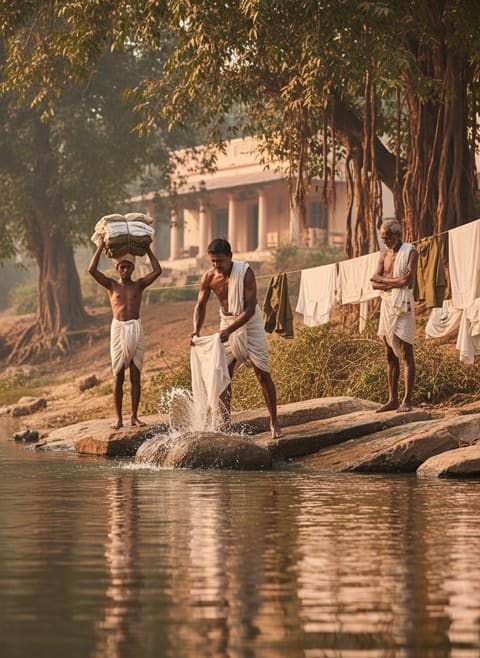
In the muggy pre-dawn silence that enveloped Bombay in 1895, a curious rhythm played out on the edges of the British cantonments. Hundreds of dhobi wallahs, often unnoticed foot soldiers within the empire's ranks, made their daily pilgrimage to the Dhobi Ghat by the banks of the river. These washermen converged in a coordinated ballet of labor, transforming heaps of dirty laundry into crisp, white mountains of linen. They were its linen-keepers, the unseen hands who ensured that the imperial facade remained unblemished.
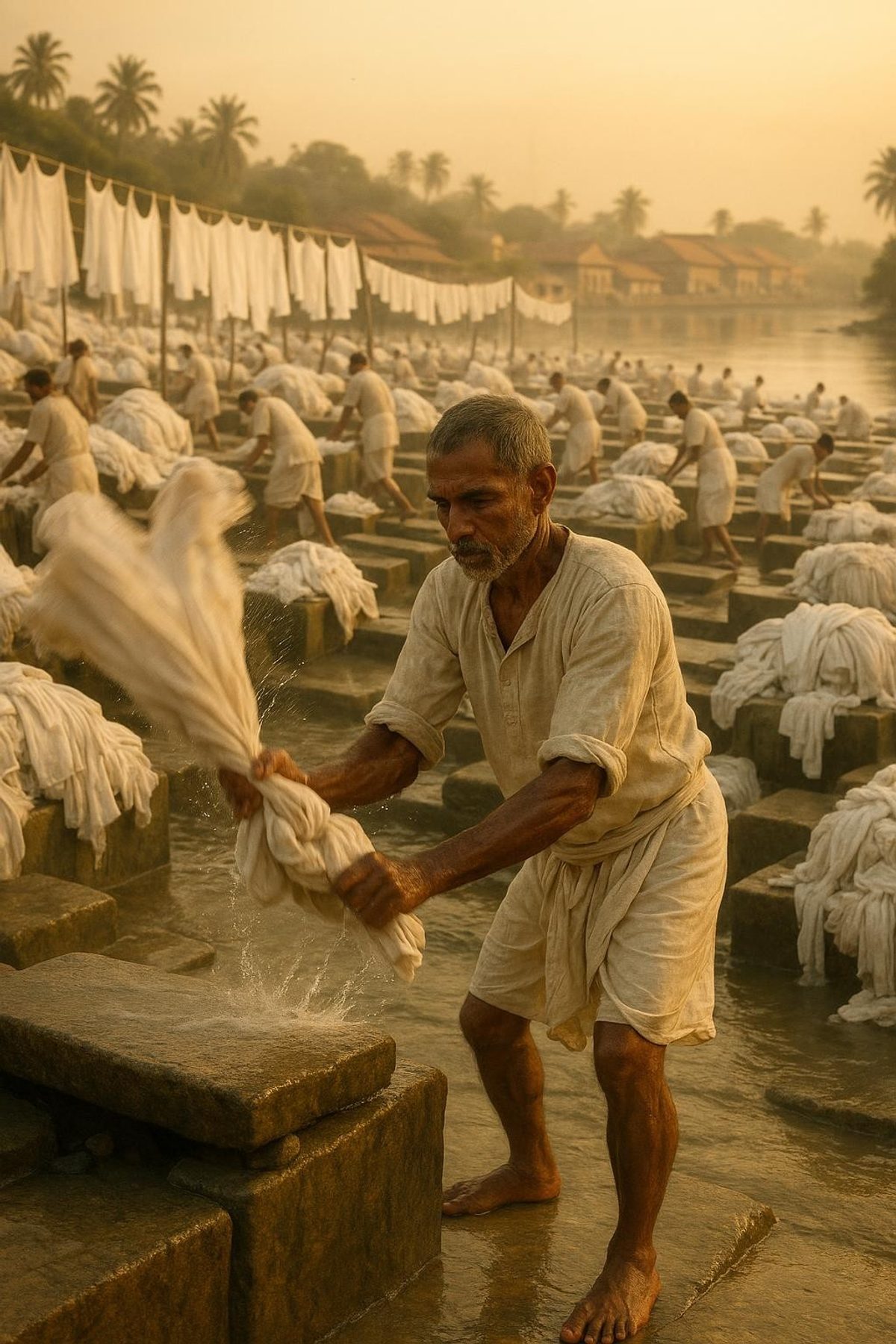
The Dhobi Ghat, India's open-air laundromat, was a marvel of organized chaos. As the morning mist lifted, it revealed rows of flogging stones that stretched as far as the eye could see, standing ready to receive the battered linens of British officers and their families. The dhobi wallahs, wielding soaps and starch, turned the mundane routine of laundering into a spectacle of sound and motion. The slap, crackle, and pop of damp fabric on stone echoed across the river, a rhythmic melody that set the tempo for the bustling city that awakened beyond the riverbanks.
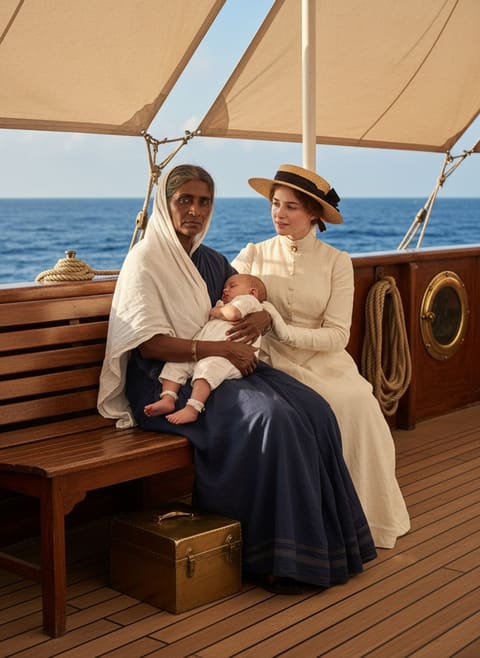
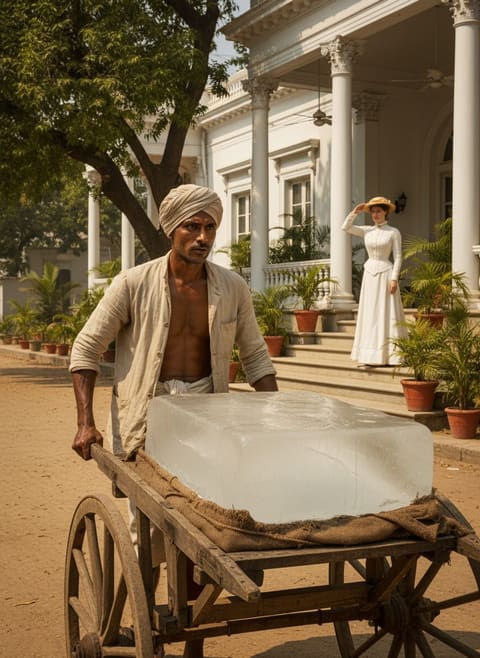
At a time when the empire's identity was entwined with notions of cleanliness and order, maintaining the purity of white clothing was more than just hygienic — it was symbolic. The pristine whites worn by officers and memsahibs projected an image of civilizing authority and cultural superiority. In a world where first impressions were paramount, freshly laundered and crisply starched clothing became emblems of dignity and command. Yet few considered the laborious journey each garment underwent before arriving at their doorsteps, immaculately pressed and free of blemish.
Read next: When the Fishing Fleet Girls Arrived at Bombay's Gate, 1890
In every corner of the empire, the dhobi wallah's toil was both art and survival. Trained in the craft by generations past, these washermen knew the secrets of taming obstinate stains and turning them into proof of sartorial elegance. Their skills were passed down from father to son, with each generation mastering the delicate balance of soap, water, and friction. Despite the humble nature of their trade, they wielded power of another kind — the power to uphold appearances in an empire obsessed with outward image.
The Dhobi Ghat operated with such precision that it was easy to overlook the sheer backbreaking labor it involved. Garments of all kinds were documented, sorted, and washed with a methodical efficiency that rivaled any factory line back in Britain. Each piece was subject to a process that began with soaking, followed by the relentless beating on stones. The sweltering Indian sun became an ally, rapidly drying the dripping garments, awaiting their final metamorphosis through ironing.
While the dhobi wallahs received little recognition for their essential contributions, their work came with inherent risks and challenges. The humidity and prolonged immersion in water took a toll on their hands, rendering them permanently puckered and rough. Many faced chronic back pain from hours spent hunched over their work, while others dealt with respiratory issues from the inhaled fumes of caustic chemicals and coal-fired irons. Yet, these men continued their craft day after day, driven not by acknowledgment but by necessity.
At times of imperial inspection, the frenetic pace of the dhobi wallahs seemed to double. Each crease and fold became a matter of imperial pride, every garment a testament to the exactness expected by the empire. While the British valued order, they equally feared the undercurrent of rebellion, and even something as benign as state attire contributed to the psychological warfare of colonial domination.
Read next: When Halley's Comet Returned and the Empire Watched, 1910
As machines and progress tiptoed their way into the world of laundering, the dhobi wallahs braced for the possibility of obsolete futures. In England, steam laundries began to encroach upon industries rooted in manual labor. Yet in India, the Dhobi Ghat persisted, a living tableau of a labor-intensive tradition that machine technology could not easily replicate. For the British stationed in India, the personal touch of the dhobi wallahs was irreplaceable — a reminder that even the sprawling empire could not eclipse the importance of human touch.
In many ways, the Dhobi Ghat served as a microcosm of imperial India — a spectacle of contrasts. Beneath the grand visions of subjugation and order lay the everyday lives of individuals eking out livelihoods amid the demands of colonial enterprise. The dhobi wallahs embody this paradox, intermediaries between two worlds: the stiff-lipped mundanity of British protocol and the vibrancy of local vitality.
These washermen, weaving their labor into the very fabric of a distant empire, remind us of the quiet cogwheels that drive even the most ostentatious machines forward. Much more than just launderers, they were keepers of cleanliness that underpinned the reach and reputation of an empire that prided itself on the polished facade of white cloth. Their toil, often relegated to the background, demands recognition reflecting the unacknowledged efforts that propel history. As the sun set over Bombay and the freshly cleaned linen sparkled in its fading light, the dhobi wallahs completed another cycle, their day ceaselessly intertwined with the rise and fall of imperial fortunes. And as history marches on, one is left to wonder what stories unravel in places we've long overlooked — the legends left out of the textbooks.