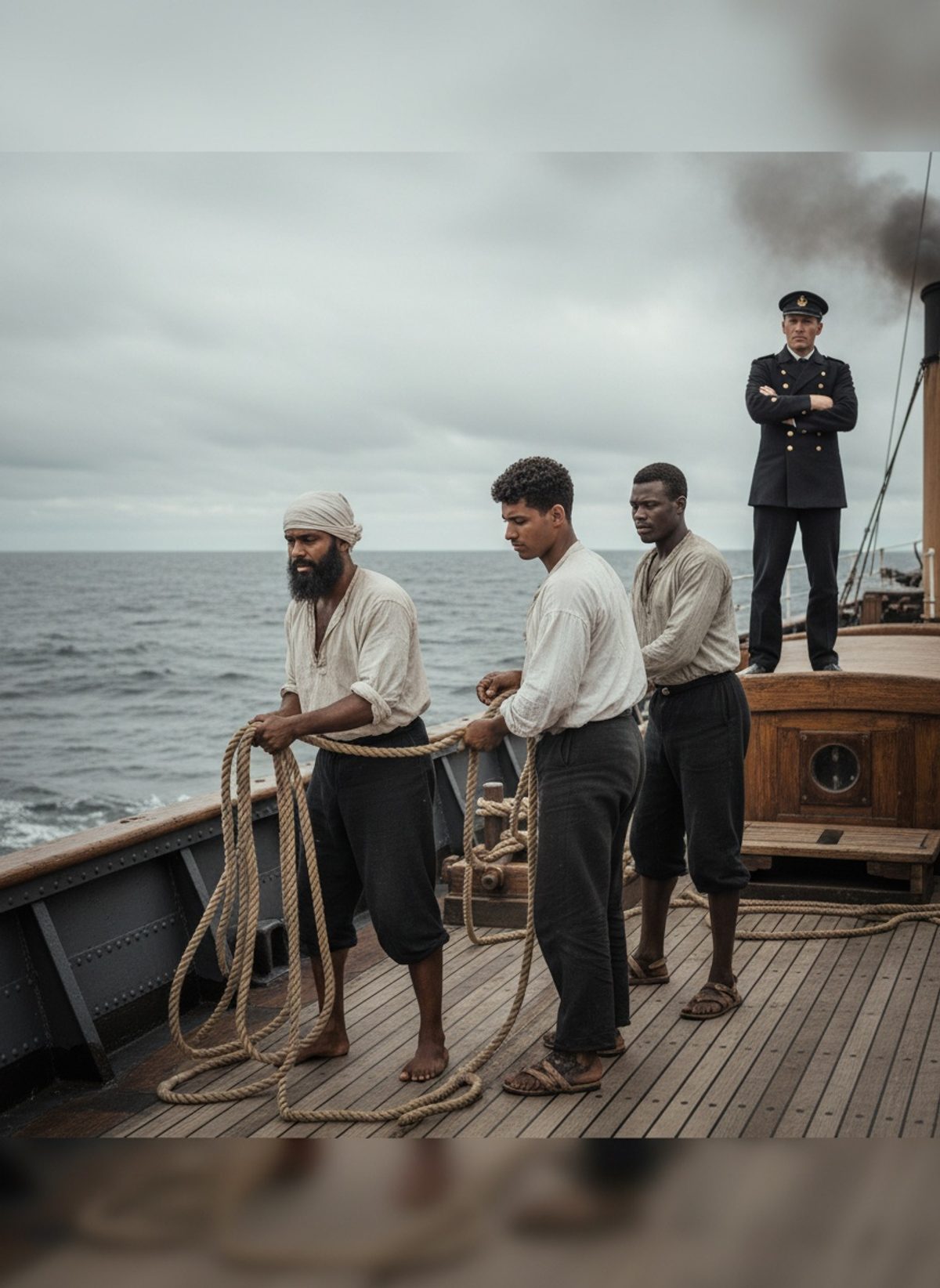
They were everywhere yet invisible. The Lascar sailors, hailing from the Indian subcontinent and the Arabian Sea, were the backbone of the British merchant fleet — and few beyond the docks ever knew their names.
Unseen Mariners of the Empire
From the lush coasts of Bengal to the bustling ports of Bombay, thousands of men were drawn by the promise of adventure and livelihood, venturing aboard British ships as Lascars. Primarily recruited from colonies such as India and parts of Southeast Asia, these sailors quickly became the lifeline of Britain’s expansive maritime empire in the 1700s to the 1940s. But despite their essential roles, the Lascars were often relegated to the fringes of history.
Working on these vessels was a grueling ordeal, and the challenges started long before setting sail. Contracted by promises that sometimes felt as elusive as the winds themselves, Lascars were often misled by agents regarding the nature of work and terms of employment. Upon boarding these mighty ships, they found themselves working long hours in extreme conditions — hoisting sails, scrubbing decks, and maintaining ship rigging under the harshest weather while their British counterparts often received better food, accommodations, and pay.
Despite having ventured across distant oceans, many of these sailors were treated with disdain. Segregated from British crews, they were often housed in cramped quarters, subjected to stringent rules and, not infrequently, to the caprice of their British commanding officers. Yet, the Lascars persevered, driven by the hope that their labor might translate into a better life for themselves and their families back home.
Read next: When Army Wives Followed the Drum Into Hell, 1857
An Unequal Pact on the High Seas
The inequalities were stark and cut to the heart of British maritime operations. While British sailors could look forward to regularly scheduled pay, the Lascar wages were abysmally low, reflecting not just economic disparity but the colonial attitudes of exploitation. For a fraction of the pay of their British equivalents, they bore the same risks, including disease, malnutrition, and the perils of sea storms. Unlike their British counterparts who might receive pensions or compensation for injuries, Lascars were left with nothing but hope that their service would be honored upon return. Unfortunately, all too often, it wasn't.
Docking at British ports, the Lascars faced even more challenges. The contracts they signed often contained clauses that stripped them of rights and benefits in foreign territories. Many were abandoned at port cities or struggled to find passage back to their countries due to exploitative agreements that made no provisions for return journeys. Desperate, some resorted to begging or fell into vagrancy, overshadowed by a society blind to their struggles and contributions.
Hope Against a Storm of Inequity
Efforts for fair treatment were sporadic but not unheard of. Occasionally, benevolent souls would step forward to advocate for better terms for these mariners. Organizations arose sporadically, driven by individuals who saw beyond the empire’s facade of prosperity, understanding that justice had seldom reached the dockyards where these sailors waited. However, systemic change was as slow as a ship caught in a dead calm.
Numerous stories illuminate the resilience of the Lascars. They brought with them a rich tapestry of cultures, infusing the port towns with vibrant traditions. Festivals and culinary practices sometimes sprang up in foreign lands, mingling with local customs and leaving an indelible mark that hinted at their hidden presence. Yet, their stories, sung in native tongues during long nights at sea, rarely made it beyond the ship or the enclaves where they stayed.
Read next: When the Hill Station Post Office Linked Two Worlds, 1885
The Legacy of the Unsung Sailors
The story of the Lascars is a poignant reminder of interconnected histories—the global tapestry woven by everyday laborers who safeguarded the sinews of an empire. Their narrative is one of survival against the odds: of men who experienced both the wonder of global exploration and the deep inequity of colonial rule, often at great personal cost.
While textbooks have largely omitted their contributions, the story of the Lascars is slowly coming to light, thanks to historians and cultural advocates dedicated to acknowledging their vital role. By unfurling the sails of their history, modern readers can better appreciate the true scope of stories that shaped nations and empires—a compelling call to reassess the weighted biases of recorded history.
Understanding the legacy of the Lascars helps us realize the profound courage and sacrifice involved in maritime empires and reminds us to revisit whose stories we choose to elevate. Does the greatness of an empire truly rest only on its victors, or is it also profoundly defined by those who stood in the shadows, shaping its course one wave at a time? The tale of the Lascars forces us to ponder broader questions about recognition, justice, and the quiet winds of change driven by the unseen yet indispensable forces in history.