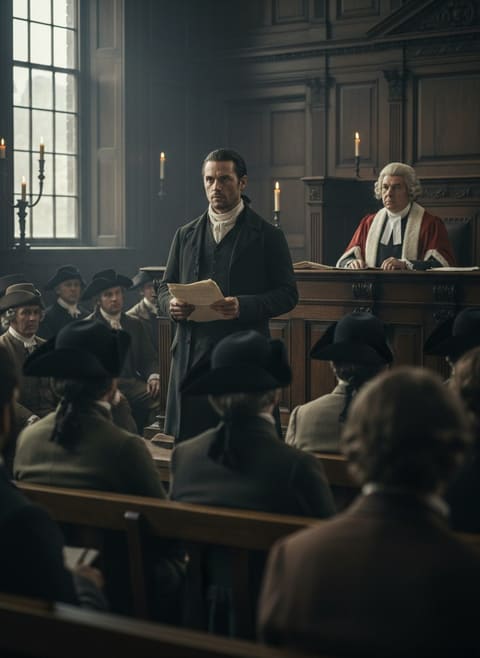
He was already planning his return to England, the promises of a triumphant homecoming within his grasp. The irony lay in his ignorance of a peace that rendered his victory redundant.
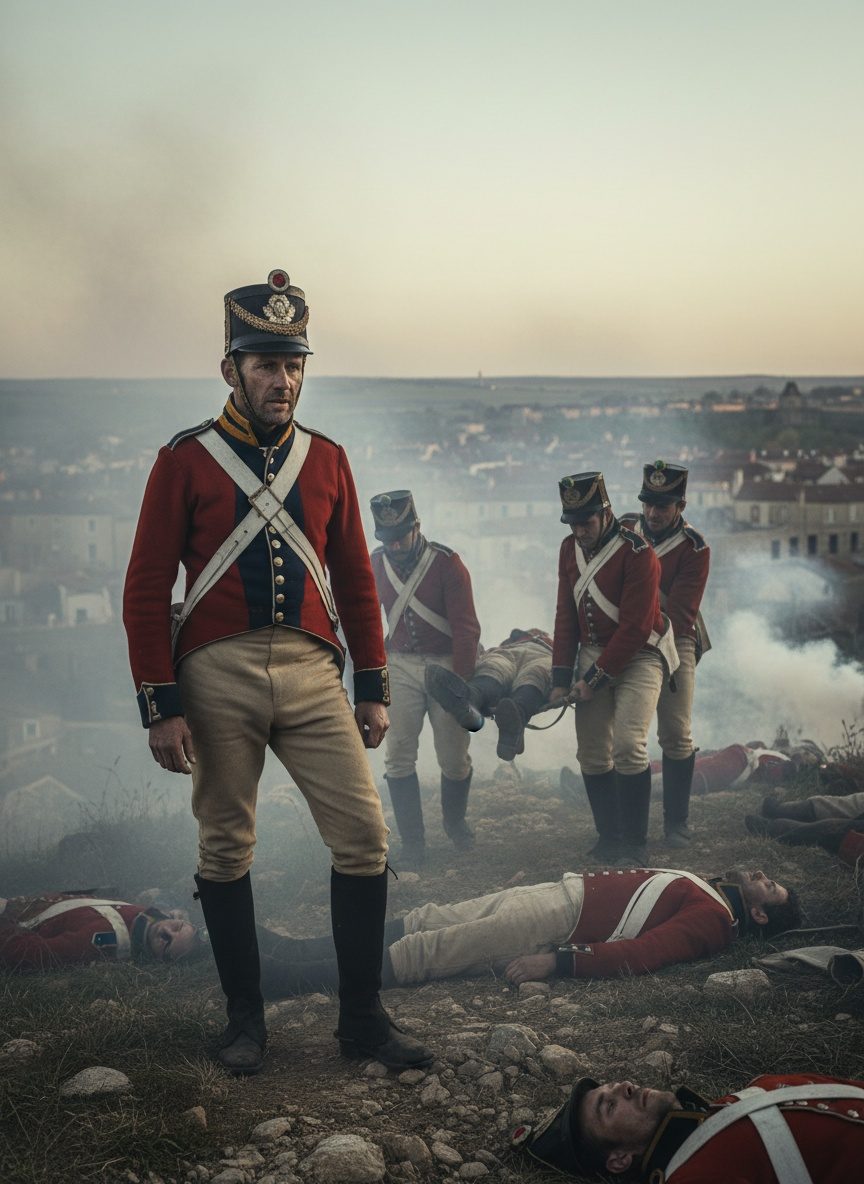
On Easter Sunday, April 10, 1814, the streets of Toulouse bore witness to one of the last brutal acts of the Peninsular War as the Duke of Wellington's forces clashed violently with those of Marshal Soult's French army. The sun rose over the sprawling plains, casting long shadows on the crimson-streaked slopes of the Mont Rave heights. No sermons echoed through Toulouse's churches that day, their sanctity torn by the roar of musket fire and the cries of wounded men. What thousands of brave souls did not yet know, as they faced death with valor, was that their sacrifice had been rendered futile days before the fighting commenced. In distant Paris, far removed from the carnage, Napoleon Bonaparte had accepted the terms of abdication on April 6. The Emperor's hubris had dragged the continent into chaos, and now, as the ink dried, a new chapter of European peace was dawning. But the keys to this peace could not cross the country fast enough to halt the momentum of war.
Wellington, known for his decisive leadership, had spent years campaigning across Spain and Portugal, honing the skills that would earn him praise and reverence. On that fateful Easter Sunday, he faced a formidable opponent in Marshal Soult, whose resilience held against Wellington’s strategies time and again. The battle was meticulously planned; Wellington had resolved to seize the commanding heights of Toulouse, crucial for controlling the city's defenses. British, Portuguese, and Spanish troops moved in unison, their synchronized steps weaving the fabric of this ghastly tableau. Smoke billowed and musket balls whizzed through the air, an orchestra of war that played its grievous symphony.
Eyewitness accounts of the battle reveal the chilling ferocity that defined those hours. Soldiers unfalteringly stormed the slopes, their determination palpable even as they stumbled over the bodies of fallen comrades. The Aisle of Muzillac saw some of the fiercest fighting. Riflemen fired at close range, artillery thundered relentlessly, and cavalry charges swept through, their intent to break the French lines. Brave officers urged their men forward through the fog of battle, unaware of the futility of their gallantry. It was a macabre dance between life and death, choreographed unbeknownst by a peace treaty already signed.
Read next: The Day a Freed Slave Lectured Britain's Finest Minds
Toulouse itself was a city steeped in potential, its streets lined with the enduring architecture of the Gothic and Romanesque. Its people, bruised by years of war, watched helplessly as the conflict unfolded beyond the city walls. Each quarter mile gained by Wellington's forces was drenched in blood, with over 7,000 men wounded or dead by the day’s end. For the families of Toulouse, Easter hymns were replaced with the dirges of mourning, as streets once bustling with the vibrancy of life echoed with somber silence.
What makes this moment in history so heartbreakingly poignant is the cruel trick fate played. Communication was the crux upon which the success of any army relied. Yet in 1814, information was a slow companion, reliant on the speed of couriers and the endurance of weary horses. As battle plans were laid and orders shouted, the news from Paris was still crawling eastward, each league bringing it closer to quelling the conflict's flames. If fortune had favored the messengers with swifter passage, how different the narrative could have been. The couriers, vital cogs in the machinery of war, could not ride fast enough to halt a tragedy already set into motion.
Read next: The Winter That Broke Napoleon's Army of Portugal
To Wellington and his foes, ignorance was their only ally or adversary—a dual-edged sword cutting through their purposes. The death of soldiers, whose only knowledge was of duty and honor, was not a reflection of the grand strategies conceived by generals; instead, it was an unnecessary coda to a symphony of suffering. Maurice de Tascher, a chronicler of the time, encapsulated the bewilderment that followed—of soldiers laying down arms as peace descended around them, bewildered by the abrupt cessation of violence. The soldiers returned to their encampments, weary yet resolved, unaware that what they believed was so very different from the world’s new reality.
The tale of Toulouse stands as a stark reminder, echoing across the centuries, of the uncertainty that governs history’s tides. The clash of arms that day epitomized the futility of misinformation, a singular, devastating outlier in a chain of otherwise predictable events. Though physical wounds have long since healed and the scars of battle have faded, the legacy endures in the lessons learned—from the importance of communication to the powerlessness of humanity caught in the churning currents of historical momentum. As we reflect upon this battle, unseen by textbooks yet indelibly etched in the annals of conflict, we are called upon to remember not just the decisions made by those in power, but also the silent cries of the common soldier, who, for a brief moment, stood at the precipice of history made impotent by distance and destiny.