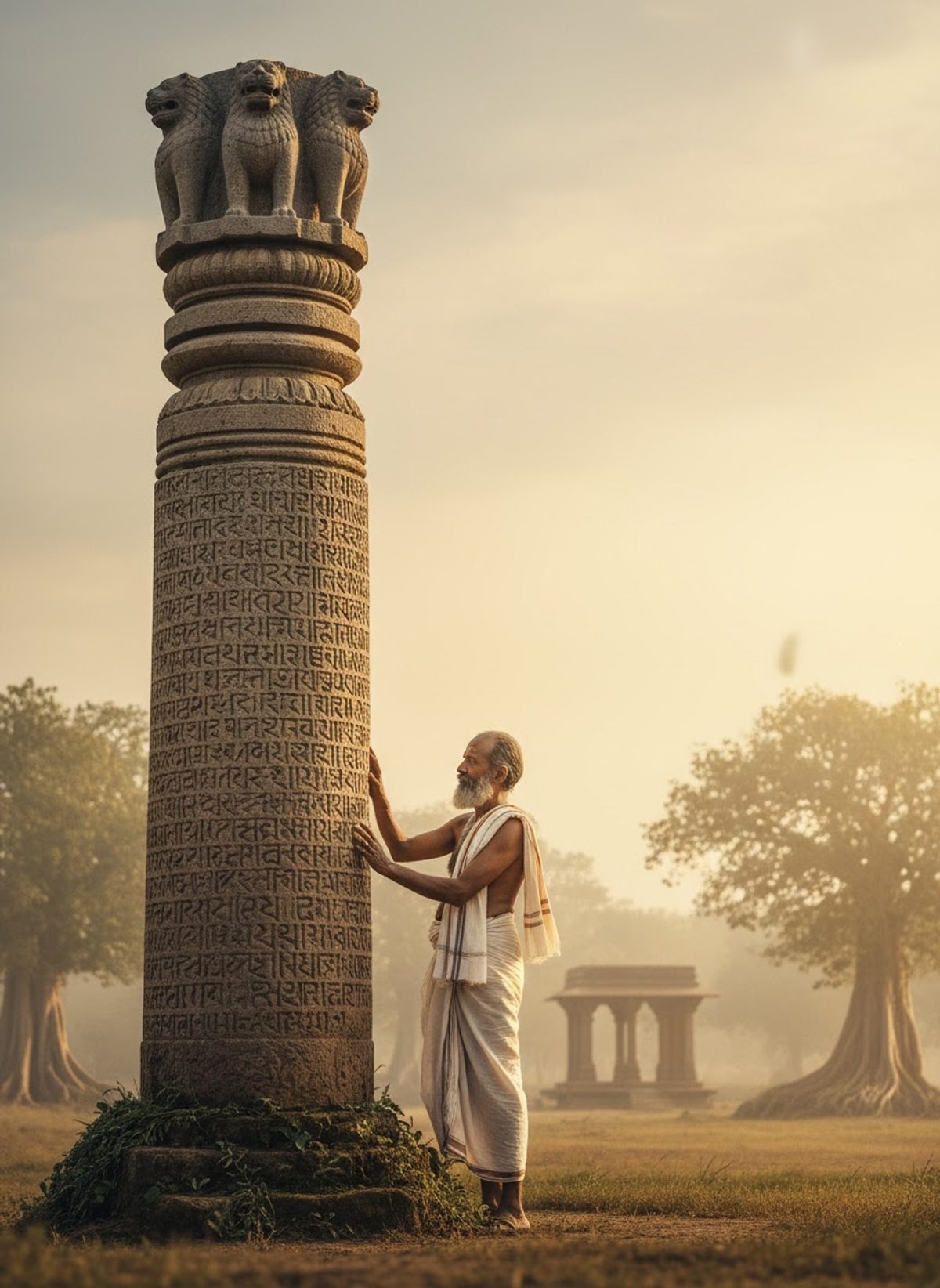
It is a crisp morning in the heart of India's Gangetic Plain. The first light of dawn casts a golden hue over the rugged landscape, illuminating the enduring silhouette of an ancient monolithic structure. This is not just a stone pillar standing solitary against the vast sky; etched into its very soul are the words of Ashoka the Great, Emperor of the Maurya Empire, whose principles of peace and tolerance irrevocably altered the course of history.
Over 2,300 years ago, Ashoka seized the reins of an empire stretching from the Hindu Kush to the Bay of Bengal, commanding the largest army of its time. Yet, in the wake of one devastating conflict, he renounced the sword, marking his transformation with enduring stone.
The Battle That Changed an Empire
In 260 BCE, Emperor Ashoka's forces descended upon the region known as Kalinga, an area corresponding to modern-day Odisha. The stakes were typical for an expansionist campaign: land, resources, and tribute. However, the aftermath was anything but ordinary.
The chronicles reveal that the Kalinga War was a catastrophe like no other—a brutal clash that consumed the lives of over 100,000 soldiers and civilians alike, leaving rivers stained red and fields littered with the fallen. The echoes of suffering resonated through the emperor's halls, each cry a haunting reminder of the consequences of conquest.
Read next: Derinkuyu: 20,000 People Carved an Entire City Underground
Ashoka's transformation stemmed from witnessing these horrors firsthand. The emperor, who had once relished in power's spoils, now found himself at a moral crossroads. The anguish and destruction unfolded before him became the catalyst for an unprecedented pivot in the trajectory of his reign. In a moment of profound introspection, Ashoka turned away from the path of war and embarked on a journey defined by peace, marking a new era for the Maurya Empire.
Determined to commit his new-found principles to immortality, Ashoka chose stone as his medium. His transformation, once internal, now etched into the bedrock of his empire. The edicts inscribed on his pillars profess a commitment to "dhamma" or righteous conduct, advocating non-violence, empathy, and respect for life in all its forms.
A New Doctrine Etched in Stone
Scattered across the expanse of the Maurya Empire, Ashoka's pillars are the earliest surviving self-representations of imperial power from the Indian subcontinent. Each stands as a silent sentinel of an emperor's pledge to a higher moral code. Crafted from chunar sandstone, these pillars were built to withstand time's relentless march, their messages as clear today as when they were first carved.
What is remarkable is not just the survival of these monuments, but the nature of the messages they bear. In a world dominated by conquest and subjugation, Ashoka preached a different path. His edicts include commands for religious tolerance, the importance of moral behavior, and directives for animal welfare—a radical departure from the norm. Ashoka recognized all faiths, urging respect and understanding even among diverse beliefs.
One notable pillar, the meticulously polished column at Sarnath, is crowned with four lions facing outward—a symbol of power and sovereignty. Yet beneath this regal image are the words urging tolerance and love. The script, in Brahmi, reminds those who read it of their shared humanity.
The Spread of a Legacy
Beyond their immediate impact, Ashoka's edicts facilitated a softer conquest—one of ideas and spirituality that extended beyond the boundaries of his empire. A keen supporter of Buddhism, Ashoka's reign coincided with a significant proliferation of the religion. He is traditionally credited with convening the Third Buddhist Council, supporting the monastic community, and dispatching emissaries to far-flung lands, from the Mediterranean to Sri Lanka.
Read next: Cahokia: A City of 20,000 Rose in Illinois and Vanished
These missions played a crucial role in spreading Buddhist ideology, intertwining Ashoka's laws and teachings into the fabric of societies across Asia. The Lion Capital, a crowning symbol of one such pillar, has been embraced as the national emblem of modern India. Its adoption and the integration of the Ashoka Chakra into the national flag attest to the enduring influence of his philosophies.
Yet, Ashoka's story extends beyond religious patronage. His edicts not only touch on spiritual matters but also delve into practical governance. They urge the establishment of medical facilities for humans and animals, a vision of welfare centuries ahead of its time.
A Timeless Message
Today, the resolute figures of Ashoka's pillars remain scattered across the Indian subcontinent, their messages still echoing across millennia. They remind us of the journey of a ruler who, faced with unspeakable devastation, chose reconciliation over retribution, ideals over imperialism. They stand not only as historical records but also as symbols of the possibilities that emerge when power embraces empathy.
In a world still wrestling with the complexities of power and peace, Ashoka's legacy challenges us to consider how governance can be a force for good, steadfastly advocating for unity, compassion, and justice. His story—one carved in stone, yet rooted in humanity—offers timeless insights into the profound potential of transformation. It’s a potent reminder that in leadership, the greatest victories are often those won within, against the darker aspects of our own nature.