July 3, 1908. The midday sun beat down on the dusty ruins of an ancient civilization.
The Unearthing of an Enigma
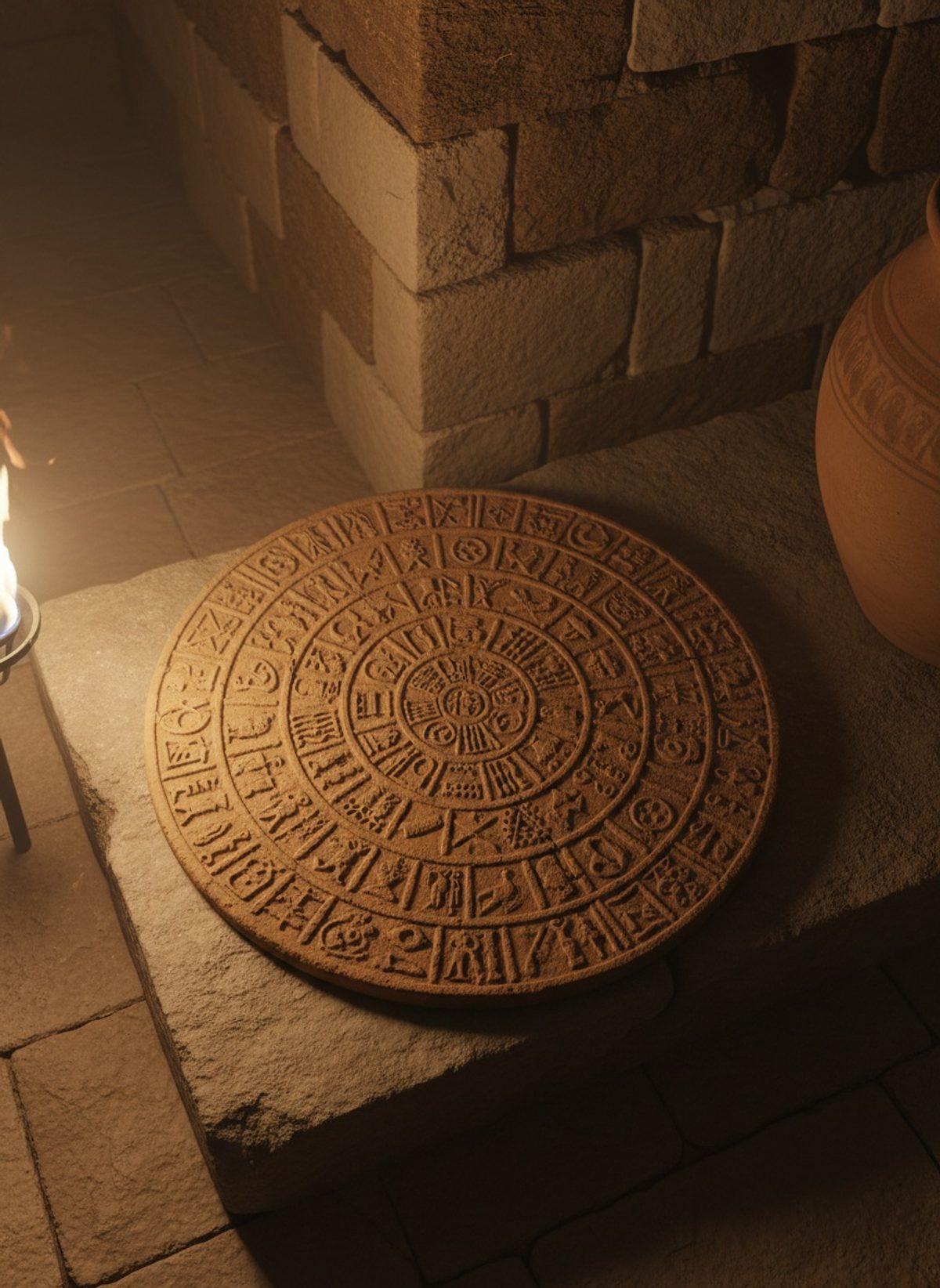
On this sweltering summer day, amidst the silent stones of what was once the Minoan palace at Phaistos, Italian archaeologist Luigi Pernier made a discovery that would send ripples through the world of archaeology. As he brushed away the centuries of dirt and debris, he uncovered a clay disc unlike anything else found on Crete or, indeed, the world. Known now as the Phaistos Disc, this fired clay artifact, approximately 15 centimeters in diameter and just over a centimeter thick, was covered in spiraling symbols pressed into both of its sides with unparalleled precision.
The palace of Phaistos, where the disc was found, was a hub of activity during the Bronze Age, situated in one of the largest cities on Minoan Crete. With views stretching out over fertile plains toward the distant sea, the site contained architectural marvels that still capture imaginations today. Yet, it was the discovery within its ruins that promised to unlock secrets of the Minoans, a civilization shrouded in mystery.
The Disc bore 241 individual signs, consisting of 45 distinct characters, imprinted using a system akin to a rudimentary type of movable type, an astonishing innovation for the period. Each symbol on the Disc was pressed into the clay with remarkable consistency, suggesting a level of sophistication that hinted at the intimate knowledge possessed by its creators. The symbols themselves, however, presented a puzzle that remains unsolved over a century later. Despite extensive efforts by scholars from around the globe, the language of the Phaistos Disc continues to defy interpretation.
Read next: The Flood Before Noah: What Ancient Tablets Actually Say
The Symbols and Their Mystery
The symbols on the Phaistos Disc diverge from the known scripts of the ancient world. They are reminiscent of Linear A, also found in Phaistos and other archaeological sites across Crete, but remain fundamentally different. Questions arise as to the purpose of this enigmatic script—was it a prayer, a catalog, a decree, or perhaps something else entirely? The lack of parallel texts compounds the enigma, making the Disc a stand-alone anomaly amongst Minoan artifacts.
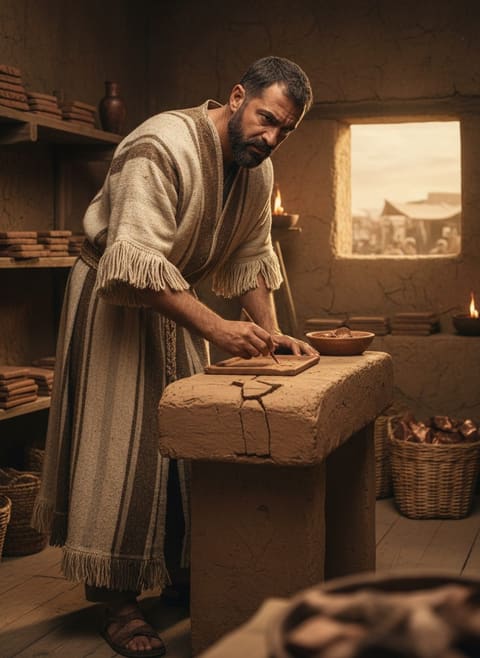
The methodology of creating the Disc is as mysterious as the script it bears. Unlike Linear B, which was transcribed manually, the symbols on the Phaistos Disc were pressed into the clay with individual stamps before firing, marking it as the oldest known example of typography. This discovery invites speculation on whether it implies mass production or was a singular innovation. Regardless, the process denotes significant advancements by this ancient culture, hinting at their complex societal structures and sophisticated technological capabilities.
Archaeologists and linguists have proposed numerous interpretations of the Disc’s text. Some theories suggest it could be an astronomical calendar or a religious artifact, while others speculate it may have been a record-keeping tool or even a form of Minoan entertainment. Despite these varied theories, none have withstood the scrutiny of the academic community, leaving the Disc silent to outsiders looking in on its ancient world.
Chasing Shadows of the Past
The story of the Phaistos Disc is more than just an archaeological puzzle; it is a reminder of the lost complexity of the Minoan civilization. As other artifacts, like pottery, bridge-spouted bowls, and tall jars, have been uncovered at Phaistos, they tell tales of a community rich in trade and culture, with interconnected roads even leading to other Minoan cities like Knossos and Malia. Yet, the Disc stands as a solitary guardian of a language lost to time, a remnant of a people who thrived on trade and innovation but left few written records behind.
Read next: The Map Was Buried for Centuries. The City Was Real.
Some suggest that the disc might bear a message or a record unique to the Phaistos region, meant to serve local communities in ways we cannot begin to comprehend. Others propose it was crafted by an outsider, a visitor employing a personal code or language lost with their passing. While there are Linear A texts appearing in Phaistos and nearby, they do not match the Disc's symbols, adding another layer to its mystery.
As scholars continue to examine and debate the Disc, it captivates more than just archaeologists and linguists; it intrigues anyone drawn to the mysteries of the ancient world. What message did the creators of the Phaistos Disc etch into clay for future generations? Was it a mundane record or a sacred text meant to be revered only by its originators? Until the key to its symbols is found, the disc holds its secrets within the hard-baked clay.
In its undulating lines and spirals, the Phaistos Disc encapsulates the essence of humanity's drive to communicate across the ages. It challenges our understanding of history and reminds us of the tales still buried under layers of soil and time. As long as the Disc remains undeciphered, it stands as both an invitation to uncover knowledge yet out of reach and a testament to the rich and varied paths civilizations have walked throughout human history.