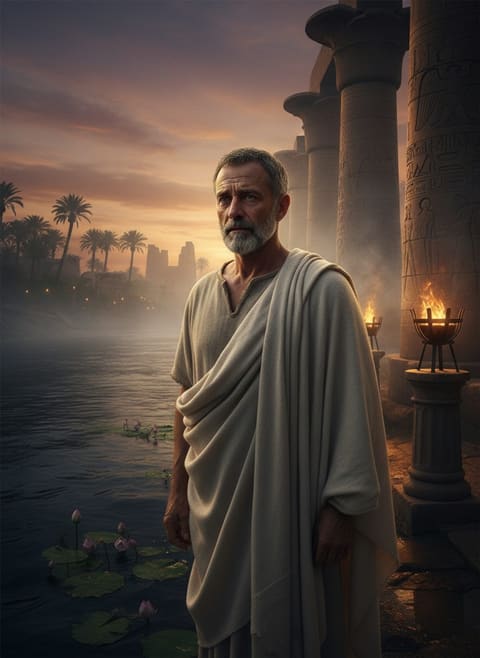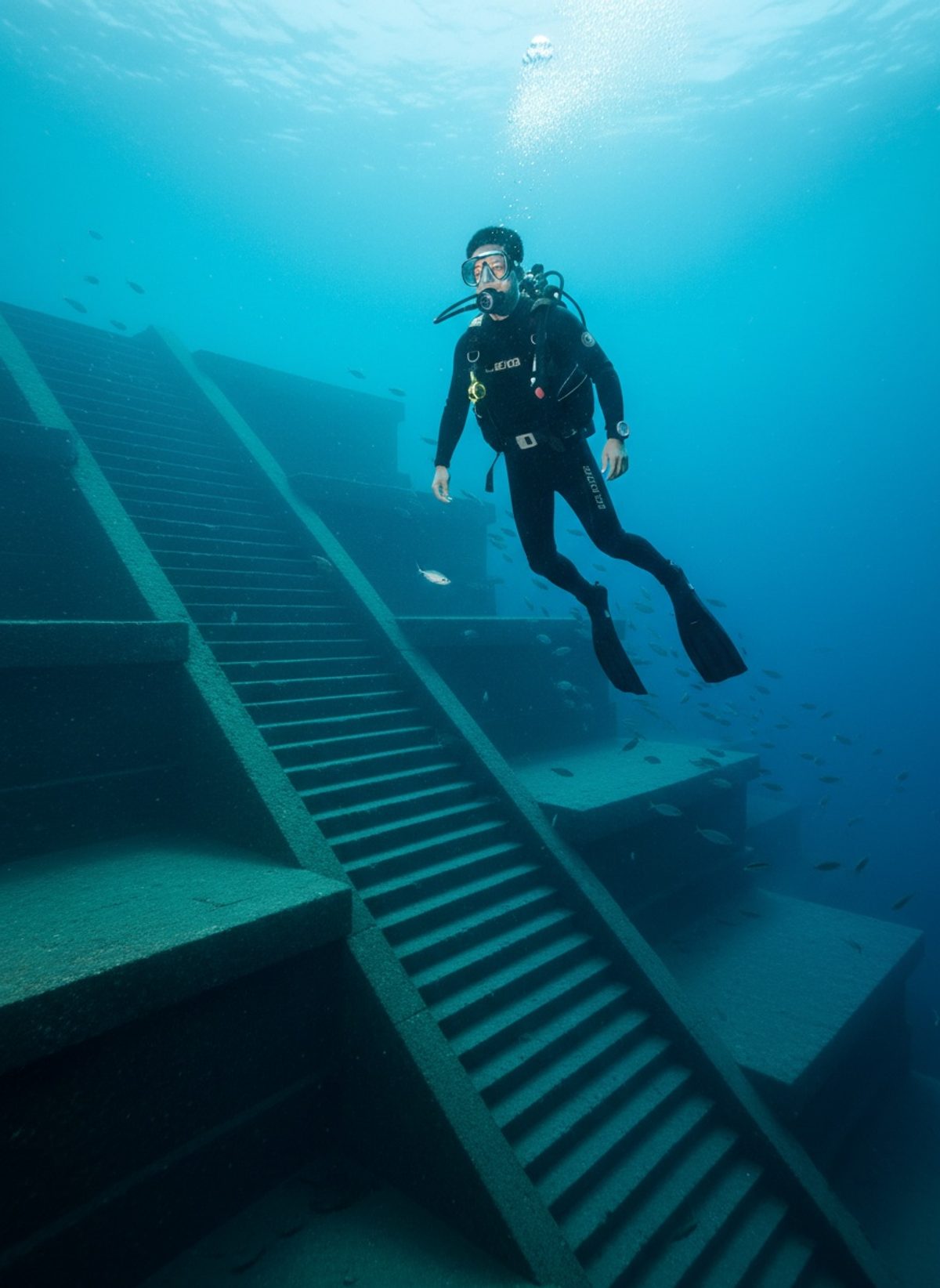
The waters off Yonaguni Island are a wondrous palette of blues in the mild seasons, but in winter they transform into a serene stage for hammerhead sharks weaving through the ocean's depths. On a crisp day in 1986, with a calm surface echoing its hidden wonders, Kihachiro Aratake dove beneath the waves in search of these majestic creatures. Instead, he stumbled upon something extraordinary. Nestled in the shadows at the island's southernmost tip lay stone formations that seemed ripped from the pages of an ancient tale. As sunlight filtered through the water, it revealed terraces, angles, and steps carved with such precision they surely held a story of their own. What Aratake found was not merely a curiosity but a doorway into a debate that still divides scholars today.
The Dive That Unraveled History
Yonaguni Island, the southernmost of the Ryukyu Islands, has long been a gateway between Japan and Taiwan, lying just 100 kilometers from Taiwan's shores. In 1986, it gained global attention when Aratake's fateful dive unveiled structures that ignited imaginations worldwide. The formations were strikingly geometric, with flat platforms and right-angled passages, diving dramatically from the seafloor. These were not just scattered stones; they appeared thoughtfully arranged and connected to the underlying rock mass, almost hinting at human handiwork.
Intrigued by this astonishing find, marine geologist Masaaki Kimura of the University of the Ryukyus launched an investigation. Kimura proposed these were ancient remnants of a lost civilization, possibly dating back thousands of years. He believed the structures were man-made stepped monoliths, drawing parallels to historical pyramidal architecture. His theory painted a picture of a bygone community erased by the tides of time and possibly submerged by rising sea levels at the end of the last Ice Age.
Yet, despite its allure, his hypothesis was met with skepticism. The Japanese Agency for Cultural Affairs and the government of Okinawa Prefecture refrained from recognizing these formations as cultural artifacts, casting doubt on the claim. Without state-backed research or preservation efforts, the Yonaguni Monument lingered in an ambiguous chapter of history, a riddle with no clear answer.
Read next: The Copper Scroll Listed Real Treasure. No One Has Found It.
Nature’s Marvel or Human Heartbeat?
The enigmatic Yonaguni formations captured attention far beyond Japan's shores, drawing geologists and archaeologists into the fray. Among them, Robert M. Schoch and John Anthony West were particularly vocal about their natural formation thesis. Visiting Yonaguni with a keen eye for geology rather than myth, Schoch noted that the site’s stone was composed of sandstones and mudstones with natural bedding planes. These planes, parallel and well-defined, lent themselves to fracturing along earthquakes' gentle nudges, creating dramatic rectangular formations without human intervention.
Schoch's observations further argued that what some saw as walls and carvings were likely the consequences of natural erosion, with rock formations slipping to vertical planes as underlying structures eroded away. His sentiments were echoed by other researchers, such as Wolf Wichmann, who proposed the structures were not fantastical remnants of a lost society but rather the work of time, tide, and geology.
Read next: The Sanxingdui Masks: Bronze Faces From a Civilisation With No Name
Supporters of the natural formation theory emphasize how Yonaguni is not alone in this geological theatre. Similar step-like sandstone formations exist on the northeast coast of Yonaguni and at Sanninudai, revealing the earth's artful hand at work beneath the waves. Each crevice, split, and smooth-cut angle serve as reminders of nature's unpredictable creativity, shaped over millennia through tectonic, oceanic, and atmospheric forces.
The Mystery Beneath the Waves
Despite years of scrutiny, the Yonaguni Monument remains an absorbing puzzle. Efforts to digitally map and analyze the area continue, with researchers such as Takayuki Ogata contributing to a better understanding of Yonaguni Island's topography. Yet the site doesn't lend itself to simple conclusions—the stones whisper secrets, urging curiosity, embracing ambiguity.
Throughout the debate, the monument has become more than just rocks under the sea. It fuels a deeper exploration into how human minds perceive the mysterious and unknown. Are we drawn to stories of hidden civilizations because they spark a desire to connect with the primal aspects of our past? Or do these tales serve as modern myths, grounding us in the present through wonder? The answers elude researchers and divers alike, caught between the starkly real and the romantically imagined.
The Yonaguni Monument compels us not only to explore the past but to ponder the lenses through which history is told. In its silence, it poses a question to any who dare to search its depths: Where does history end and imagination begin? A dive into Yonaguni's underwater world is a dive into the human spirit's quest for knowledge, leaving the ocean's secrets to shimmer tantalizingly out of reach. It’s a reminder that history’s most compelling stories often reside on the precipice of discovery and the vast, uncharted waters of our endless curiosity.