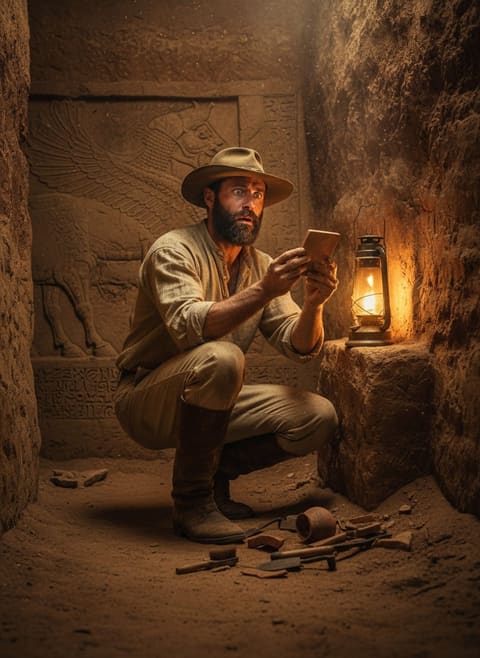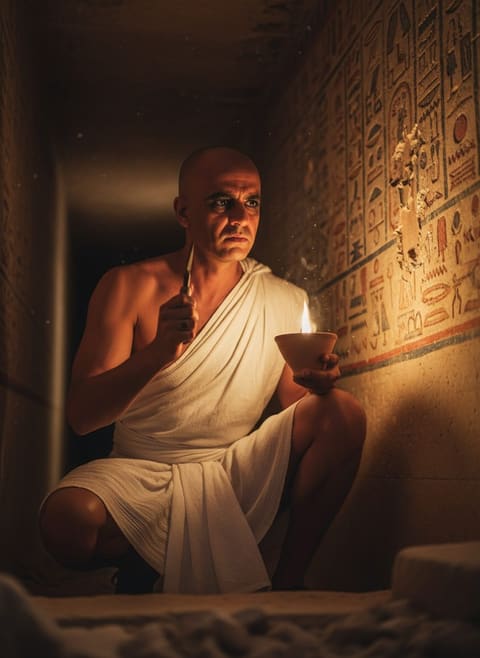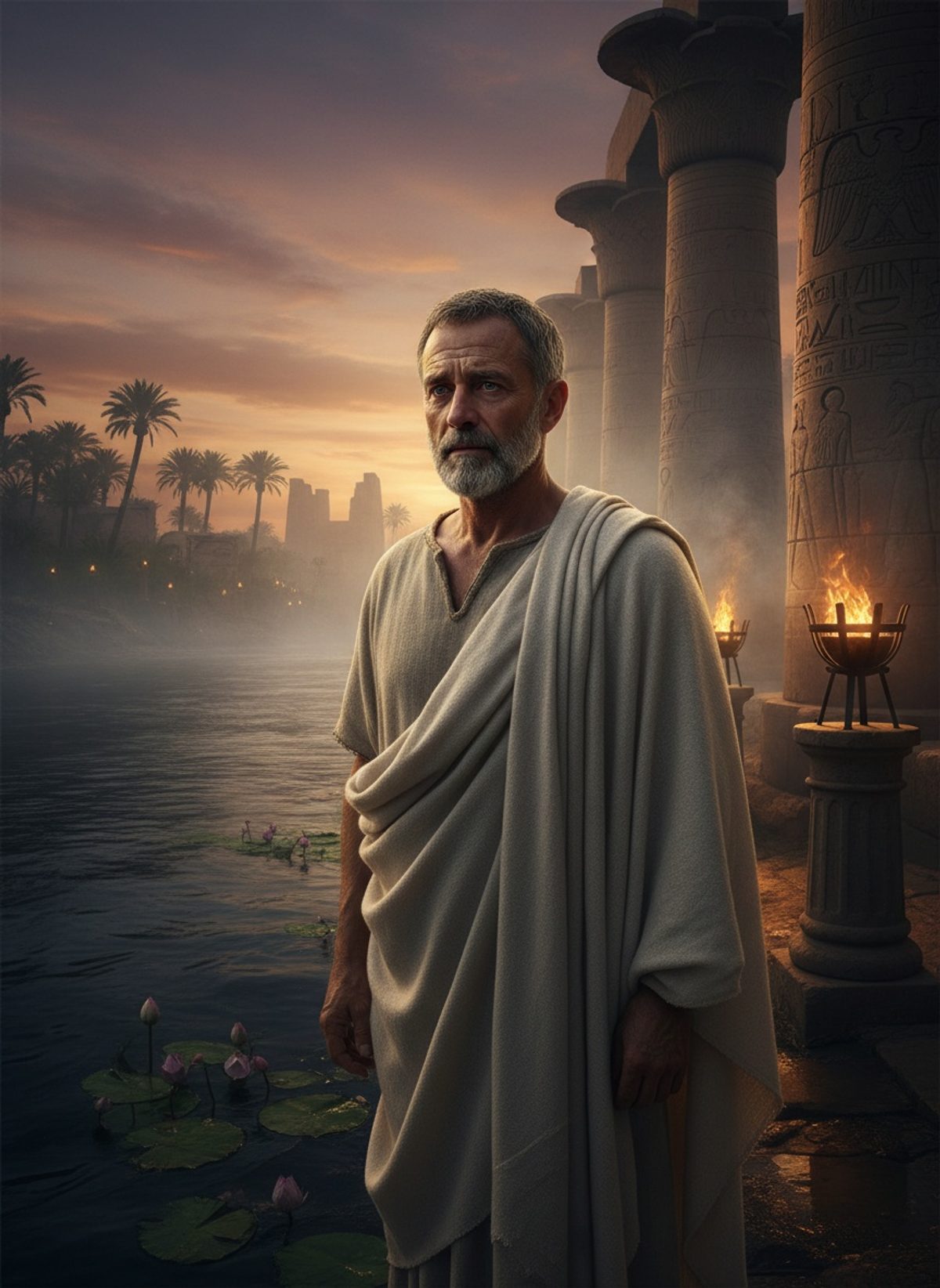
The Nile River flows lazily under the relentless gaze of the Egyptian sun, its waters shimmering with a golden hue. The air is thick with the scent of ancient soil and the occasional call of a distant heron. It's hard to imagine that these serene waters once became the backdrop for a mystery that has confounded historians and archaeologists for centuries. Here, in the year 130 AD, the body of Antinous, a young Greek man beloved by one of Rome’s most powerful emperors, was pulled from the watery depths. His drowning was the catalyst for a wave of deification and reverence, but it marked the beginning of another enigma—the disappearance of his final resting place.
A Love That Moved Empires
The Emperor Hadrian ruled over the Roman Empire with an intellect and sensitivity that was as formidable as his strategic acumen. Known for his passion for architecture and an unwavering quest for knowledge, Hadrian’s travels across the empire were legendary. It was during one of these journeys, in Bithynia (modern-day Turkey), that Hadrian met Antinous. A relationship blossomed, one that was intensely personal yet public enough to capture the attention of the empire. Antinous was not merely a companion to Hadrian; he became the emperor’s muse, a living icon woven into the fabric of Roman culture.
Hadrian's affection for Antinous went beyond simple companionship. The young man’s image began to appear throughout the empire in statues and coins, immortalizing his beauty. It was a reverence that transcended societal norms, transforming into something that was both extraordinary and deeply political. The love they shared became a founding stone for Hadrian’s imperial narrative, and Antinous was placed alongside gods and heroes in Roman art and literature. This elevation, however, was only the prelude to a transformation born of tragedy.
The Waters of Fate
It was during a fateful excursion along the Nile River when everything changed. In October 130 AD, Antinous drowned under circumstances shrouded in mystery. The cause of his death has been the subject of endless speculation—was it an accident, a sacrificial ritual, or something more sinister? Hadrian’s grief was palpable, his distress over the loss of Antinous igniting a cascade of actions that defied tradition and reshaped religious landscapes.
Read next: The Tablet Was Smashed. The Message Survived Anyway.
In a move unprecedented for someone of non-imperial lineage, Hadrian deified Antinous. This wasn’t merely an expression of grief; it was a bold statement in a time when the deification of mortals was reserved for emperors or their immediate family. The creation of a cult around Antinous served dual purposes. It commemorated Hadrian's profound sorrow and enshrined Antinous as a symbol of timeless beauty and divine favor. Temples were erected, and oracles proclaimed his divine revelations. The young Greek was to be worshipped as a god from Egypt to the edges of the empire, embodying both a new deity and an ideal of divine youth.
The City of Antinoöpolis
Despite the deep-seated tradition of Roman pragmatism, the mythologizing of Antinous did not stop at statues or public decrees. Hadrian ordered the founding of Antinoöpolis, a city named in honor of his companion, built at the site where Antinous died. This city was more than a tribute; it was a living monument designed to enshrine the memory and the deity of Antinous permanently. The city thrived as a center of culture and worship, a physical manifestation of Hadrian's love and a pilgrimage site for Antinous devotees.
The cult of Antinous spread rapidly, linking distant provinces under a shared spiritual banner. This infrastructure of faith and the broader implications of Antinous's divinity bolstered Hadrian’s own political narrative, offering a unifying figurehead that reinforced the emperor’s vision of a Rome that was both diverse and closely knit by shared cultural icons. However, amid all this devotion and propagation of religious cults, one critical aspect remained conspicuously absent: the location of Antinous's tomb.
An Unfound Mausoleum
In the wake of deification and the establishment of Antinous as a god, Hadrian purportedly commissioned the construction of a tomb. However, the exact location of this final resting place remains one of history's enduring mysteries. The absence of any discovered tomb has sparked myriad theories—from contemporary accounts suggesting it lies within the city of Antinoöpolis itself to conjecture about its relocation to suit imperial power dynamics over time.
Read next: The Flood Before Noah: What Ancient Tablets Actually Say
Theorists and archaeologists alike have speculated that the tomb might have been deliberately hidden or incorporated into another monumental structure. The lack of definitive archaeological evidence could point to intentional obfuscation by those who later opposed the Antinous cult, or possibly, the relocation of remains to a more ‘fitting’ resting place after Hadrian’s death. Some even suggest that it was intentionally left unmarked, as the lasting legacy of Antinous was intended to be an eternal myth rather than a mere mortal resting place.
A Mystery That Endures
The story of Antinous is a tantalizing puzzle, interlocking pieces of devotion, politics, and mystery, leaving a legacy that transcends its own myths. While Hadrian’s efforts ensured Antinous reached divine heights, the young man's mortal remains elude us to this day, offering a fascinating glimpse into the cultural interplay of power, love, and faith in the Roman world. The elusive tomb of Antinous stands as a silent testament to the complexities of his time—a beacon of mystery and a symbol of the love that transcended ordinary boundaries.
In our search for historical truths, the absence of Antinous’s grave invites us to ponder the intersections of humanity and divinity, memory and forgetfulness. It reminds us that history is not just about what is known, but what is still waiting to be uncovered. This quest reveals as much about us as it does about them—the stories we choose to preserve, the mysteries we endeavor to solve, and the eternal allure of the unknown that beckons us to keep searching.