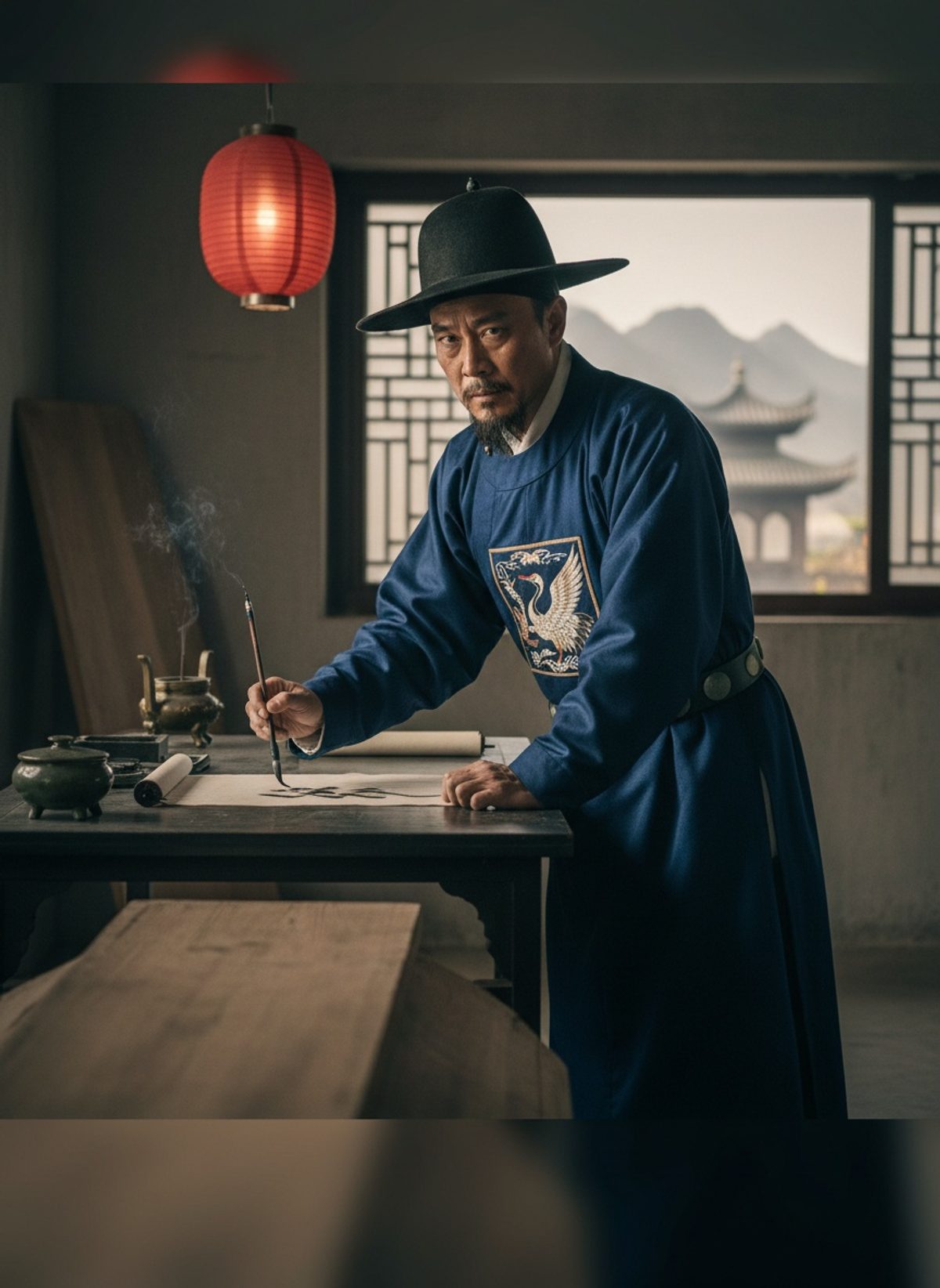
The courtyard of the Han imperial palace lay cloaked in the soft, diffuse light of dawn, so quiet you could hear the gentle rustle of silk robes as courtiers hurried to their morning duties. Trees, their leaves trembling in a light morning breeze, cast dappled shadows on the stone pathways. Yet, beneath the serene veneer, the air was tense with the electric hum of courtly life: a place where whispers could change fortunes in the blink of an eye. Sima Qian, the court's most esteemed scholar, found himself at the heart of a storm brewing not from weather, but from words. He had defended a general who had fallen out of favor, and in the labyrinth of court politics, such a defense stood as a grievous misstep.
The Wrath of the Emperor
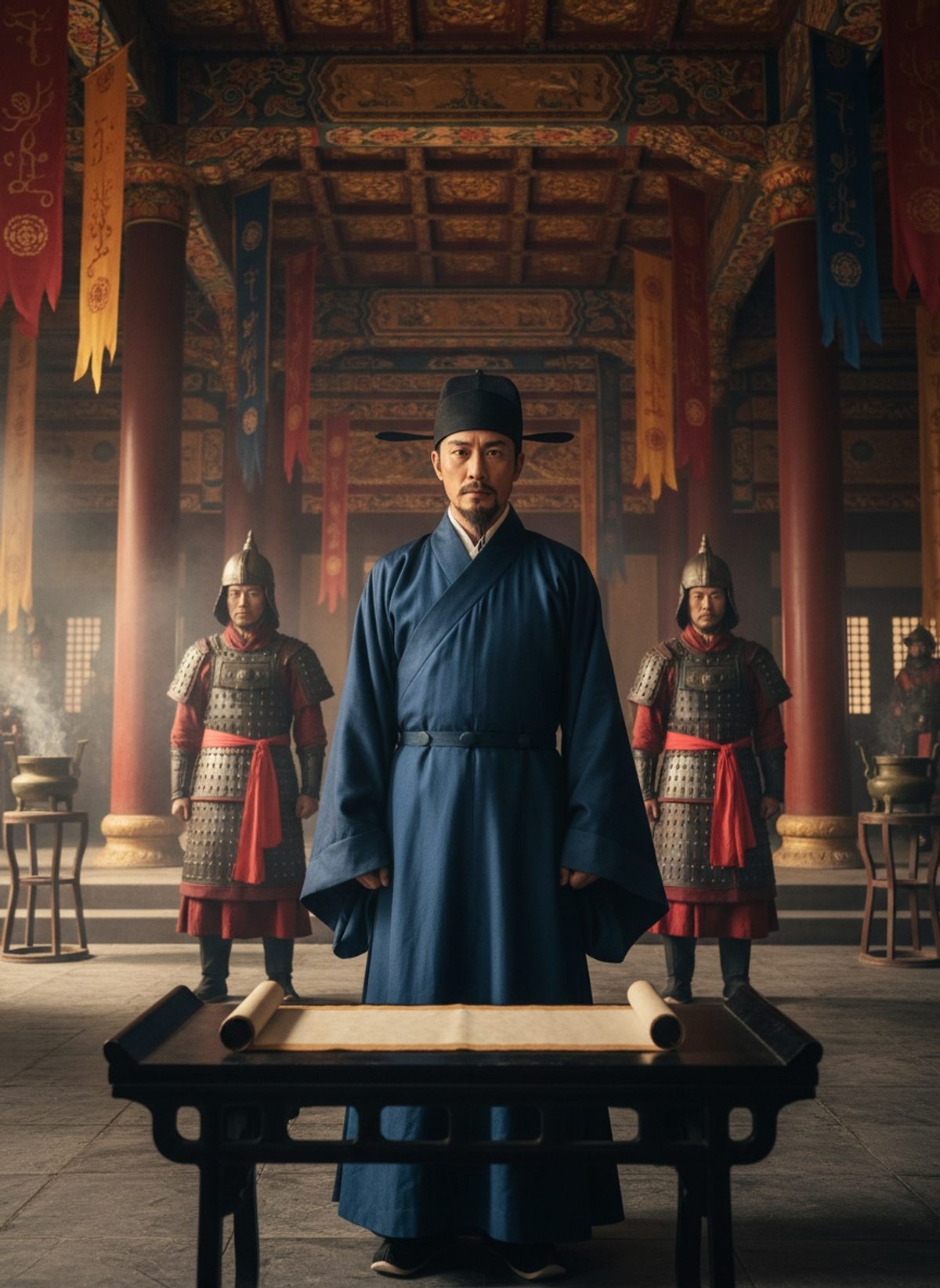
In the marble-clad halls of power, Sima Qian faced a peril that few could withstand: the wrath of the Emperor Wu of Han, a ruler whose gaze alone could freeze the bravest of hearts. Sima Qian's fate was sealed when he dared to argue against the relentless condemnation of the general Li Ling, whose defeat by the Xiongnu forces was deemed a betrayal. In an empire where honor was a currency as valuable as gold, defending a perceived traitor was an unforgivable offense.
Imperial justice was swift and ruthless. Accusations flew like arrows in the grand audience chamber, each more piercing than the last. The crime of defending Li Ling cast a long shadow over Sima Qian's accomplishments — his meticulous historical work, his service to the court, his lineage as the son of Sima Tan, the former Grand Historian. The punishment decreed was unimaginably severe: castration, a fate more humiliating than death in the society of the day, where Confucian values placed immense importance on bodily integrity and familial legacy.
Faced with the irrevocable loss of dignity and status, most would have chosen the honorable escape of suicide. But Sima Qian, with his indomitable spirit and an eye still keenly focused on the future, made a different choice. He would live, not out of fear of death, but driven by a duty still unfulfilled — the completion of his magnum opus, a historical record that would echo through the corridors of time itself.
Read next: Xu Xiake Walked Into the Unknown. He Never Stopped.
The Chains of Duty
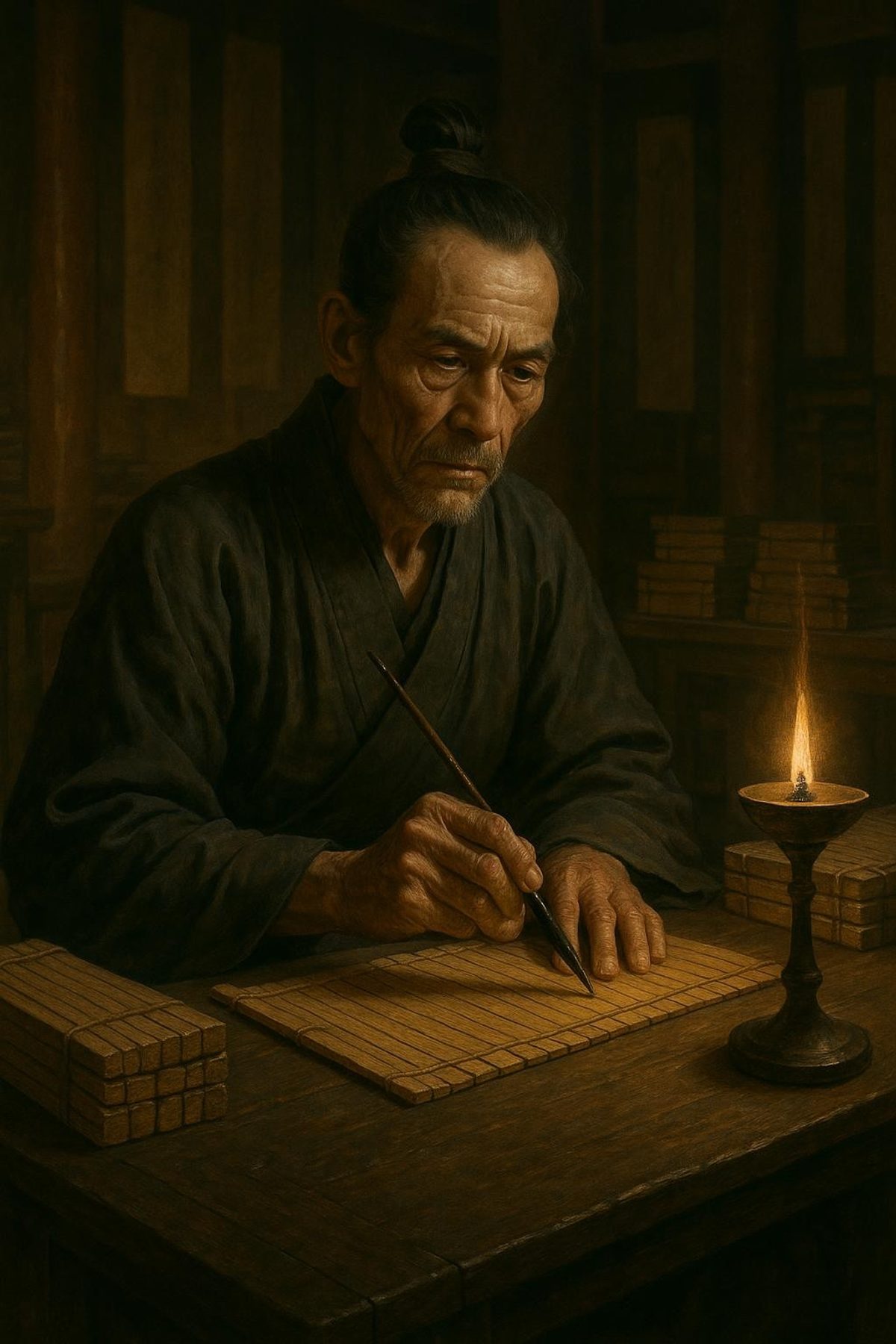
Within the confinement of his own misfortune, Sima Qian set to complete his life's work, the Records of the Grand Historian (Shiji). Each scroll he penned was a vessel of human history spanning over two millennia, from the legendary era of the Yellow Emperor to his present. The past was brought forth with vivid clarity, a panorama of tales both grand and trivial — from emperors' conquests to the lives of commoners, the tapestry of a civilization unspooled under his quill.
The act of writing became both sanctuary and rebellion. As his hand moved meticulously across the paper, brushing ink into indelible forms, Sima Qian anchored himself in the tradition of his father, fulfilling a pact made with the past. Yet, every character etched on the page also served as a defiance against the empire that had wronged him. In finishing a book that encapsulated Chinese memory, he would immortalize more than just history; he would inscribe his name alongside it.
Despite every setback, Sima Qian worked with unyielding resilience. He labored in obscurity, his days marked by the quiet scratch of ink and the steady unfurling of parchment. Though his body bore the scars of unjust punishment, his mind remained a beacon of clarity and purpose. He understood that the history he chronicled was not only his legacy but a beacon for future generations, a cultural compass for emperors and scholars alike.
A Legacy Beyond Time
As the lamps flickered in the dim confines of his study, casting long shadows across piles of completed scrolls, Sima Qian could scarcely have glimpsed the monumental impact of his work. He wandered through dynasties like a ghost, now bound to the history he had inscribed. The Shiji would survive not just as China's first comprehensive historical text, but as a foundational pillar upon which all subsequent histories would stand. Chinese civilization, rich in the continuity of its past, would forever owe a debt to the words penned by a man who sacrificed everything except his duty to truth.
In every page, the peoples and places of ancient China come alive, whispered into the ears of readers centuries beyond Sima Qian's own tragic tale. The work became a mirror holding up the complexities of human endeavor, a testament to our triumphs and follies. Readers, from the courts of the Tang to the academies of the Ming, and even into modern times, would seek guidance and wisdom within its chapters.
Through his triumph over unimaginable personal despair, Sima Qian reminds us that history's yarn is spun by those tenacious enough to endure its harshest trials. His story teaches us that integrity and dedication can transcend even the most profound humiliation, leaving an indelible mark on the world. It is a haunting reminder that, sometimes, the greatest acts of rebellion are not tumultuous revolts but persistent resolutions to preserve the light of understanding. By finishing his book, Sima Qian ensured that China's expansive heart would continue to beat for generations, sounding a timeless resoance that echoes from ancient halls to today's bustling streets.