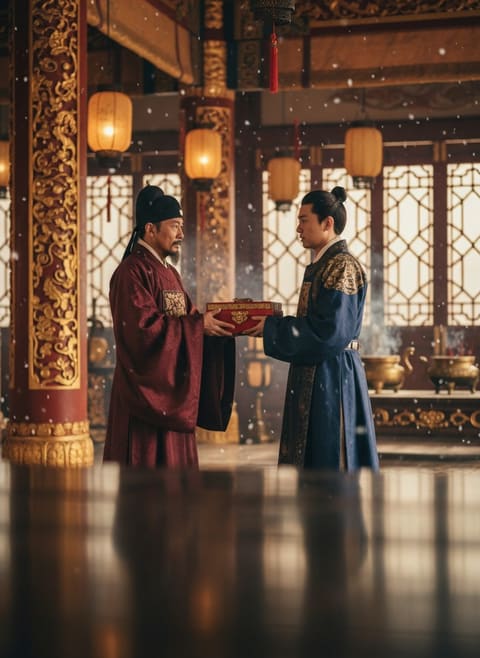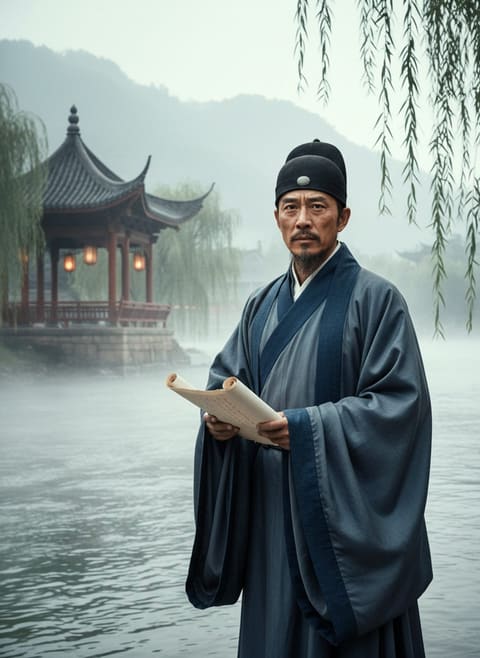
Han Qi was just another minister in the Song Dynasty court. Yet, he became a beacon of integrity in an era rife with corruption.
Whispers in the Imperial Court
1043 AD played host to a dramatic moment in the halls of the Song Dynasty's emperor's inner circle. The lavish court clinked with the echoes of whispered secrets and hushed deals as officials plotted and schemed for greater power. Nestled within this potent mix of ambition and deceit was a scroll—a seemingly innocuous list concealed with potent potential—containing the names of corrupt officials who had embedded themselves into the very foundation of the empire's administration.
The court's usual air of structured elegance and ritual was abruptly disrupted when the list, swathed in whispers of scandal, reached the emperor's hands. Such a breach of trust and moral decay couldn't simply mar the reputation of individuals—it threatened to corrode the integrity of the entire imperial hierarchy. Thus, the emperor made a swift decision, an attempt to stifle the budding scandal before it sprawled into public consciousness: the list was to be destroyed.
The Unyielding Voice of Accountability
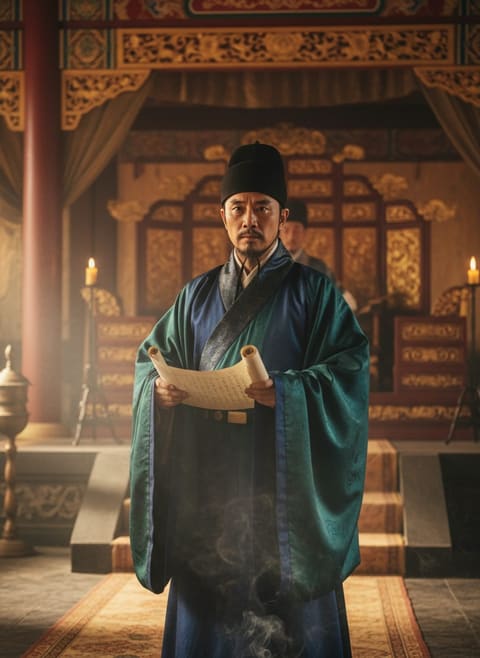
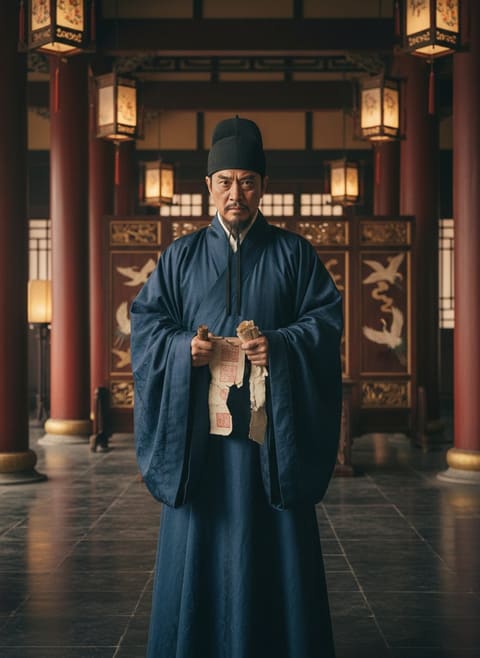
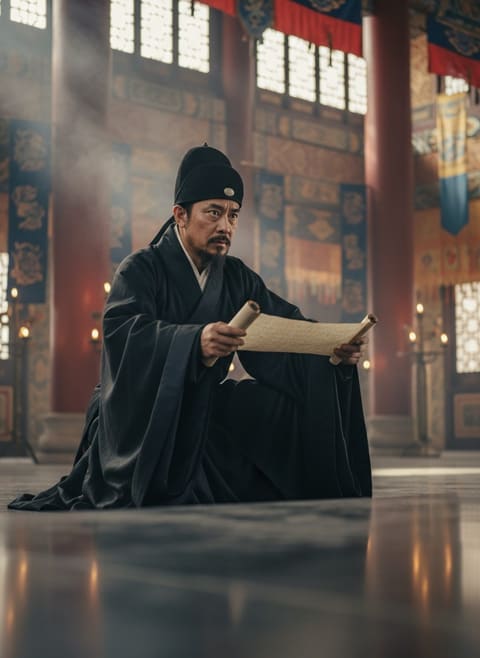
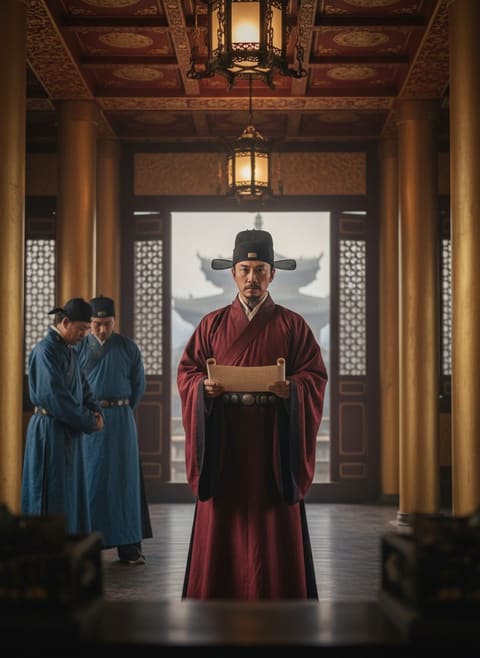
Han Qi, a minister known not just for his sagacious counsel but also for his unwavering principles, found himself thrust into a moral crossroad that day. Tasked with the incineration of the document that bared the twisted roots of corruption within the government's noble façade, Han Qi stood before the court, the list a potent symbol of grievance held tightly in his grasp. The emperor's command was clear: reduce it to ashes and silence the murmuring unrest. But Han Qi's conscience burned brighter than any ordered flame.
Read next: He Held the Emperor's Letter. He Sent It Back Unsigned.
In an audacious display that would slice through centuries to remain immortalized in historical memory, Han Qi chose defiance over docility. He unfolded the list, each rustle of the paper a defiant drumbeat against the backdrop of the court's silence. He lifted the scroll, and with a voice reinforced by a lifetime of service, uttered each name slowly, deliberately, as though painting their treachery for all to see in curling strokes of sound.
Those compiled names, perhaps expected to ignite only flickering flames, instead erupted as explosive truths, spreading through the court like ink through water. Han Qi's refusal to abide by the emperor’s decree posed a significant risk, yet it was the kind of risk he deemed necessary—an act that served not merely as a reprimand to those named but as a clarion call for ethical governance.
Tempered by Trials
Han Qi's rebellion was as remarkable as it was dangerous. The gravity of contradicting an emperor in that era was unthinkable; the Song Dynasty, like many, was a tapestry interwoven with threads of absolute power and rigorous social hierarchy. Han Qi's actions were not just a political statement—they were a profound personal risk. Any deviation from the emperor's orders could result in charges of treason, or at the very least, the end of one's career and honor.
This audacious act wasn’t crafted in momentary impulse or naïve heroism. Han Qi's decision was born out of a deep understanding that the empire, as a construct of enduring human endeavor, required the hard bedrock of ethics and responsibility. He saw the list not as incendiary but as revelatory—a chance to realign the court’s moral compass and cleanse its ranks.
Read next: He Stood Before the Emperor. He Refused the Pardon.
However, any expectation that this moment would yield instant reform was mistaken. The empire was not stirred into immediate reform or upheaval; instead, it cast a lingering shadow on the reputations of many, unsettling the court’s internal machinations. Politics, like the careful strokes of a calligrapher's brush, moved slowly in the Song Dynasty.
A Legacy of Courage and Integrity
Han Qi's actions that fateful year became embedded in the lore of the Song Dynasty, not through grandiose transformations but as an enduring symbol of moral fortitude. His stance, remember beyond the tombs of time, asserted the power of accountability in governance. It echoed the timeless need for leaders who act as bulwarks against the rampant tides of selfish ambition and unbridled corruption.
In choosing to read each name, Han Qi demonstrated the striking importance of transparency and integrity, even when it put him at odds with imperial power. Throughout history, those who have dared to stand against the silence have often catalyzed the discourse that fuels societal progress. Han Qi's legacy is a testament to the idea that the true power of a government lies not in its titles and thrones but in the honesty and righteousness of its actions.
This story, often left untold amidst narratives of battles and dynastic successions, resonates deeply because it reminds us that true leadership sometimes demands resisting the tide and that a single act of integrity can inspire countless others. As one contemplates Han Qi's choice in the present age, his story stands as an enduring call for conscientious leadership and unwavering ethical standards, values that remain as crucial today as they were in 1043 AD.