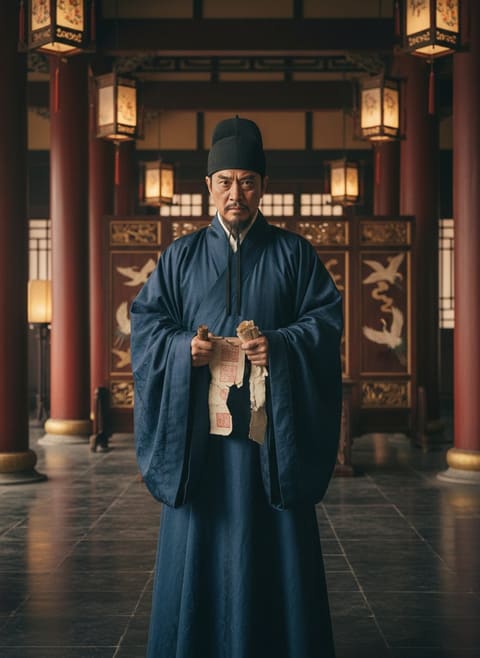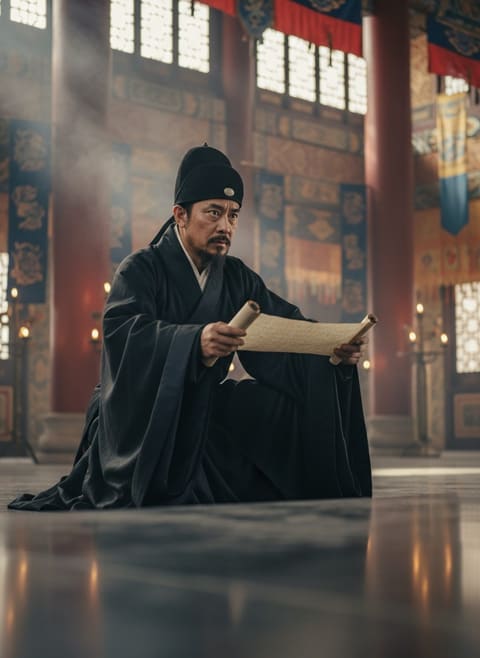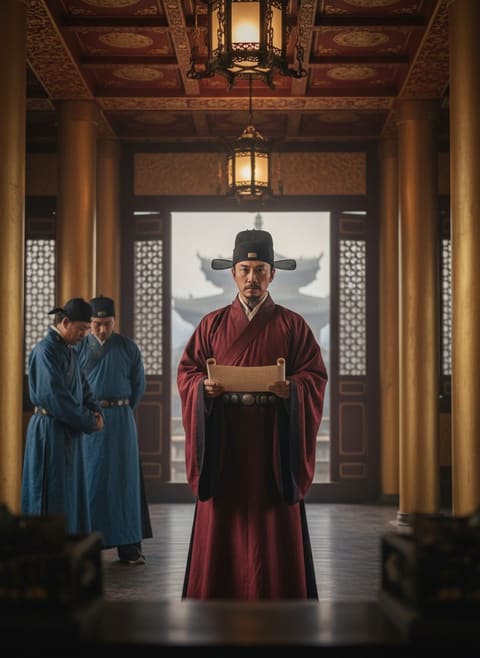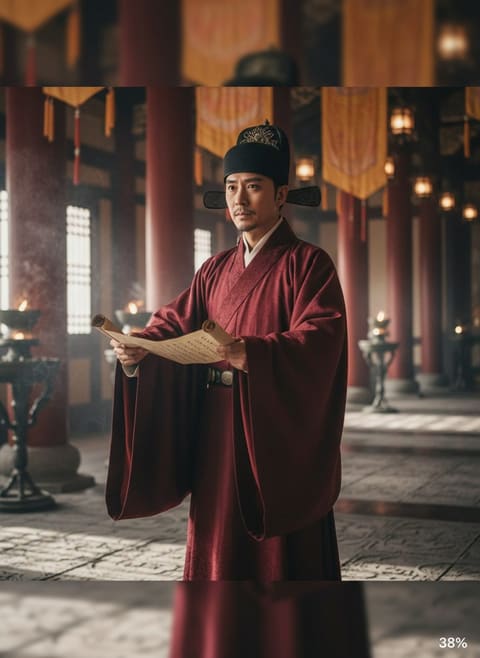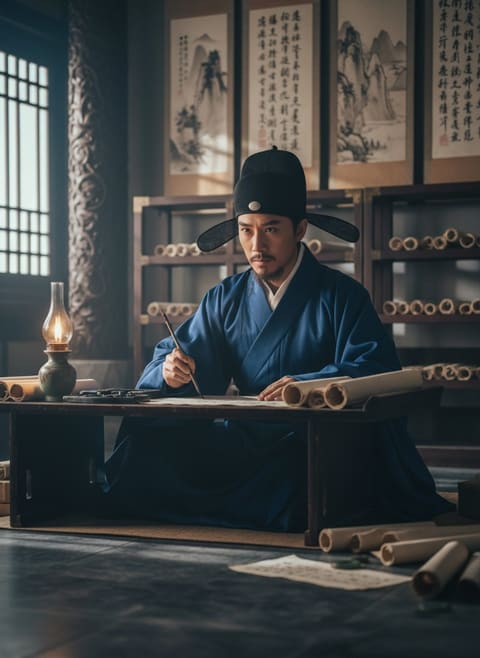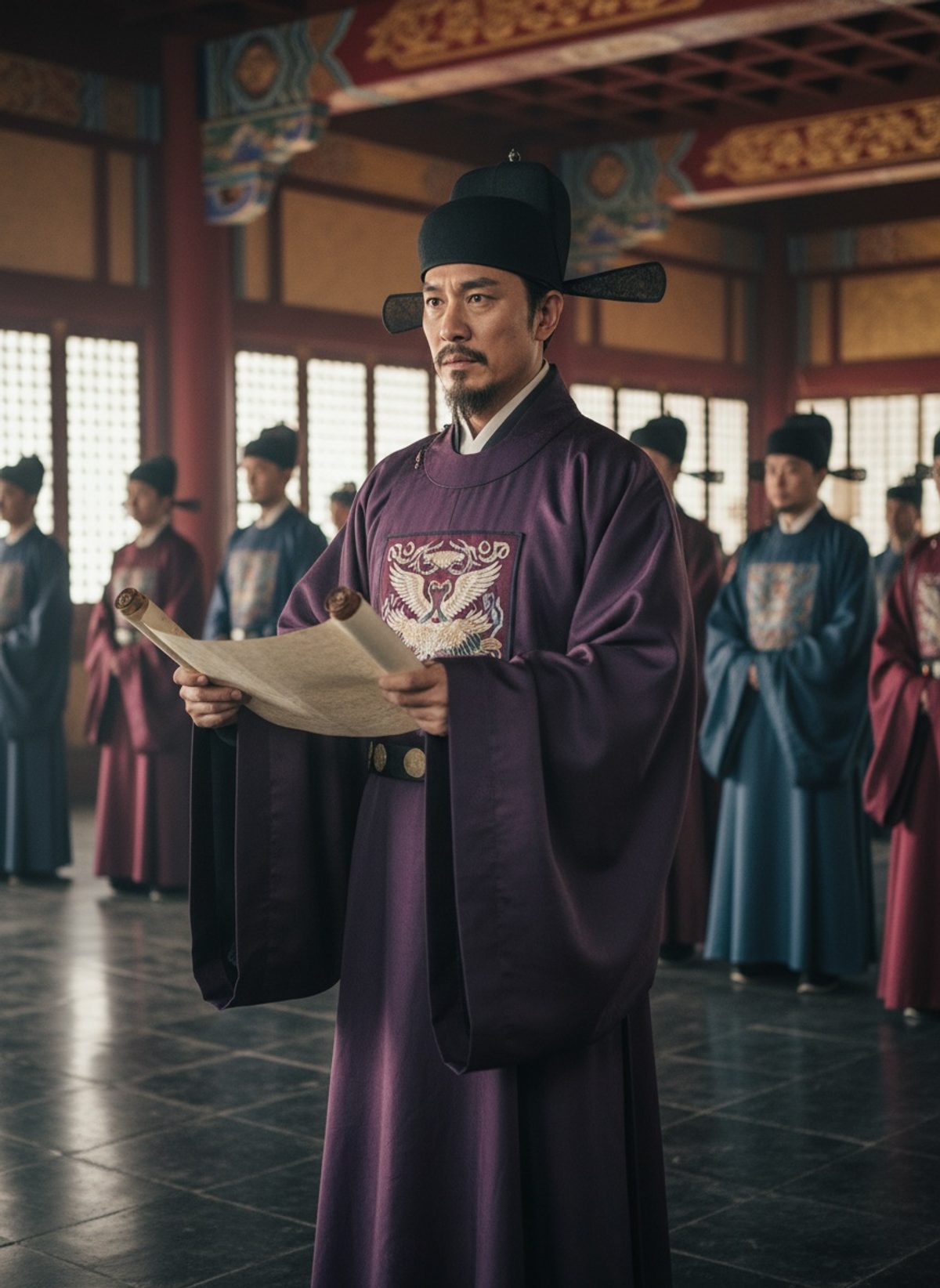
He was a man of letters in a land of bureaucrats. Han Yu had never walked the corridors of power as an official, yet his pen could topple ideas like a warrior king's sword.
The Scholar Who Defied an Empire
The Tang Dynasty, resplendent in its cultural and political zenith, was not without its strains. In 819 AD, the illustrious imperial court of Emperor Xuanzong rustled with whispers of unrest. Among the courtiers, a scholar named Han Yu dared to question the spiritual direction of the state. He was no mere scribe; his words could crack the façade of imperial orthodoxy.
Emboldened by a fiery sense of righteousness, Han Yu penned a memorial that would shake the foundations of the Tang court. It was a time when Buddhism, imported and adapted, bloomed under imperial patronage, embedded in rituals and relics celebrated by the court. Han Yu, a staunch Confucian, saw the emperor’s indulgence in such practices as a perilous deviation. He believed they undermined the societal values and social order revered by Confucian doctrine.
Han Yu's memorial condemned the affair with biting eloquence, asserting that state endorsement of Buddhist relics was tantamount to superstition. His words, laced with intellectual rigor, accused the worship of clouding the moral clarity needed to govern the empire justly. To him, the emperor's actions were a dangerous path leading away from reason and order.
Read next: He Held the Imperial Decree. He Threw It in the River.
A Sentence Writ in Ink and Blood
The repercussions were swift and harsh. Han Yu's memorial was no ordinary critique; it was a direct affront to the emperor and the religious tolerance practiced at court. Emperor Xuanzong, feeling the sting of Han Yu's indictment, responded with severe measures. The punishment was exile to Chaozhou, located on the fringes of the empire.
Exile to the malarial south was a sentence feared by many. It was not merely a relocation but a transportation to a perilous borderland fraught with disease and harsh conditions—a death sentence in disguise. Despite the certainty of his fate, Han Yu remained resolute. Friends and colleagues implored him to seek clemency, to retract his words and secure a pardon. Yet, he stood unwavering by his convictions, refusing to unsay the truth he had spoken.
In his heart, Han Yu cherished the ideals of a philosopher, viewing the preservation of integrity over the preservation of life. His silence in the face of potential salvation spoke volumes, resonating through the annals of history as a testament to moral courage over institutional obedience.
The Malarial South: Trials and Tribulations
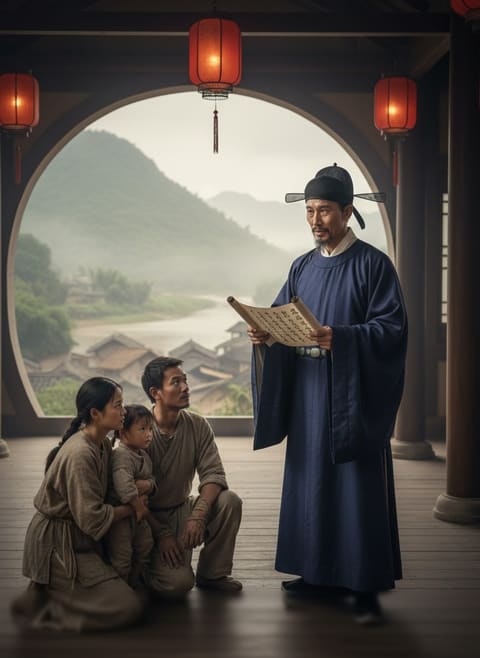
Chaozhou, awaiting Han Yu at the edges of Tang's civil grasp, was a region teeming with challenges. Vast rivers snaked through a landscape unlike the gleaming halls of Chang'an. Here, the dense air carried not only the hum of insects but the palpable sense of neglect. The people lived fragmented lives, with Confucian order a distant echo beneath the prevailing local customs.
As he settled into this new chapter, Han Yu's impact transpired beyond survival. He cast his gaze upon the community, seeking ways to stitch Confucian ideas into the social fabric. His work in Chaozhou was not without reward; the locals benefited from his wisdom, and he became a beacon of reform and adaptation in a land resistant to change.
Read next: He Faced the Emperor's Blade. He Read the Letter Anyway.
The challenges of Chaozhou transformed from insurmountable barriers into opportunities for Han Yu's philosophy to breathe life into a neglected domain. It was here that he imbued Confucian ideals with an adaptability that would extend beyond his exile, proving the resilience of his intellect and the timelessness of his principles.
The Unyielding Legacy of Han Yu
Though confined by imperial decree, Han Yu’s legacy transcended the constraints of his banishment. His return to court, prompted by a subsequent emperor, underscored the lasting value of his contributions. His efforts in Chaozhou and his uncompromising devotion to principle earned him a reverence that time could not erode.
Han Yu’s tale is a potent reminder of the power of intellectual courage in the realms of governance and personal conviction. In an era dictated by compliance, his refusal to yield set a precedent for integrity in the face of institutional suppression. His life illustrates an unyielding commitment to truth, exemplifying how a single voice, inscribed with conviction and principle, can echo throughout history.
Today, as we sift through the annals of time, Han Yu’s defiance rings true. It challenges us to question the nature of power and the role of truth amidst the machinations of empires, urging us to consider the eternal question: what price are we willing to pay for our principles?