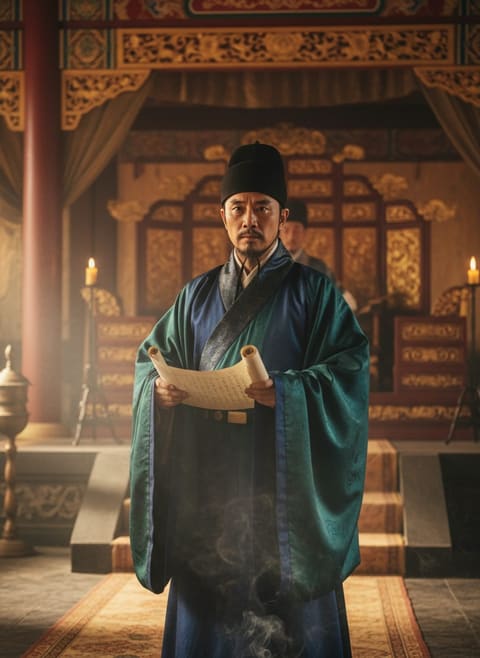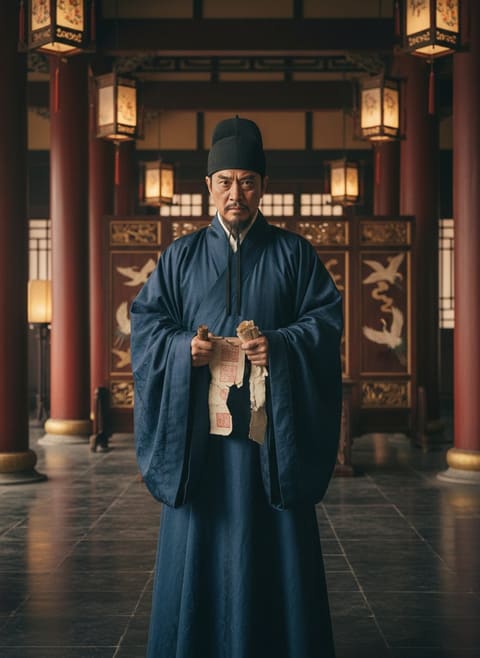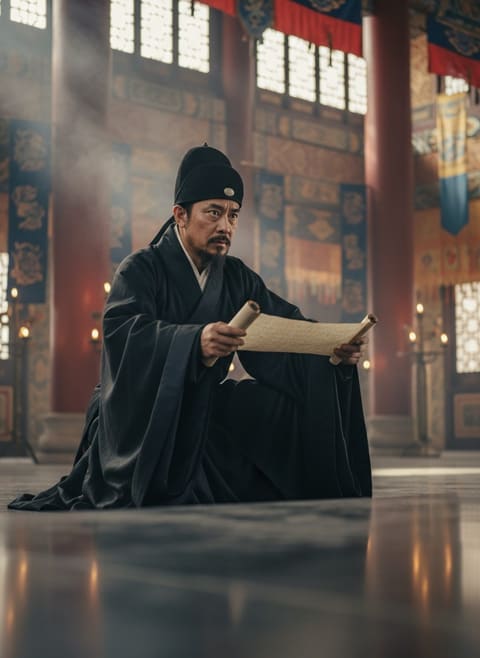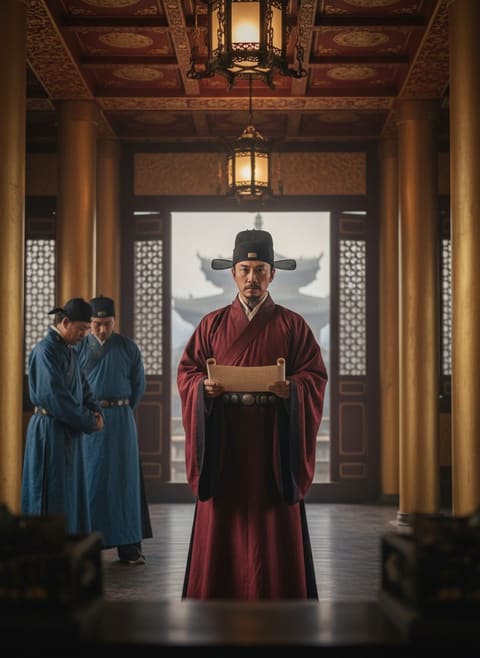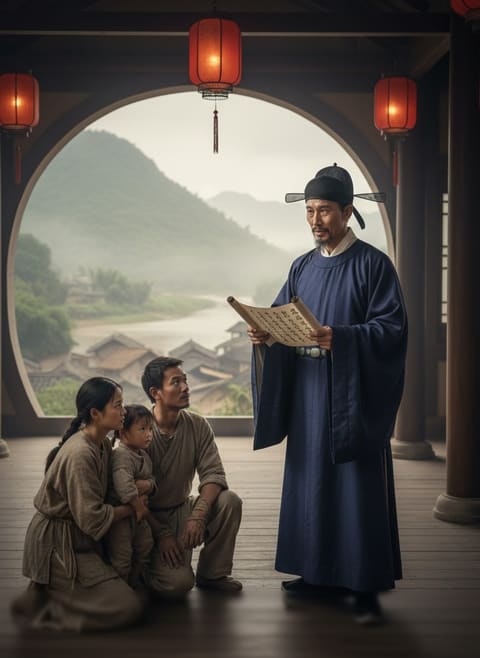
The landscape of Shaanxi in high summer is a tapestry of contrasts. Golden waves of ripe wheat spread across the fields, bending under the caress of a gentle wind. Scattered clouds drift lazily across a brilliant sky, casting dappled shadows on the provincial town below. But beneath this serene setting, the air carries an undercurrent of urgency, a palpable tension that tethers the peaceful scene to the harsh realities endured by its inhabitants. It is 1043 AD, and in the modest governmental office, an official named Han Qi is holding the Emperor’s letter—a letter that could change everything.
A Moment of Decision
The document Han Qi held was more than a simple letter; it was a golden ticket promising wealth, recognition, and a life far removed from the struggles of Shaanxi Province. The Song Emperor, moved by Han Qi's dedication and effectiveness, had offered him a prestigious post that would elevate his status among the empire’s elite. The offer was not a mere suggestion; it was a summons, bearing the imperial seal, its authority palpable even through unspoken words.
Yet, as Han Qi looked out from the open window of his office, his thoughts were not on personal gain but on the people who toiled in the fields below. The poor of Shaanxi had known too much suffering; famines had ravaged the land, and wars had displaced many. They relied on Han Qi not just as a governor but as a custodian of their hopes and well-being. And so, with a heart that weighed heavy and a conscience already decided, Han Qi set the Emperor’s letter down. He picked up his brush, inked it, and wrote his response—a refusal.
The Guardianship of Shaanxi
For years, Han Qi had shepherded Shaanxi through trials and tribulations. The people had faced severe challenges, from the relentless pressure of northern invaders to the merciless devastation of natural disasters. Each crisis had left its mark, but it was Han Qi’s leadership that provided a constant beacon of stability amidst chaos. His tenure in Shaanxi was marked by not only resilience but also innovation in administration.
Read next: He Held the Emperor's Seal. He Gave It to a Stranger.
Han Qi’s approaches were pragmatic and often ahead of their time. He implemented strategies to ensure more effective distribution of resources during scarce times and focused on infrastructural improvements that could buffer against future crises. His policies aimed to create a self-sustaining community, empowering people to both fend for themselves and support their neighbors.
His dedication to public service and decision to remain with the people of Shaanxi was not simply an act of altruism; it was an embodiment of Confucian ideals. In the broader cultural context of the Song Dynasty, a leader's role was grounded in duty to others, reflecting values that prioritized collective welfare over personal enrichment. The people, in turn, revered Han Qi, seeing in him a protector who shared in their struggles rather than a bureaucrat detached from their realities.
An Unsigned Promise
The return of the Emperor’s letter was unexpected—a bold move bordering on insubordination. For any official, an imperial summons was both an honor and an obligation. Refusal, especially without a despot's punishment, underscored Han Qi’s unique standing with the emperor.
His unsigned response spoke more than any letter filled with words of gratitude could. It communicated a commitment that resonated beyond the confines of palace halls and into the very hearts of the Shaanxi populace. With his decision, Han Qi had subtly questioned the traditional trajectories of power and privilege in favour of a different kind of legacy, one that was rooted in service and sacrifice.
Read next: He Held the Imperial Decree. He Threw It in the River.
Such choices were rare, particularly in an era where advancement and personal interest often dictated the actions of those who wielded authority. Han Qi's decision stands as an extraordinary example of fidelity, a rare instance where moral duty eclipsed the tempting allure of imperial favour.
The Legacy of Loyalty
Han Qi’s story, while perhaps little chronicled in the grand annals of history, offers a nuanced perspective on leadership and integrity. His refusal of an imperial post for the continuance of local governance highlights a principle equally relevant today: true leadership is found not in titles or wealth but in unwavering commitment to those who are powerless and in need.
This episode during the Song Dynasty reflects an enduring truth about human societies: the most profound impact is often made not through grand gestures, but through the everyday decisions that prioritize collective over individual goals. In returning the Emperor's letter unsigned, Han Qi chose the path less travelled—a path that, though fraught with challenges, promoted hope and resilience among his people.
As years passed, the lessons from Han Qi’s decision resonated throughout the region and perhaps whispered their way into the corridors of power, reminding those at the helm of the ancient Chinese empire that authority, at its most noble, serves not itself but the greater good. Such narratives, hinted at in old texts or carried in the folklore of a community, echo the fundamental truth that character is best measured not in prosperity but in adversity.