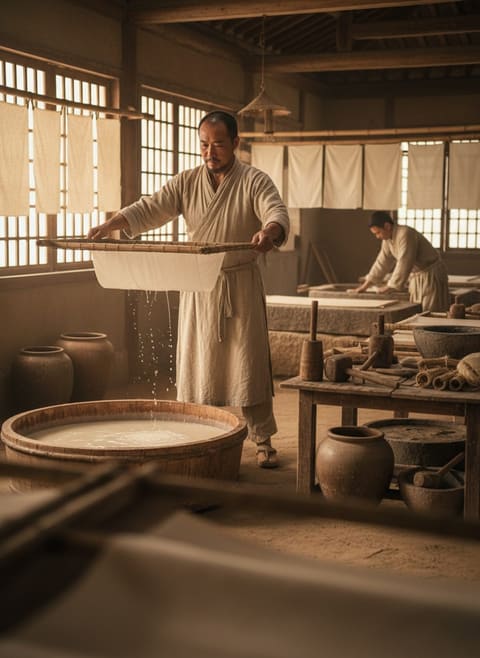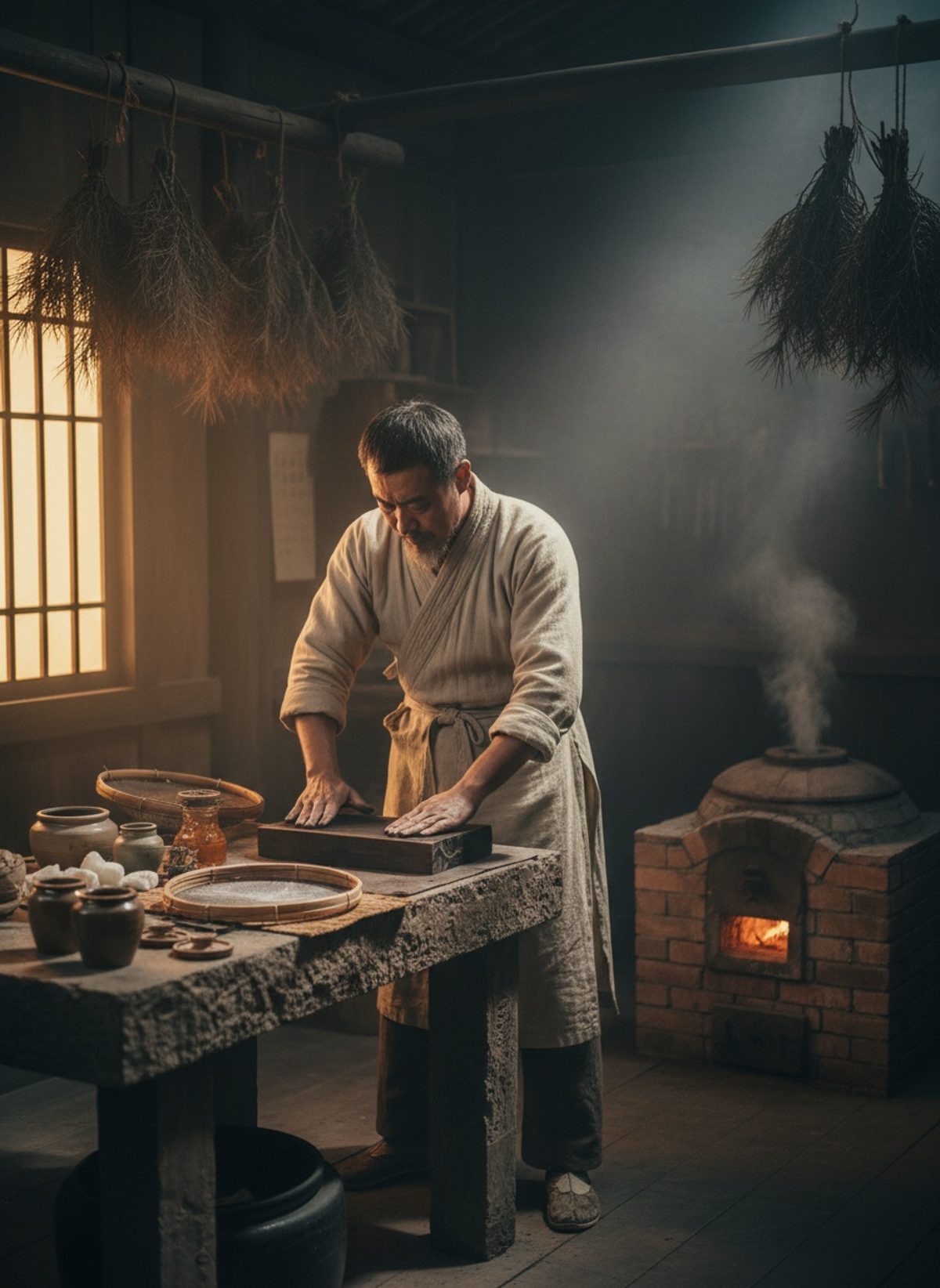
Smoke curled upward through the narrow chimney, the faint scent of burning pine wafting into the quiet night. Inside a dimly lit workshop, the craftsman adjusted the slow-burning fire, careful to maintain the precise conditions necessary to transform humble pine soot into the famed black ink sticks of Northern Song China. These ink sticks would later capture the thoughts and poetry of an era, immortalizing ideas that shaped a civilization.
The Alchemy of Ink: From Soot to Script
The Song Dynasty (960-1279 AD) was an era of remarkable innovation and creativity in China, where the seemingly ordinary act of writing was elevated to an art form. At the heart of this cultural renaissance was ink made from the soot of burned pine resin, regarded as more precious than silver. Crafted with meticulous skill, the process was both an art and a science, requiring the patience of a monk and the precision of an alchemist.
In the city of Bianjing, now known as Kaifeng, artisans sealed pine wood within chambers, tending fires that burned slowly over forty days. From this labor, the finest particle of carbon floated up as soot, collected grain by grain. This raw material was the key to producing ink that could write the legacy of an empire. As the pine wood burned, the craftsman vigilantly adjusted the airflow and temperature, understanding how each change would affect the character of the soot.
Once collected, this soot was ground, almost lovingly, into a fine powder. To bind it into a stick, it was mixed with hide glue, creating a malleable paste. But what set Song ink apart was the addition of camphor and musk, rare aromatics that perfumed phrases and verses as beautifully as the brushstrokes that formed them. The paste was then pressed into delicate wooden molds, often inscribed with intricate designs or calligraphy to enhance the stick's visual and functional allure.
Read next: The Meuse Valley Smog of 1930 Killed 60 in Three Days
In Pursuit of Perfection: The Ink's Artistic Journey
The resulting ink sticks were more than utilitarian objects; they were artistic treasures in their own right. Admired for their deep, black sheen, these cakes were coveted by poets, scholars, and artists across the empire. As the ink was ground with water upon a stone slab, its fragrance filled the air, the scent invigorating the mind and preparing the soul for creation.
Song scholars, awash in the intellectual pursuits of Confucian classics and innovative thought, found inspiration in the purity and depth of the ink. As they set brush to paper, the ink connected them to others across time and space, encapsulating their reflections and wisdom in elegant characters. The very process of grinding ink became a meditative practice, a doorway to contemplation and clarity.
The dynasty's emphasis on education and literary achievement further cemented the importance of high-quality ink. In a society where words held immense power and education was a path to social elevation, the ability to write beautifully and clearly was vital. Ink sticks thus became essential for those vying to pass the imperial examinations, which could change the trajectory of lives, launching careers in government and influencing the empire's course.
An Empire Written in Ink: The Legacy Endures
The Song Dynasty was a period marked by extraordinary achievements in technology, science, and philosophy. This era's artistic and intellectual pursuits were inseparable from the tools of their expression, spearheaded by the humble ink stick. It was during this time that Chinese literature flourished, setting a cultural standard that would influence Asia and beyond for generations.
Read next: Tang Dynasty Ice Merchants Cut Frozen Rivers to Cool the Emperor's Table
More than a simple medium, Song ink was a bridge between the material and the intangible. It enabled the articulation of ideas, emotions, and dreams—forming a record of humanity's multifaceted experience. The ink captured the nuances of a moment and the spirit of an age, preserving them against the ravages of time.
Even as the dynasty's political power waned, outmaneuvered by the Jin dynasty and eventually subsumed by the Mongol-led Yuan dynasty, the cultural achievements of the Song era, ink among them, continued to resonate. The ink sticks knew no political boundaries, transcending ephemeral empires to become symbols of enduring knowledge and beauty.
This ancient practice of ink-making reminds us of the perseverance and creativity intrinsic to human endeavor. As we reflect on the delicate balance of art and science embodied in these precious sticks, we recognize how history is crafted not only through grand deeds and towering figures but also through the silent diligence of devoted artisans. The ink sticks of the Song Dynasty quietly tell the story of an age that still whispers its wisdom to those who choose to listen.