The city of Yangzhou stretches beneath the morning mist like a vivacious, breathing organism. As dawn breaks, pale sunlight plays across the canals, which gleam like liquid jade against the backdrop of low, ancient hills. The air is thick with the scent of damp earth and vegetation, mingling with the heady aromas of incense and spice carried across the town by a gentle breeze. Bustling markets brim with people in a dizzying dance of trade, conversation, and clamor. Yet, away from the boisterous exchanges, nestled within the quieter alleys, is a workshop where history is silently and deftly crafted by hand: the age-old art of papermaking. In this unassuming workshop, damp, pliable sheets of bamboo pulp are painstakingly transformed into the paper that will, without fanfare, alter the very fabric of global communication and culture.
The Alchemy of Bamboo: Crafting Civilization
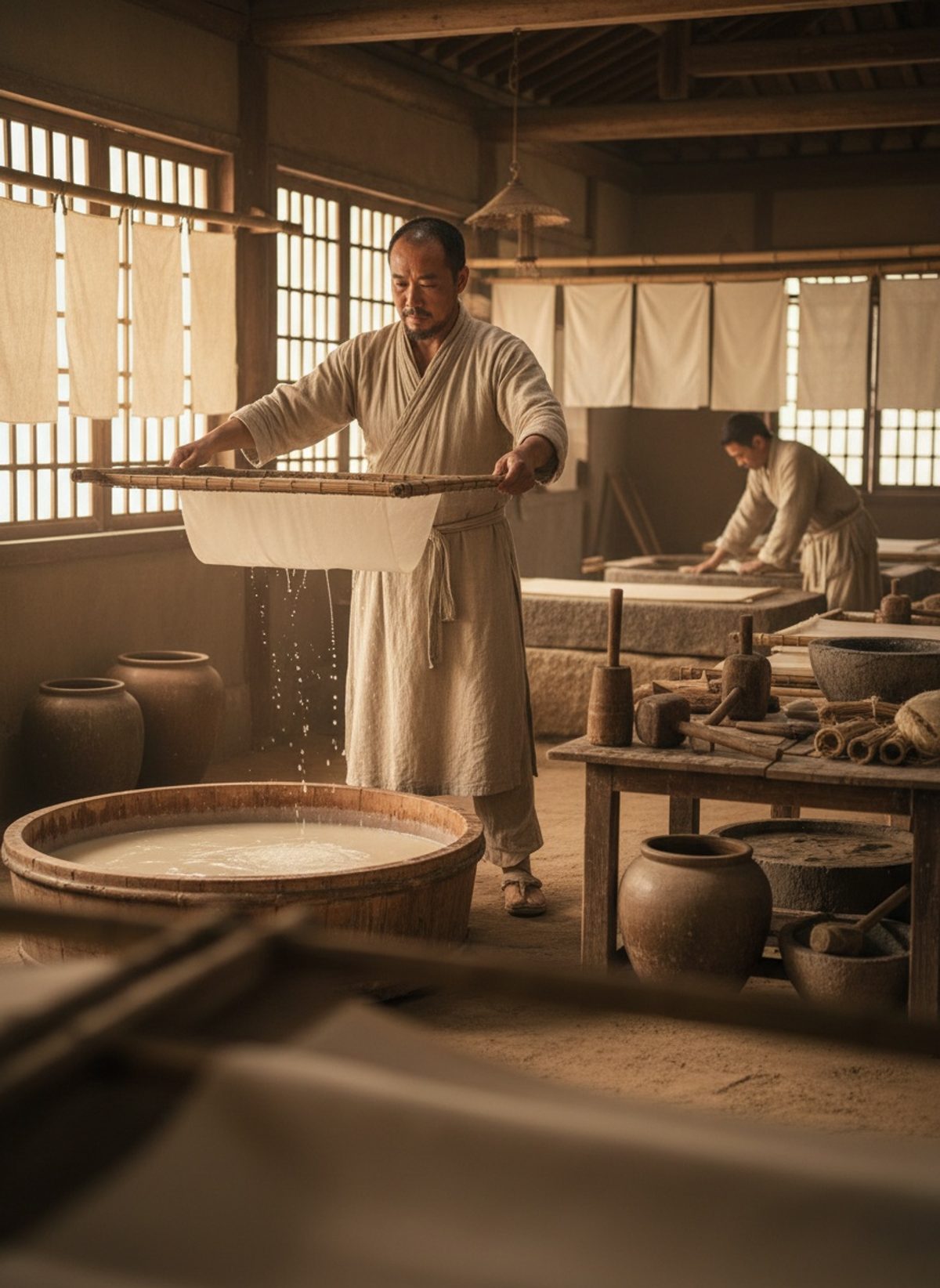
Within the sheltered confines of this Yangzhou workshop, the rhythmic thud of wooden mallets on bamboo echoes like a choreographed symphony—each strike a note that contributes to the harmony of creation. Here, artisans, whose skill has been honed through generations, perform a series of timeless, deliberate actions. They soak thick stalks of bamboo until the fibers surrender their rigidity, then beat them into a pulpy slurry. This mixture is gently dipped and skillfully lifted from vats that hold not just water, but a concoction of history and aspiration.
It’s a process refined over six centuries—long before the Tang Dynasty took power in 618 CE. The technique, developed initially during the Eastern Han dynasty, reached its peak under Tang rulers, becoming an alchemical wonder that converts humble organic matter into cherished substrates of knowledge. Papermaking in Yangzhou benefited immensely from the city’s strategic location and affluent status. By the Tang era, it was a nexus of trade, buzzing with exchanges between domestic and foreign merchants—including Koreans, Arabs, and Persians—enriching the cultural tapestry, bringing new techniques, and expanding the city’s artisan repertoire.
The sheets produced in this setting are not just vessels for ink; they cradle the weighty words of imperial decrees and the ephemeral whispers of lovers' sonnets. In their fibers are inscribed the ideas and innovations of an empire, strong and vast enough to bequeath its legacy to the world beyond its borders. This paper, once dry and whisper-thin, is destined to traverse the vast lengths of the Silk Road, reaching distant lands and languages previously untouched by the delicate grace of the written word—a powerful testament to the ingenuity and perseverance of Tang Dynasty artisans.
Read next: The Medieval Hammam: Where Baghdad Washed, Gossiped, and Healed
Connecting Worlds: Yangzhou Paper on the Silk Road
The network of trade routes known as the Silk Road was both a physical pathway and a conduit of cultural exchange. It wove from China to the Middle East, connecting continents and civilizations. Yangzhou’s position as a major port and cultural center enabled it to become a city of convergence, where paper became a quintessential medium for global interaction. Embarked upon caravans across deserts and mountains, Yangzhou paper was carried to the farthest reaches of the known world, much like silken cloth and spices before it. Yet, unlike these material goods, this paper bore wisdom, counsel, and song.
Alongside the tangible materials traded, ideas and traditions found passage between cultures. Islamic scholars marveled at the paper’s superior quality, favoring it over previously used papyrus and vellum. This influence lingered, leading to the establishment of papermaking in the West and fundamentally altering the trajectory of literary culture. In effect, Tang paper allowed for the writing and preservation of the Islamic Golden Age’s vast body of scientific and philosophical texts, underscoring the silent power of these humble sheets.
Yangzhou’s transformative paper dissolved old boundaries, meshing diverse peoples and traditions into a shared human endeavor. They equipped scholars, artists, and statesmen with a reliable medium to document their thoughts and catalyze intellectual advancement. Moreover, these well-traveled sheets stimulated burgeoning trade networks, ever more intricate and constantly evolving, until the world found itself entwined—wrapped in the collective consciousness made enduring and portable through the papermaker’s art.
Read next: The Tang Dynasty Bathhouse That Served Emperors and Farmers
The Threads of Influence: A Quiet Revolution
As the centuries unfold, the modest sheets of Yangzhou gradually weave themselves into the fabric of everyday life, leaving a mark that, while faint at first glance, is indelible in its impact. By silently facilitating the creation and dissemination of knowledge, these paper sheets empowered revolutionaries, poets, and scientists to defy convention and dream boundlessly. Indeed, their influence extends to realms far beyond China’s borders, stimulating Renaissance thought, Enlightenment philosophy, and the eventual explosion of printed communication.
Even more remarkable is the notion that this papermaking practice, seemingly unchanged through millennia, continues to resonate, echoing the rhythm of those ancient workshops where time, labor, and craft converged. This enduring tradition speaks to a fundamental human drive: the desire to communicate and connect across time and space, to encapsulate one’s thoughts and emotions in a form that survives long after the thinker has departed.
The simple act of transforming bamboo fibers into a blank slate might appear as mere industrial artifice. Yet it signifies much more—a testament to human ingenuity and an enduring quest for knowledge. Through the whisper-thin sheets that emerged from Tang Dynasty workshops, the world indeed discovered new possibilities. In Yangzhou's quiet alcoves, artisans molded more than paper; they shaped the future, ensuring that ideas, once birthed in fleeting thoughts, would forever sail on the breeze of human enterprise.