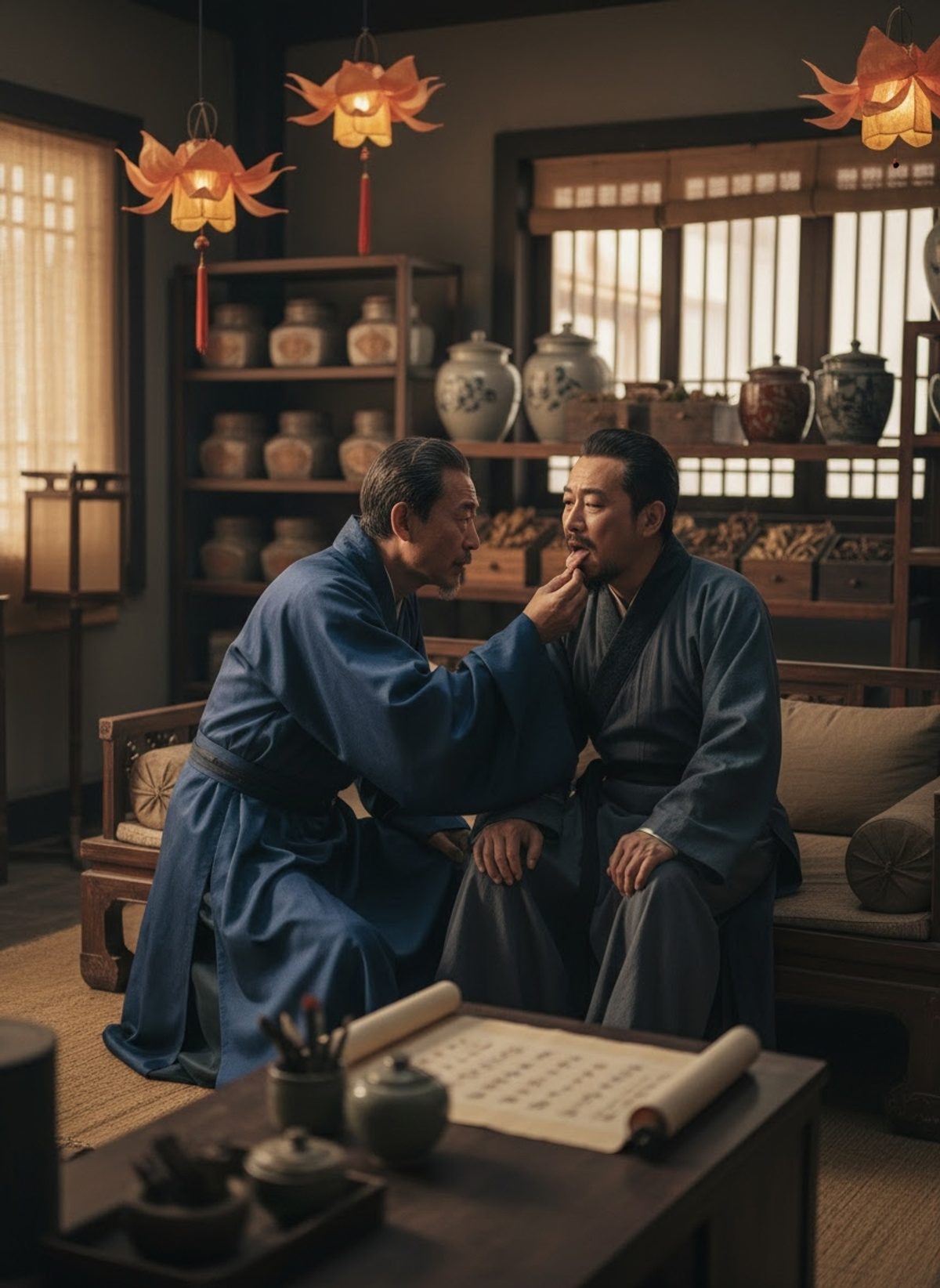
He had no thermometers, no stethoscope, and certainly no modern imaging technology. Yet, the Tang dynasty doctor could diagnose ailments with the precision of contemporary medicine. He did it by looking at the patient's tongue, an approach that fourteen centuries later remains a significant diagnostic tool in traditional Chinese medicine.
The Art of Diagnosing: The Tongue as a Mirror
In the bustling capital of Chang’an, the heart of the Tang dynasty, doctors like Sun Simiao honed their craft. Sun, who lived from 581 to 682 AD, was a legendary physician and writer renowned for his holistic approach to healing. His insights into tongue diagnosis became foundational.
By examining the tongue’s color, shape, and texture, Tang physicians sought to understand the inner workings of the human body. This ancient practice was deeply rooted in the guiding principles of Yin and Yang and the vital life force known as Qi.
In the absence of today’s sophisticated medical technology, Tang physicians relied on their keen observational skills developed through years of practice and study. They believed that different areas of the tongue corresponded to different organs and bodily systems.
Read next: Song Dynasty Teahouses: Where Merchants Argued and Poets Dreamed
For example, the tip of the tongue was said to reflect the heart and lungs, while the back of the tongue represented the kidneys. A pale tongue might indicate a deficiency of Qi or blood, whereas a red tongue could signify heat within the body.
Historical texts such as the “Qianjin Yaofang” by Sun Simiao offered extensive guidance on the interpretation of tongue signs. The knowledge contained within these ancient volumes spread throughout China and beyond via the Silk Road, influencing medicinal practice across East Asia. Understanding the nuanced language of the tongue allowed physicians to offer detailed diagnoses, prescribing herbal remedies and lifestyle adjustments tailored to restore balance.
Healing in a Golden Age
The Tang dynasty, spanning from 618 to 907 AD, was a period of unparalleled growth and cultural achievement. It was considered a golden age characterized by cosmopolitanism and the flourishing of arts and science. As Chang’an reigned as the largest city in the world, drawing scholars, merchants, and travelers, it also became a center for medical knowledge and practice. The importance of maintaining health and balance in such a booming society meant that skilled physicians were highly revered.
During this era, medical practitioners often doubled as scholars, committed to the study of both natural sciences and human physiology. The Tang civil-service system, known for its rigorous intellectual standards, ensured that individuals like Sun Simiao were selected for their scholarly acumen. The integration of medical knowledge with a civil-service ethos further underscores the esteem in which the medical profession was held.
This was not just an era driven by intellectual inquiry; it was pragmatic too. In a time when trade routes like the Silk Road facilitated cultural exchanges, these physicians needed practical solutions to combat the diseases that often accompanied such interaction. Epidemics would sweep through cities due to the constant movement of people and goods. Tongue diagnosis offered a quick, accessible method to assess health and prescribe treatments that could be disseminated widely across a population.
Read next: The Meuse Valley Smog of 1930 Killed 60 in Three Days
The Lingering Legacy
It is remarkable that a practice so ancient maintains its relevance today. While traditional Chinese medicine, including tongue diagnosis, was largely overlooked by Western medicine for centuries, the tide has slowly shifted. Today, clinics around the globe incorporate aspects of this ancient wisdom into contemporary practice. For practitioners of traditional medicine, the tongue remains a vital diagnostic tool, speaking volumes about a patient’s internal health.
This historical practice raises questions about the convergence of old and new medical traditions. In an era where technology increasingly dominates healthcare, there is renewed interest in comprehensive approaches that consider the whole person, much like the Tang dynasty physicians did. Their holistic treatment methods resonate with growing numbers of people in search of balance amid modern life's complexities.
The Tang dynasty was not merely a period of cultural and political hegemony but a time when the boundaries of medical understanding were boldly expanded. The physicians of this era exemplified an intuitive marriage of art and science embodied in a deceptively simple exercise: examining the tongue.
This story of ancient wisdom speaks to humanity’s enduring desire to understand and heal the body, a need as urgent now as it was fourteen centuries ago. And so, the art of tongue diagnosis continues to inspire, a testament to a time when medicine was as much about the eye of the beholder as it was about the science of medicine.