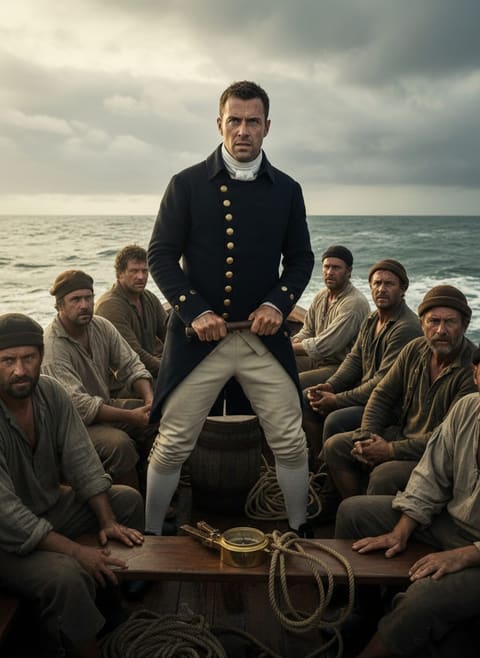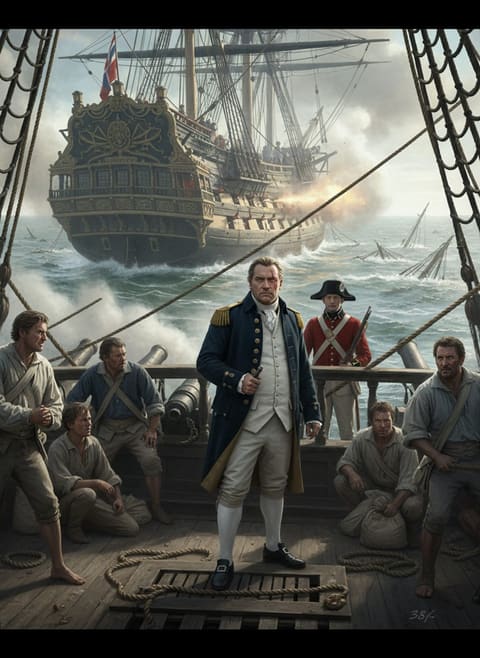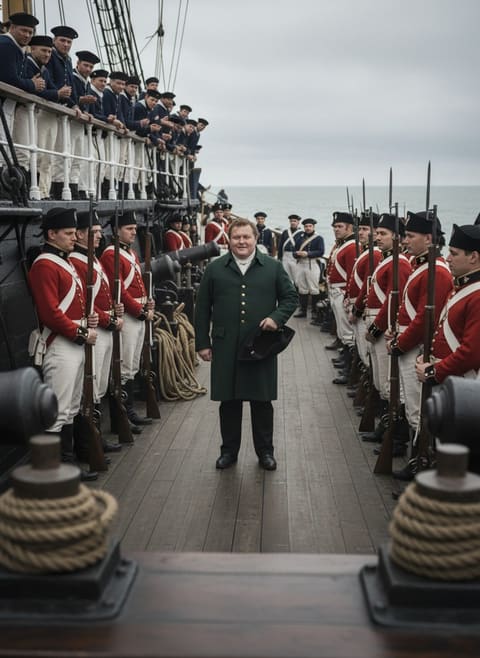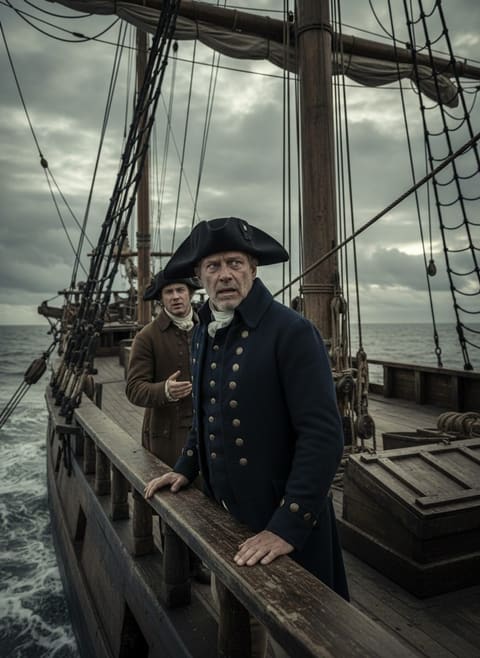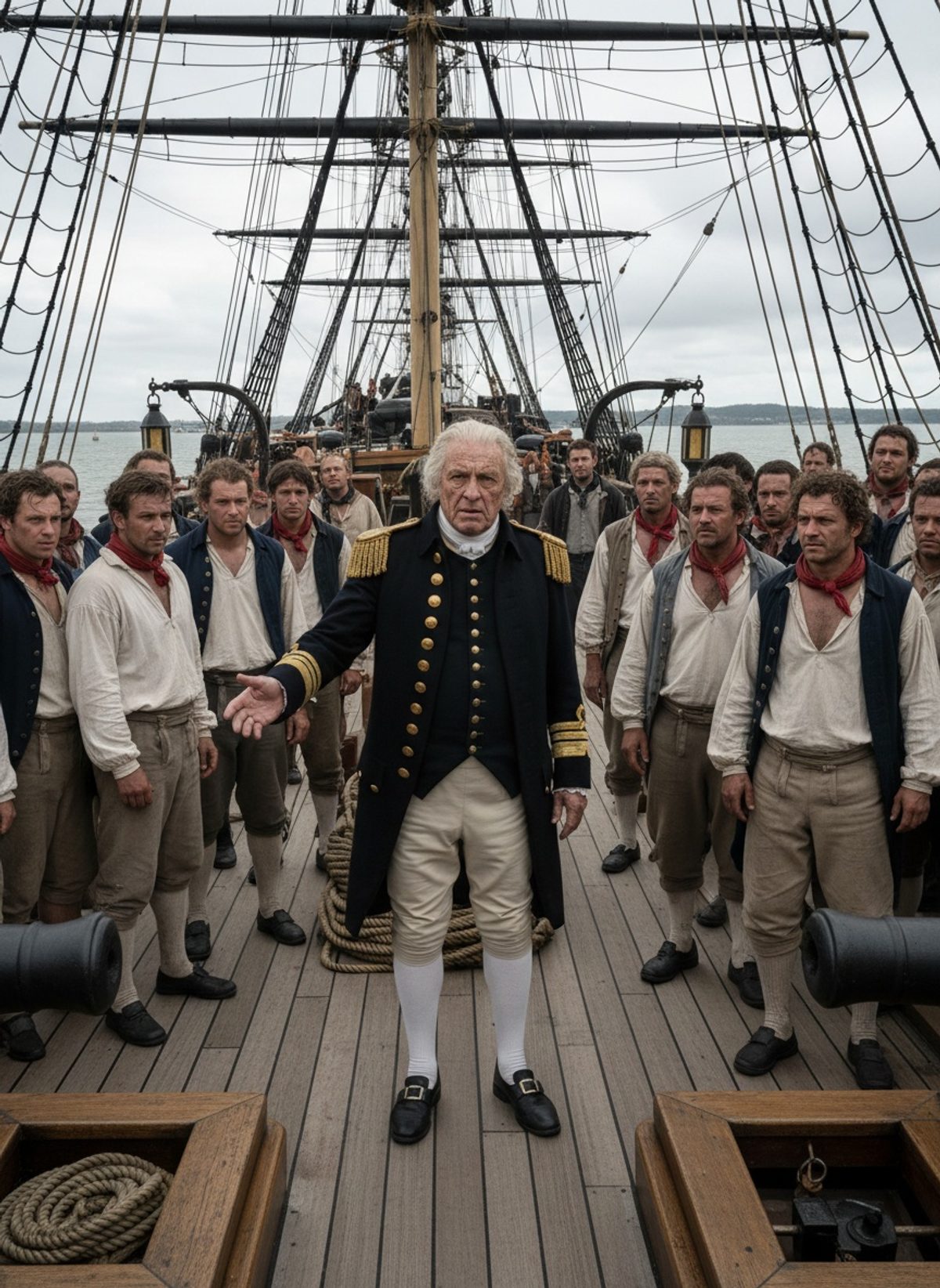
He was a man who knew how to fight without raising a hand. Facing the most significant mutiny in British naval history, Admiral Howe entered the arena armed only with words.
The spring of 1797 bore witness to a discontentment that simmered like the turbulent waters of the English Channel itself. The Channel Fleet, a formidable assembly tasked with safeguarding Britain against Napoleon's burgeoning threat, lay anchored off Spithead. Normally a scene of disciplined order and unyielding authority, the fleet had strayed onto uncharted tides of rebellion. The men — those stalwart sailors who had endured the harshest of climes and cruellest of sea battles — had finally reached their limit. Their plight was not petty quibbling over minor grievances but a profound cry against years of unfulfilled promises and inhuman conditions.
To understand the mutiny at Spithead, one must delve into the crumbling foundations of naval society at the time. The Georgian Era painted an often grave picture of life at sea. The Royal Navy was the backbone of British imperial prowess yet infamous for its harsh discipline and abysmal living conditions. Forced conscription, or 'press ganging,' swept men off streets and alehouses, thrusting them into service away from their families. Many had not laid eyes upon shore leave in decades, let alone held a full purse. Their sustenance came from barrels of biscuit infested with weevils and meat steeped in brine so long it might have been older than some of the youngest midshipmen.
Yet it was more than just the absence of coin and the vile swill called rum that stoked the coals of unrest. It was a line of bruising injustices and lashings that cracked the whip upon salt-crusted backs. Officers, often from privileged backgrounds and ignorant of sailor life, commanded with brusque arrogance where empathy should have reigned. Discontent was an ocean, and the waves of rebellion rose high enough to threaten the shores of established order.
Read next: The Day a Navy Captain Shielded a Slave Ship's Cargo
Amidst this unease, Admiral Richard Howe walked aboard the flagship on that fateful day. Describing Howe simply as an elder statesman of the sea fails to capture his unique powers of persuasion and an intricate understanding of the human spirit. He was the last person most would expect in the role of peacemaker. Yet, therein lay his genius — Howe's most formidable weapon was an uncanny ability to listen. Born of noble lineage yet deeply respected by his men, he commanded true loyalty through respect, not fear.
The sailors’ demands were clear, and Howe heeded their voices without diminishing their dignity. He found allies in their struggle, not enemies. The mutineers sought nothing outrageous — fair pay aligned with inflation, more frequent shore leave, proper attention to their grievances, and the replacement of tyrannical officers. Howe did something rarely seen in history without the bitterness of battle as its precursor. He agreed to everything. In an extraordinary act of leadership, he took the sailors’ concerns to heart and drafted changes aiming to amend decades of neglect. His promises were not mere assurances to quench the immediate fire; they were documented commitments ratified by an act of Parliament.
Read next: The Day a Navy Captain Freed a Ship Full of Pressed Men
This revolutionary step shifted the course of the Royal Navy like a rudder adjusts a ship’s path. No longer were the sailors disposable tools of war but valued members of a greater maritime society. Howe's actions transcended simple negotiation, inspiring future reforms — a precedent that resonated through history. His confrontation with the mutineers did not result in the expected floggings or executions. Instead, it heralded a new dawn where humanity found a tenuous footing aboard the otherwise unforgiving decks of the navy.
With the tensions dissolved, the ships set sail once more, resembling formidable phalanxes on a sea defense mission. Spithead became an extraordinary chapter not merely because a mutiny was quelled but due to it setting an ethical compass for generations. Howe’s legendary role was a masterful balance act between maintaining institutional authority and demonstrating unaffected compassion for the men who powered the empire.
Today, Spithead may be a tale known primarily to history enthusiasts, but its lessons are universally applicable. Howe's diplomatic victory goes beyond a successful quelling of dissent. It echoes in modern management and leadership, reminding us that the power to listen and act with empathy carries the weight to move fleets and mountains alike. As ships once again disappear into the Channel's horizon, this tale remains not just a story of rebellion subdued but of a transformative peace achieved without a single cannon fired.